Vanilla tea
Black tea with a short vanilla infusion, made in a small pot to preserve aroma without excessive bitterness.
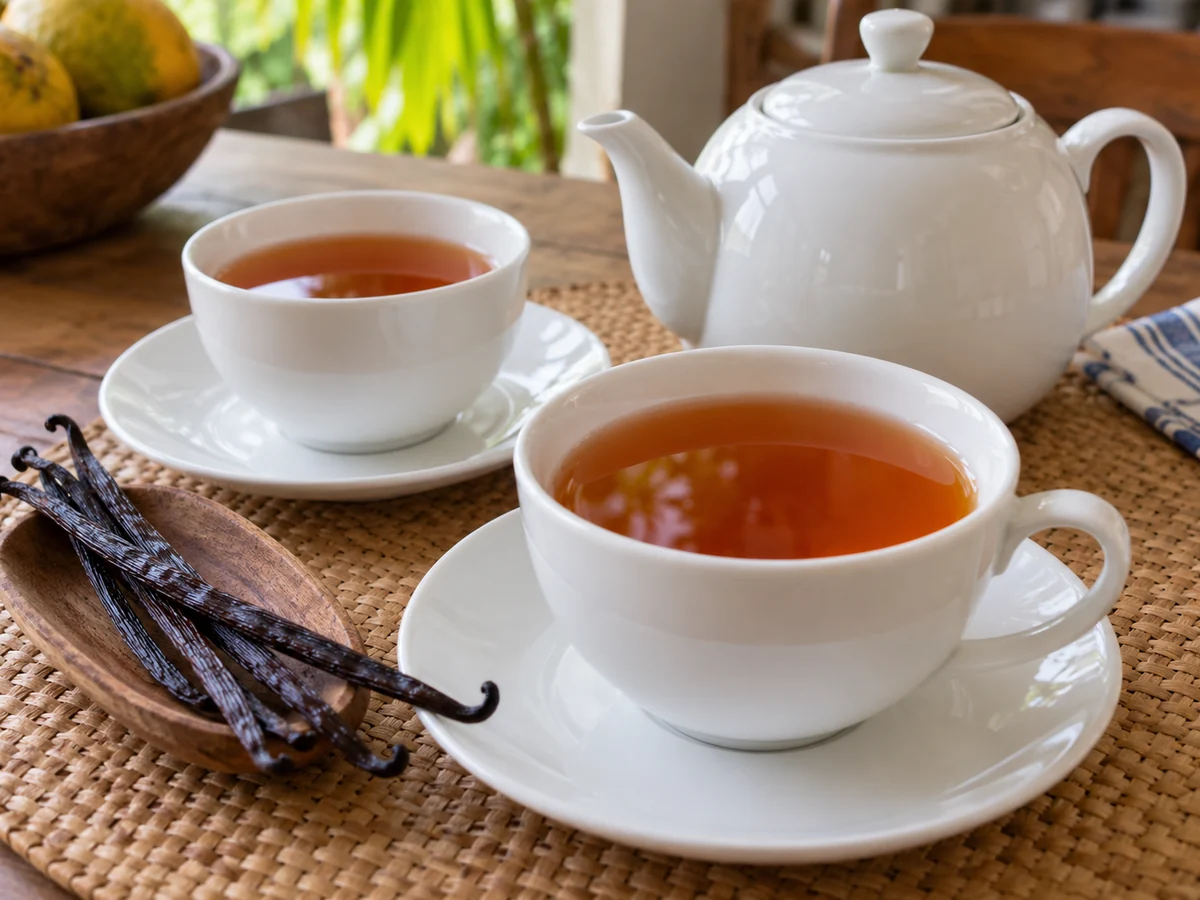
Ingredients
- 8 g plain food-grade black tea
- 800 ml drinking water
- 1/2 food-grade vanilla pod
- 0–20 g sugar, optional
- 100 ml pasteurised milk, optional and served separately
Preparation
Prepare a clean teapot and four cups. Split half a vanilla pod lengthwise and scrape out its seeds with a clean knife.
Heat the water with pod and seeds in a pan and simmer gently for 3 minutes to release the vanilla aroma.
Turn off heat and pour vanilla water over tea in the pot. Infuse for about 3 minutes or according to the chosen tea’s instructions.
Strain out leaves and pod completely. Taste a small sample; do not extend leaf contact automatically to increase the vanilla flavour.
Serve immediately and offer sugar and milk separately. Keep milk refrigerated until the moment of serving.
Make a fresh small pot when needed rather than keeping leaves in the tea for a long time. Discard leftovers from cups.
Introduction
Vanilla benefits from brief simmering before tea leaves are added off the heat. The leaves themselves are not boiled during that stage. A pre-flavoured commercial tea may simply follow its packaging; extra vanilla is not compulsory. Strain promptly to limit bitterness.
Split the vanilla pod to expose its surface, scrape seeds into water and infuse the pod too before straining. Small black vanilla seeds are not a defect. Use a food product without mould; liquid extracts differ in concentration and are not replaced volume-for-volume for a pod. Eight grams of tea in 800 ml gives a starting point, while leaf size and the packet’s advice may call for a shorter infusion. Strain leaves fully to stop continuing extraction. A tea already filtered can wait briefly, but leaves left inside continue changing the taste. Divide the pot between cups rather than overfilling the first while the rest waits. Taste plain before adding sugar. Milk changes mouthfeel but does not repair over-extraction, and should not be added to the whole pot without knowing guests’ preferences. For a snack with sweet cakes, unsweetened tea provides contrast. Offer a caffeine-free alternative for anyone who prefers it and renew small pots rather than prolonged heating.
Cultural context
Context and identity are documented here: https://groupe-saintaubin.com/wp-content/uploads/2024/08/Catalogue-Tea-2024-French.pdf. The measured amounts and small-batch method are a domestic formulation, not an exclusive origin claim or a universal family recipe.
Tips
Prepare the ingredients and utensils first, then follow the sequence to control the final texture.
Taste a small portion at serving temperature before adding optional seasoning to the entire batch.
Follow the stated storage conditions; a clean container alone does not make food shelf stable.
Variations
Keep the base unchanged for the first attempt. Change one optional flavour in a later batch, rather than changing quantities and technique together.
Accompaniments
Serve a small portion with the other elements of the meal or snack already prepared. Choose a lightly seasoned accompaniment or an unsweetened drink, and offer optional garnishes separately.
Nutrition notes
Plain tea has little energy without sugar or milk and naturally contains caffeine. Optional milk supplies calcium and protein; sugar changes energy content. This recipe promises no guaranteed vitamin, mineral or therapeutic benefit.