Poutou
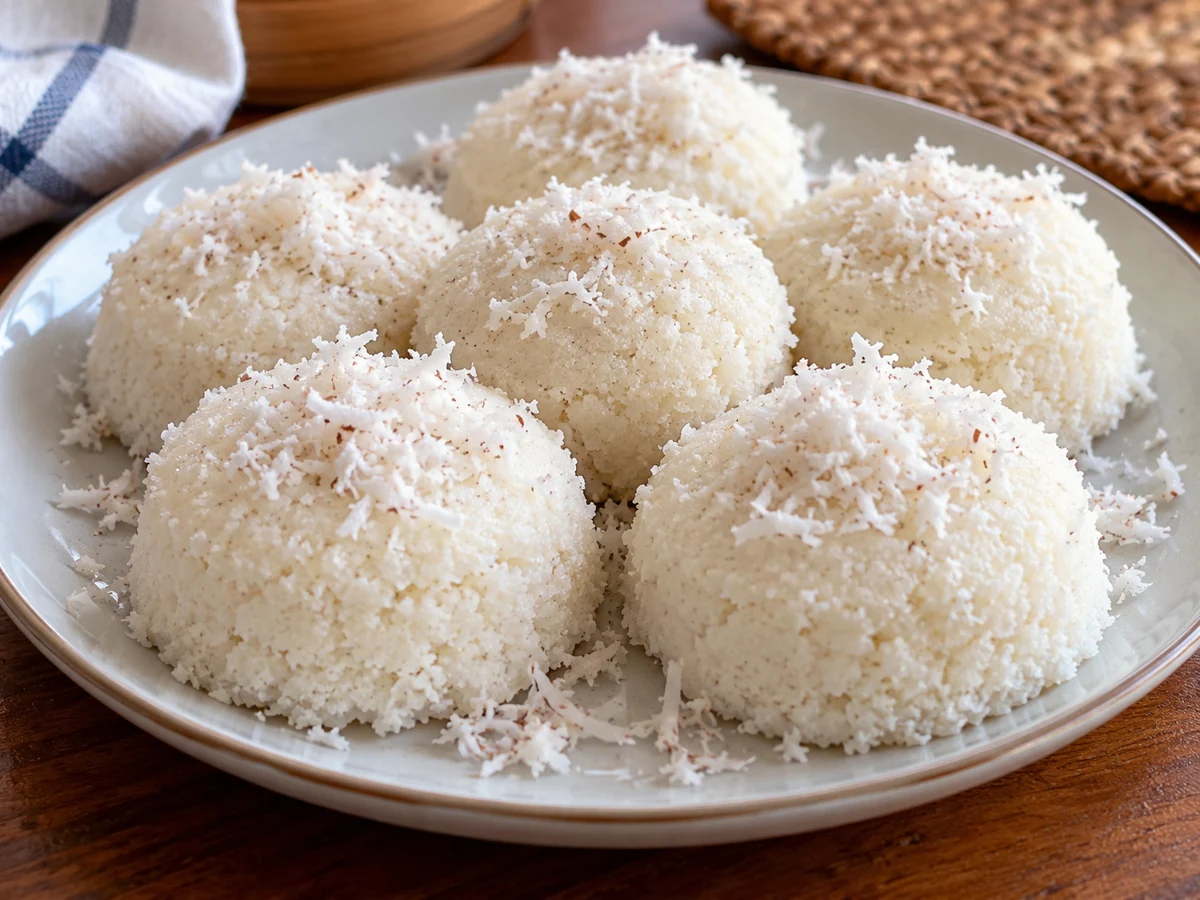
Lightly sweet steamed rice-and-coconut cakes, adapted here to small moulds in a domestic steamer.
Ingredients
- 250 g fine food-grade ground rice or fine rice semolina
- 100 g fresh food-grade grated coconut, including 30 g for finishing
- 70 g sugar
- 180–220 ml drinking water
- 1/2 teaspoon vanilla extract
- 1 small pinch salt
Preparation
Mix ground rice, sugar, salt and 70 g coconut. Gradually rub in vanilla and 180 ml water with clean fingers to obtain damp crumbs, not a liquid batter.
Hydrate for 20 minutes, then crumble. A squeezed handful should gather and fall apart easily. Add reserved water only if still completely dry.
Line small steam-resistant moulds with clean culinary muslin or suitable perforated baking paper. Fill without compressing hard, leaving steam room to circulate.
Bring steamer water to a simmer below the moulds. Place them in the basket and cover while limiting drips directly onto the cakes.
Steam for 20–25 minutes depending on mould size. Check water safely and taste a cooled piece: rice must not feel dry or chalky; extend if needed.
Rest for 3 minutes off the heat, unmould gently and scatter with the reserved 30 g coconut. Serve warm with tea.
Refrigerate unserved portions promptly in a clean box and eat the following day. Steam again until the centre is thoroughly hot.
Introduction
Traditional vendors use a kola and cylindrical moulds; this version adapts the steam principle to a kitchen basket. The mixture is damp and crumbly, not pourable cake batter. Rice grain size affects hydration, and heavy compression can prevent even steam circulation.
Hydration is assessed with a squeezed handful: it gathers yet breaks apart easily. A sticky paste suggests water entered too fast, whereas powder that never gathers may need a small reserved addition. Fine ground rice, very powdery flour and coarse broken rice do not behave identically. Choose a clearly identified food product, and use the first batch to learn its absorption rather than adding water without observing. Line similar small moulds with clean culinary material and fill loosely; heavy compression prevents steam circulating evenly. Simmer water below, not touching, the moulds. Violent boiling increases splashes without guaranteeing better cooking. Check the water level safely, open the lid away from your face and avoid blocking steam outlets. Keep lid drips from soaking part of the cake. Let the moulds become manageable before lifting the liner gently. Sugar cannot repair a dry poutou: review hydration and steaming next time, while a waterlogged cake calls for checking initial water and condensation.
Cultural context
Context and identity are documented here: https://lexpress.mu/article/perfect-poutou. The measured amounts and small-batch method are a domestic formulation, not an exclusive origin claim or a universal family recipe.
Tips
Prepare the ingredients and utensils first, then follow the sequence to control the final texture.
Taste a small portion at serving temperature before adding optional seasoning to the entire batch.
Follow the stated storage conditions; a clean container alone does not make food shelf stable.
Variations
Keep the base unchanged for the first attempt. Change one optional flavour in a later batch, rather than changing quantities and technique together.
Accompaniments
Serve a small portion with the other elements of the meal or snack already prepared. Choose a lightly seasoned accompaniment or an unsweetened drink, and offer optional garnishes separately.
Nutrition notes
Rice supplies mostly starch; B vitamins and minerals depend on milling. Coconut adds fibre, fat and manganese. Added sugar remains present. This snack does not alone provide enough protein to constitute a complete meal.