Gâteau patate
Fried sweet-potato half-moon pastries filled with coconut, sugar and a measured touch of cardamom.
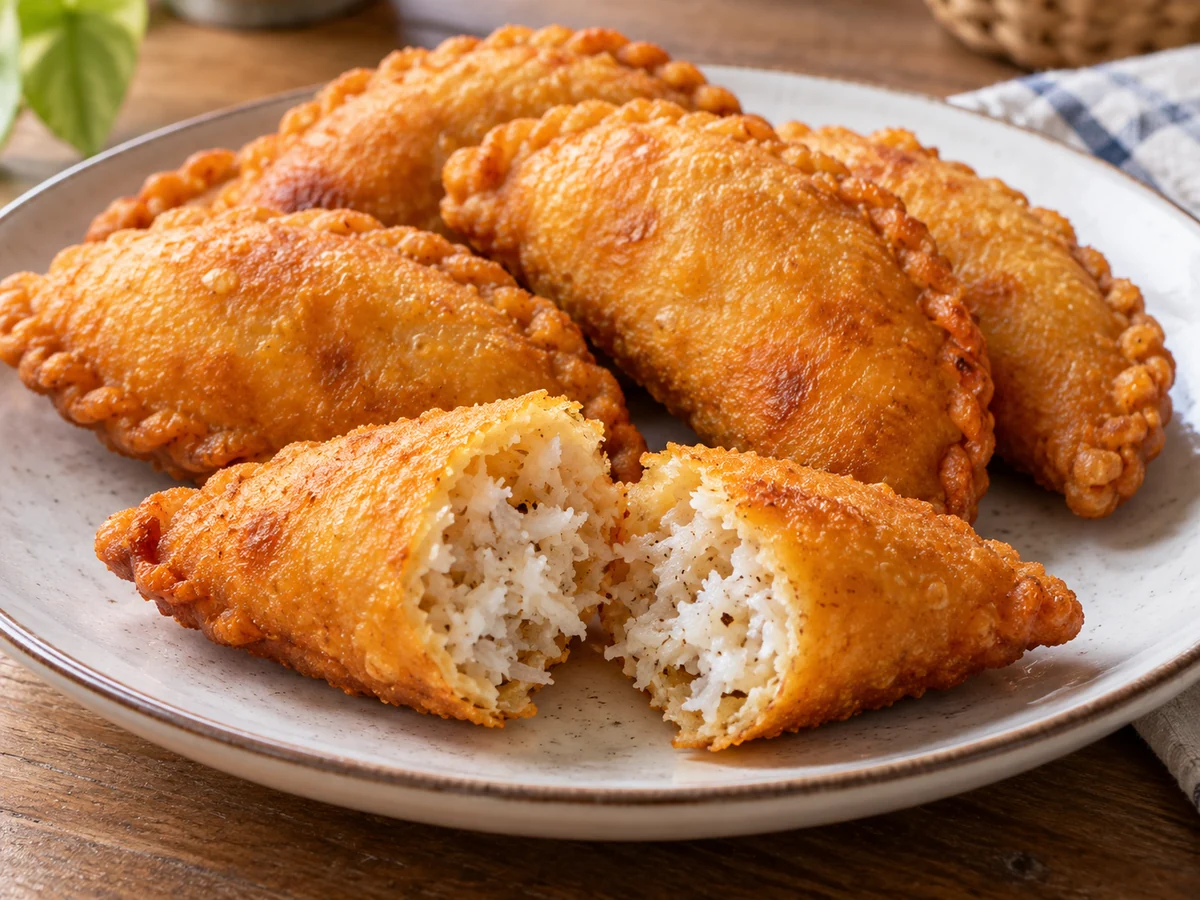
Ingredients
- 500 g peeled sweet potato
- 180–220 g wheat flour, plus 15 g for the worktop
- 100 g fresh food-grade grated coconut
- 60 g sugar
- 1/2 teaspoon ground cardamom
- 1 small pinch salt
- 800 ml neutral frying oil; absorption varies
Preparation
Cut sweet potato evenly and simmer for about 25 minutes until tender. Drain thoroughly, mash without adding water and cool completely.
Mix coconut, sugar and cardamom. Taste a little to ensure cardamom does not dominate, then refrigerate the filling.
Add salt and 180 g flour to cold mash. Mix and add only enough remaining flour for a soft dough that holds together.
Lightly flour the surface, divide into 12 and flatten each piece into a 10 cm disc about 3 mm thick. Add a small spoonful of filling.
Fold into half-moons, expel air around filling and firmly seal all edges. Keep the shaped pastries separate on a lightly floured surface.
Heat oil to about 170 °C in a stable pan no more than half full. Fry small batches for 4–5 minutes, turning, until cooked and golden.
Drain on a rack or paper and cool before tasting the hot filling. Serve the same day; refrigerate cooled unserved pastries and eat the next day.
Introduction
These are filled fried crescents rather than a baked sweet-potato cake. Cool and drain the mash before judging flour needs: warm wet mash encourages excess flour. Avoid overfilling, seal clean edges and inspect one cooled test pastry before frying the whole batch.
Moisture in the mash determines the flour adjustment. Drain cooked sweet potato well, mash without liquid and cool fully before judging the dough. Add the lower flour quantity first; using the whole range automatically can make a heavy wrapper. Work only until a soft dough forms, not for bread-like elasticity. Keep unused portions covered so their surface does not crust, and limit worktop flour: loose layers may scorch in the oil. Leave a clean border around a small filling portion, expel trapped air and seal without cracks. An overfilled crescent can open even when it looked generous before cooking. Fry only a few at once to maintain temperature and circulation. Never fill the oil pan more than halfway or add water to hot oil. Drain pastries without stacking immediately, so steam escapes rather than softening the crust. The sweet filling can remain burning hot after the outside feels manageable; cool a test piece before opening and tasting.
Cultural context
Context and identity are documented here: https://restaurants.mu/fr/recettes-maurice/gateau-patates. The measured amounts and small-batch method are a domestic formulation, not an exclusive origin claim or a universal family recipe.
Tips
Prepare the ingredients and utensils first, then follow the sequence to control the final texture.
Taste a small portion at serving temperature before adding optional seasoning to the entire batch.
Follow the stated storage conditions; a clean container alone does not make food shelf stable.
Variations
Keep the base unchanged for the first attempt. Change one optional flavour in a later batch, rather than changing quantities and technique together.
Accompaniments
Serve a small portion with the other elements of the meal or snack already prepared. Choose a lightly seasoned accompaniment or an unsweetened drink, and offer optional garnishes separately.
Nutrition notes
Sweet potato provides starch and variable carotenoids; coconut and flour add energy and fibre. Frying absorbs a variable amount of oil, not the full pan quantity. Sugar remains in the filling. Potassium does not turn this sweet into a treatment.