Rodriguan maize
Slowly cooked savoury fine maize meal, served separately beside beans and sauced dishes in a Rodriguan-style meal.
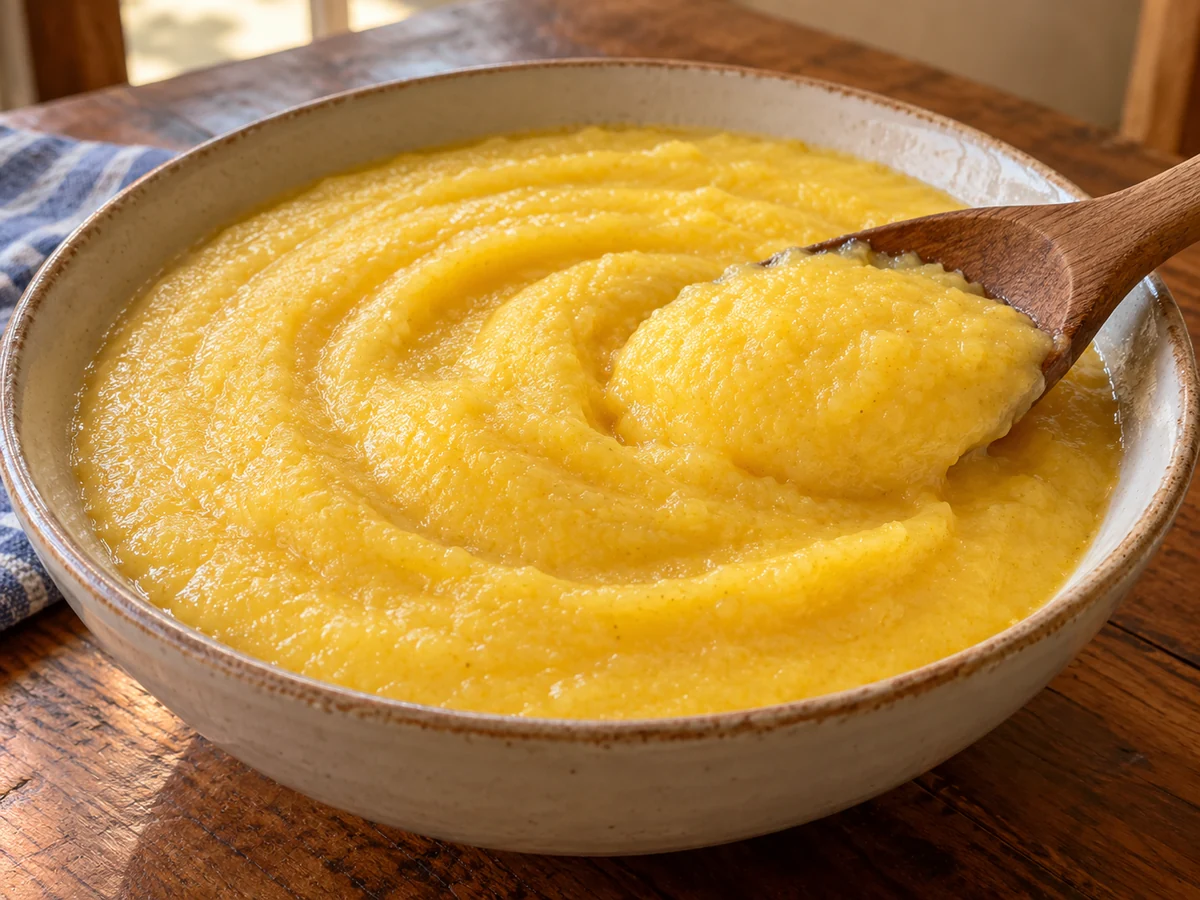
Ingredients
- 250 g fine non-instant maize meal
- 1 litre drinking water, plus 100–250 ml if needed
- 15 ml vegetable oil
- 4 g salt, adjusted to taste
- Black pepper, optional
Preparation
Read the maize packaging and its cooking time. Prepare a heavy pan, whisk and spatula; measure 1 litre water and keep extra water hot.
Bring water, salt and oil to a simmer. Lower the heat and sprinkle in maize meal while whisking to prevent large lumps.
Stir during the first minutes, then cook gently, scraping the base and corners regularly. Protect yourself from thick hot splashes.
Cook fine non-instant meal for 35–45 minutes, or follow its packaging. Add reserved hot water gradually if it stiffens before cooking through.
Taste a cooled spoonful: grains should no longer be hard or chalky. Adjust salt and retain a soft consistency suited to sauce.
Serve hot with separately prepared accompaniments. Refrigerate leftovers promptly in a shallow container; reheat thoroughly with a little water, stirring.
Introduction
The tourism office describes maize or rice with red beans. This recipe cooks maize alone and must not be confused with diri may, which combines rice and maize. Product grain size changes cooking time and water absorption; thickness alone does not prove doneness.
Fine meal, powdery flour and coarse cracked maize do not absorb water at the same speed. Check the actual product rather than applying one universal time. Sprinkle it into simmering water so each addition disperses before swelling; dumping it at once can trap dry centres inside wet lumps. A whisk helps initially, then a firm spatula reaches the thickened base and corners. Keep heat low: violent bubbling does not cook grain centres more evenly and creates hot splashes that cling to skin. Extra hot water replaces evaporation, especially in a wide pan. Add it gradually, stirring between additions, instead of surrounding a firm lump with water. Taste a slightly cooled spoonful to check for chalkiness. The deliberately simple seasoning leaves room for the flavour of beans, chilli and sauce served separately. The maize naturally firms on cooling; cut leftovers into smaller pieces and reheat with a little water rather than letting the edges dry over prolonged heat.
Cultural context
Context and identity are documented here: https://www.discover-rodrigues.com/news/gastronomy. The measured amounts and small-batch method are a domestic formulation, not an exclusive origin claim or a universal family recipe.
Tips
Prepare the ingredients and utensils first, then follow the sequence to control the final texture.
Taste a small portion at serving temperature before adding optional seasoning to the entire batch.
Follow the stated storage conditions; a clean container alone does not make food shelf stable.
Variations
Keep the base unchanged for the first attempt. Change one optional flavour in a later batch, rather than changing quantities and technique together.
Accompaniments
Serve a small portion with the other elements of the meal or snack already prepared. Choose a lightly seasoned accompaniment or an unsweetened drink, and offer optional garnishes separately.
Nutrition notes
Maize provides starch, fibre and variable B vitamins depending on milling, as well as minerals including magnesium. Beans served separately may add protein and fibre, but are not included in this recipe.