Green mango salad
Firm unripe mango gives a crunchy, tart salad with lime, onion and optional chilli.
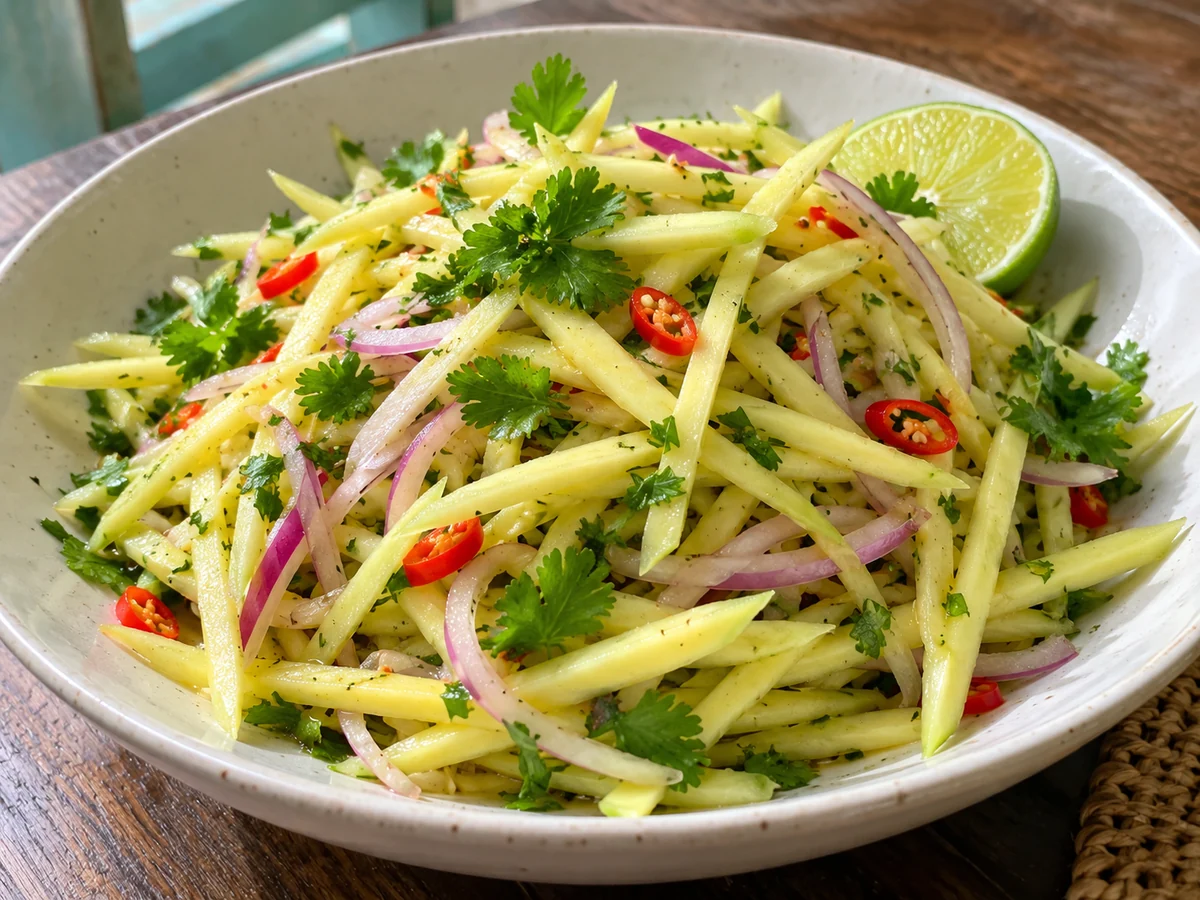
Ingredients
- 2 firm green mangoes, about 500 g flesh
- 1 small onion, 60 g
- 20 ml lime juice, adjusted after tasting
- 10 ml vegetable oil
- 2 tablespoons chopped coriander
- 1 small chilli, optional
- 3 g sugar, optional
- 2 g salt
Preparation
Wash mangoes before peeling. Place on a stable board, peel and cut the flesh away from either side of the stone.
Cut the flesh into thin matchsticks. Taste a strip to assess acidity and firmness and discard unpleasantly fibrous pieces.
Finely slice the onion, wash and dry coriander, and chop optional chilli with suitable protection for a strong variety.
Mix oil, salt and only 10 ml lime juice first. Add the optional sugar only if the mango needs a little rounding.
Combine mango, onion and coriander with the dressing. Taste, then add some of the remaining lime only if necessary.
Serve immediately, with strong chilli separate if preferred. Refrigerate any unserved portion and use on the same day.
Introduction
Look for firm, not merely green-skinned, fruit: skin colour alone does not establish maturity. This is an immediate raw salad rather than a spiced mango pickle. Reserve half the lime until tasting, since an already sour mango may need little additional acid.
Wash fruit before peeling so the knife does not carry dirt from skin to flesh. Remove large slabs around the stone on a stable board, then lay them flat before cutting matchsticks. Do not grate a slippery fruit down to the last piece near your fingers. The stated 500 g is usable flesh, not whole fruit with stone. If the flesh is very stringy, choose a more suitable mango rather than expecting dressing to correct its texture. Acidity varies substantially, so reserve half the lime and use the small optional sugar only to round a sharp edge, not to make jam. Finely sliced onion should not interrupt the mango’s crunch. Keep hot fish or curry separate until each plate is assembled; placing it on the whole salad would wilt the fruit. If a guest prefers less acidity, reserve a little undressed mango before mixing, rather than diluting the finished salad with water. Serve small fresh portions.
Cultural context
Context and identity are documented here: https://mauritiusnow.com/fr/blog/things-to-do/cuisine-mauricienne/. The measured amounts and small-batch method are a domestic formulation, not an exclusive origin claim or a universal family recipe.
Tips
Prepare the ingredients and utensils first, then follow the sequence to control the final texture.
Taste a small portion at serving temperature before adding optional seasoning to the entire batch.
Follow the stated storage conditions; a clean container alone does not make food shelf stable.
Variations
Keep the base unchanged for the first attempt. Change one optional flavour in a later batch, rather than changing quantities and technique together.
Accompaniments
Serve a small portion with the other elements of the meal or snack already prepared. Choose a lightly seasoned accompaniment or an unsweetened drink, and offer optional garnishes separately.
Nutrition notes
Mango contributes fibre and vitamin C, varying with variety and maturity. Minerals such as potassium occur in side-dish quantities. Optional sugar remains added sugar. This salad has no claimed therapeutic effect.