Pickled chillies
A small refrigerator batch of chillies in vinegar, served as a sharp condiment with Mauritian meals.
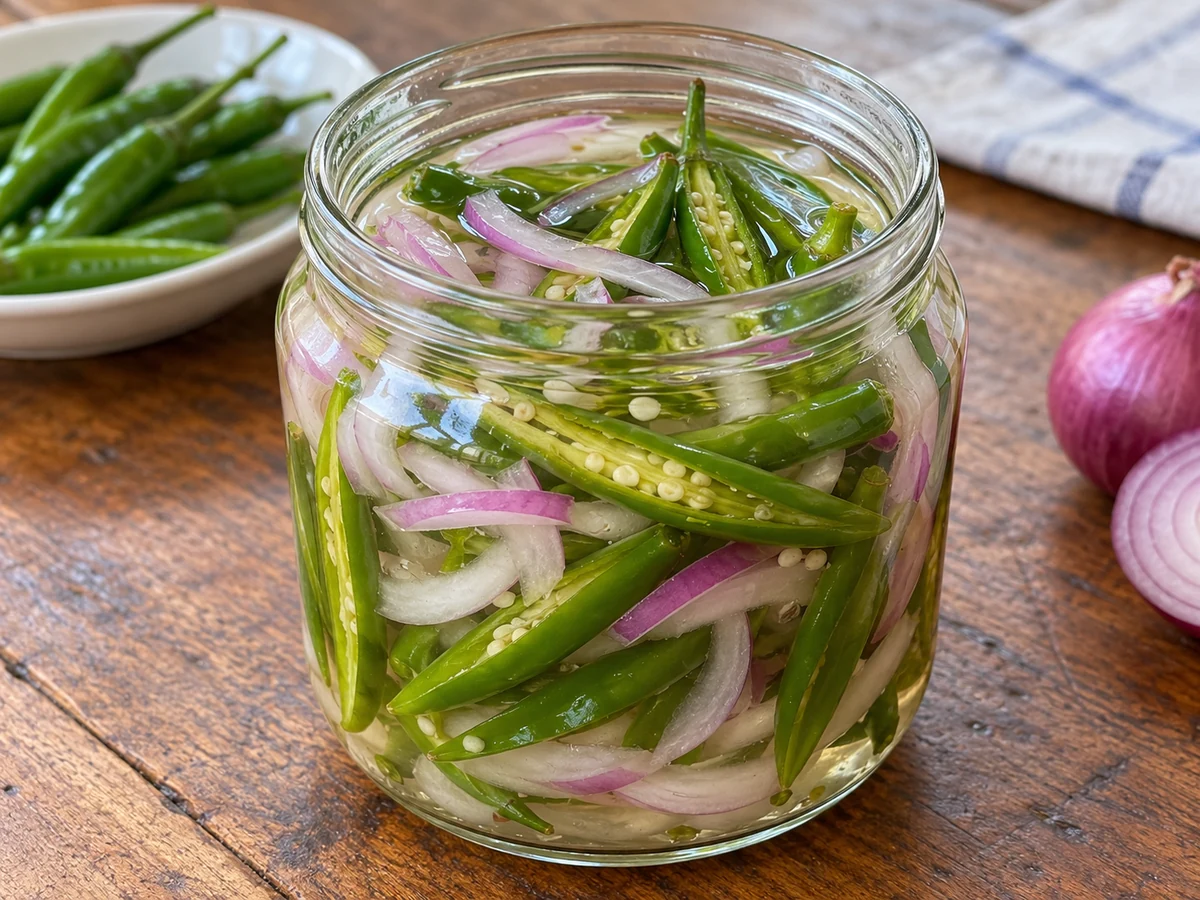
Ingredients
- 100 g firm fresh green or red chillies
- 150 ml white wine vinegar with 5% acidity
- 100 ml drinking water
- 1 small carrot, 80 g
- 1 small onion, 60 g
- 1 garlic clove
- 5 g fresh ginger
- 5 g sugar
- 3 g salt
Preparation
Prepare a clean small container and lid. Wash and dry the vegetables; wear gloves when cutting strong chillies and avoid touching your eyes.
Peel and cut the carrot into thin sticks. Slice onion, garlic and ginger; remove chilli stems and slit the chillies without crushing their seeds.
Bring vinegar, water, sugar and salt to a simmer. Dissolve the grains, add carrot, onion, garlic and ginger and simmer for 3 minutes.
Add the chillies for 2 more minutes, just to soften them. Transfer with their liquid into a clean heat-resistant container.
Let the strongest heat subside briefly, then refrigerate as soon as the container can safely be placed there. Cover; this is not sterilisation.
Rest in the refrigerator for at least 30 minutes. Serve with a clean spoon, keep the remainder refrigerated and use within 3 days.
Introduction
This quick vinegar preparation is not a shelf-stable preserve or a long traditional fermentation. Do not add oil or dilute the measured vinegar further. Chilli heat varies by variety; choose a familiar moderate type for the first batch. A clean jar does not remove the need for refrigeration.
Carrot sticks should be uniform so they soften during the short simmer without forcing longer cooking of the aromatics. Onion becomes supple, while sliced garlic distributes through the liquid without immediately making it cloudy. The carrot does not neutralise chilli heat. Removing some internal membranes can reduce pungency but does not make it predictable. Let the container size suit the vegetables rather than compressing everything into a narrow jar. Do not top up an older remainder with new raw chillies. Taste a small piece with rice or bread, since the condiment is not meant to be eaten by the spoonful. Heat can spread into the liquid during resting, so the first taste does not fully predict the next day’s strength. Keep a dedicated clean spoon for the table, promptly return the remainder to the refrigerator, and discard the whole batch if an abnormal change appears. Do not reuse the liquid for raw meat or fish.
Cultural context
Context and identity are documented here: https://mauritiusnow.com/fr/blog/things-to-do/cuisine-mauricienne/. The measured amounts and small-batch method are a domestic formulation, not an exclusive origin claim or a universal family recipe.
Tips
Prepare the ingredients and utensils first, then follow the sequence to control the final texture.
Taste a small portion at serving temperature before adding optional seasoning to the entire batch.
Follow the stated storage conditions; a clean container alone does not make food shelf stable.
Variations
Keep the base unchanged for the first attempt. Change one optional flavour in a later batch, rather than changing quantities and technique together.
Accompaniments
Serve a small portion with the other elements of the meal or snack already prepared. Choose a lightly seasoned accompaniment or an unsweetened drink, and offer optional garnishes separately.
Nutrition notes
The small condiment portion contributes limited vitamin C, carotenoids and minerals. Heat affects some vitamins. Salt and chilli call for a measured serving; this is neither a vegetable portion nor a treatment.