Mazavaroo chilli paste
This cooked mazavaroo combines red chilli, garlic and ginger in a small batch kept refrigerated.
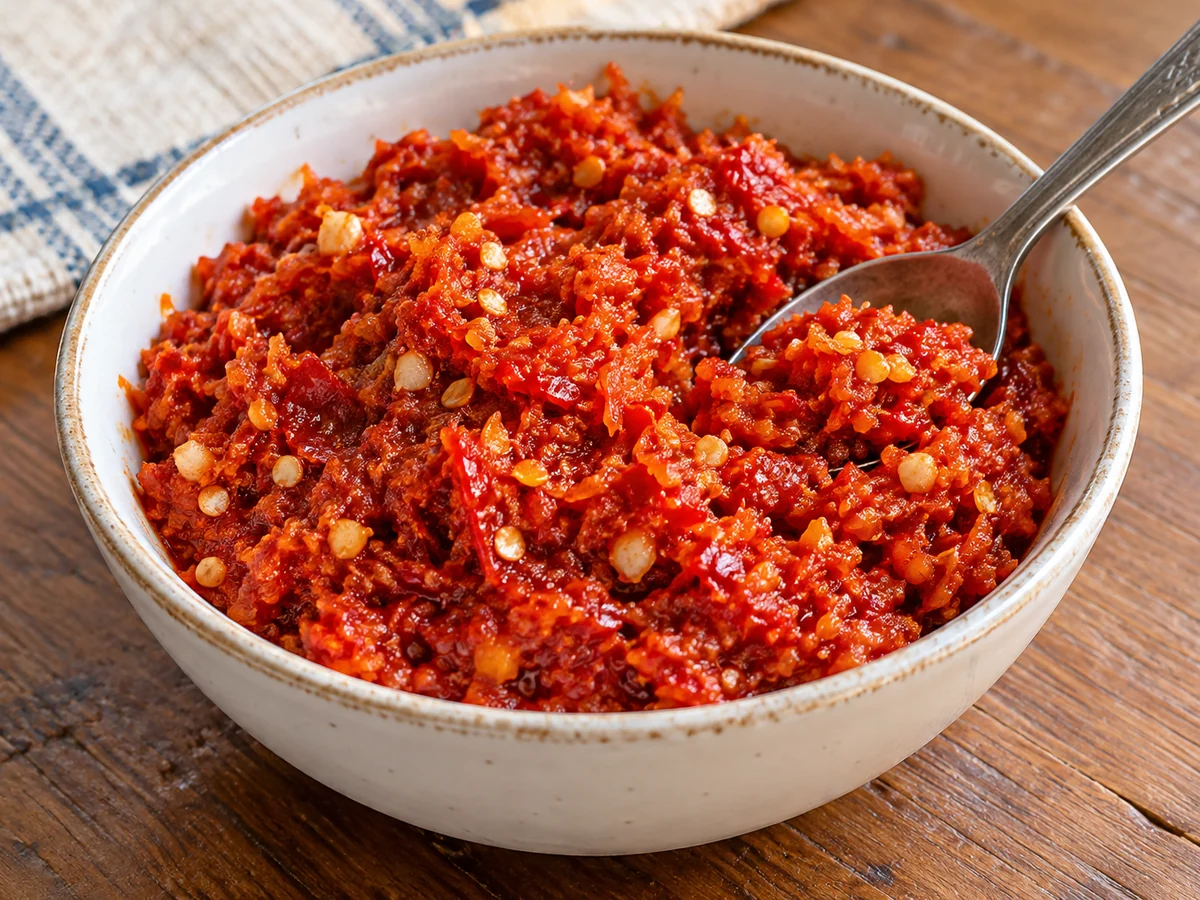
Ingredients
- 200 g fresh red chillies, prepared wearing gloves
- 100 g deseeded red sweet pepper
- 20 g minced garlic
- 20 g grated fresh ginger
- 30 ml vegetable oil
- 50 ml food vinegar with 5% acidity
- 3 g salt, then adjust when serving
Preparation
Wear gloves, wash chillies and sweet pepper and trim stalks and damaged parts. Deseed sweet pepper; remove some chilli membranes if desired. Prepare garlic and ginger.
Chop chillies, sweet pepper, garlic and ginger by knife or short processor pulses. Keep your face away from the bowl and avoid splashes.
Warm 30 ml oil over low heat, add the chopped mixture and cook for 8 minutes, stirring regularly, with ventilation and a partly open lid.
Add 50 ml vinegar and 3 g salt. Cook gently for 5–8 minutes to a thick paste, without letting it stick or burn.
Transfer to a clean shallow container, cool promptly and refrigerate. Serve tiny amounts, keep chilled and preferably use within two days; do not add oil for room-temperature storage.
Introduction
This cooked mazavaroo combines red chilli, garlic and ginger in a small batch kept refrigerated.
This is a quick refrigerated condiment, not a shelf-stable preserve or a controlled fermentation. Vinegar, salt and oil do not establish a safe room-temperature storage life. Make a small batch, use a clean container, date it and keep it refrigerated. An extra covering of oil does not change that requirement.
Drain and dry washed produce with a clean food-safe cloth or paper. Do not dry it outdoors in the sun or use equipment not intended for food. Warm the measured oil and spices gently, without scorching. Mustard is an allergen and its heat is different from chilli. Chilling allows the seasoning to spread; it is not proof of preservation. Use a clean spoon, serve only a small bowl and return the remaining container to the fridge. Preferably use within two days, and discard the whole batch if the cold chain is uncertain or mould appears.
Cultural context
Restaurants.mu lists mazavaroo among Mauritian meal condiments. This version chooses a cooked red paste with sweet pepper and no shrimp or fish; other versions differ. Source: https://restaurants.mu/mauritius-recipes/category/chutney-and-pickle-recipes
Tips
Chilli variety controls strength more than red colour; the stated sweet pepper is an explicit softening choice, not a universal formula. Check quality before cutting; seasoning cannot restore a spoiled ingredient.
Wear gloves, avoid touching face or clean handles and remember that membranes, not seeds alone, contribute heat. Keep the stated prepared weight so the written proportions remain reproducible.
Chop before cooking and shorten ginger fibres; use drained sweet pepper so excess rinse water does not prolong reduction. Observe the pieces as well as the timer and use gentle, controlled movements.
Ventilate, keep the face away from chilli steam and stir the thickening paste from the bottom over low heat. Correct gradually rather than adding a large unmeasured amount of liquid or spices.
A spoonable paste needs no free oil cover; measured vinegar gives flavour but does not validate weeks of room-temperature storage. Choose portions in relation to the whole meal and leave optional garnishes separate.
Offer tiny portions with a dedicated spoon and warn diners about heat; any seafood variation changes the declared ingredients and allergens. Keep adaptations clearly named and use clean utensils for handling and serving.
Variations
Follow the base recipe on the first attempt. A different variety or cut can change water needs and cooking time; judge the texture instead of following the timer blindly.
Accompaniments
Serve a small portion within a composed meal, with rice or flatbread prepared separately. Add another element with a different texture and offer extra chilli on the side. Accompaniments are not included in the ingredient list.
Nutrition notes
Vegetables supply fibre and micronutrients that vary with variety, peeling and cooking. Depending on the ingredients, these include B vitamins, vitamin C or carotenoids, and potassium. Oil supplies fat; declare mustard whenever present. No numerical nutrition estimate is calculated here. Actual portions, added salt and accompanying foods determine the meal’s composition. These are culinary observations, without therapeutic promises.