Coriander satini
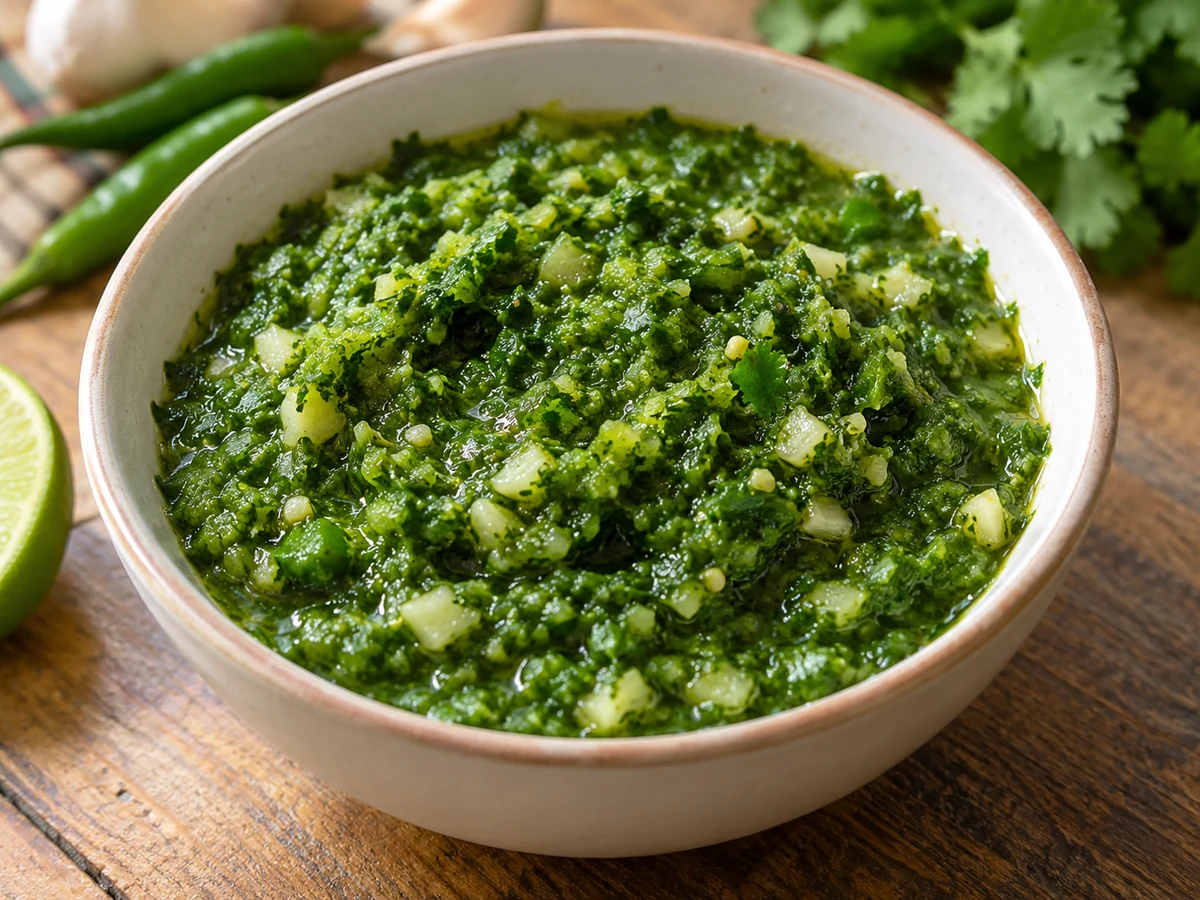
A green satini with coriander leading a small tomato, onion and garlic base.
Ingredients
- 80 g washed and dried fresh coriander
- 250 g chopped ripe tomatoes
- 60 g sliced onion
- 8 g minced garlic
- 3 g fresh chilli, optional
- 15 ml fresh lime juice
- 2 g salt, then adjust when serving
Preparation
Sort coriander, remove roots and tough parts, wash thoroughly and dry. Weigh 80 g and cut tender stems into short pieces.
Wash, trim and chop tomatoes. Prepare onion, garlic and optional chilli. Put tomatoes and onion into a small processor first.
Pulse briefly to form a moist base. Add garlic and chilli, then coriander by handfuls using short pulses; stop and unplug before scraping.
Stir in 15 ml lime juice by hand. Refrigerate if needed; add salt only when serving and taste.
Serve small spoonfuls in a clean bowl the same day. Keep the rest covered and refrigerated rather than leaving the whole container on the table.
Introduction
A green satini with coriander leading a small tomato, onion and garlic base.
Keep the main fresh ingredient recognisable. A mortar gives an uneven texture; a small processor works faster but may heat or liquefy the mixture. Start with only part of the liquid and stop once the condiment can be spooned. A completely smooth puree is unnecessary.
Remove damaged herb leaves, wash with drinking water and dry well. Cut tender stems before blending. If the blades do not catch, stop and unplug the machine before scraping the bowl. Salt draws water from vegetables, so combine and season close to serving. Keep prepared ingredients refrigerated and preferably use the finished condiment the same day. Chilli and citrus are not preservation methods. Serve a small spoonful alongside rice, vegetables, flatbread or fish, allowing diners to adjust the heat. The stated yield means several small accompaniment portions, not individual bowls.
Cultural context
Mauritian Food Recipes presents coriander satini with tomato, onion and garlic. These quantities form a small home batch; lime juice is an explicit adjustment here. Source: https://mauritianfoodrecipes.com/all-recipes/coriander-chutney-satini-cotomili/
Tips
Weigh trimmed coriander leaves and tender stems rather than counting bunches that vary in size and root content. Check quality before cutting; seasoning cannot restore a spoiled ingredient.
Remove sand carefully and dry the herbs after washing; wet or damaged leaves dilute and spoil the fresh character. Keep the stated prepared weight so the written proportions remain reproducible.
Chop tender stems before short pulses and start with tomato and onion moisture, avoiding a heated, overprocessed paste. Observe the pieces as well as the timer and use gentle, controlled movements.
Keep raw garlic measured so coriander remains dominant; lime gives freshness but is neither blending water nor a preservative. Correct gradually rather than adding a large unmeasured amount of liquid or spices.
Salt just before serving and taste on rice or farata; a slightly grainy green paste is sufficient without perfect smoothness. Choose portions in relation to the whole meal and leave optional garnishes separate.
Reserve a chilli-free portion before blending if needed, use clean spoons and make this moist herb condiment for the same day. Keep adaptations clearly named and use clean utensils for handling and serving.
Variations
Follow the base recipe on the first attempt. A different variety or cut can change water needs and cooking time; judge the texture instead of following the timer blindly.
Accompaniments
Serve a small portion within a composed meal, with rice or flatbread prepared separately. Add another element with a different texture and offer extra chilli on the side. Accompaniments are not included in the ingredient list.
Nutrition notes
Vegetables supply fibre and micronutrients that vary with variety, peeling and cooking. Depending on the ingredients, these include B vitamins, vitamin C or carotenoids, and potassium. Oil supplies fat; declare mustard whenever present. No numerical nutrition estimate is calculated here. Actual portions, added salt and accompanying foods determine the meal’s composition. These are culinary observations, without therapeutic promises.