Quick lemon achards
Precooked lemon pieces make a quick refrigerated achard, distinct from fermented or long-preserved lemons.
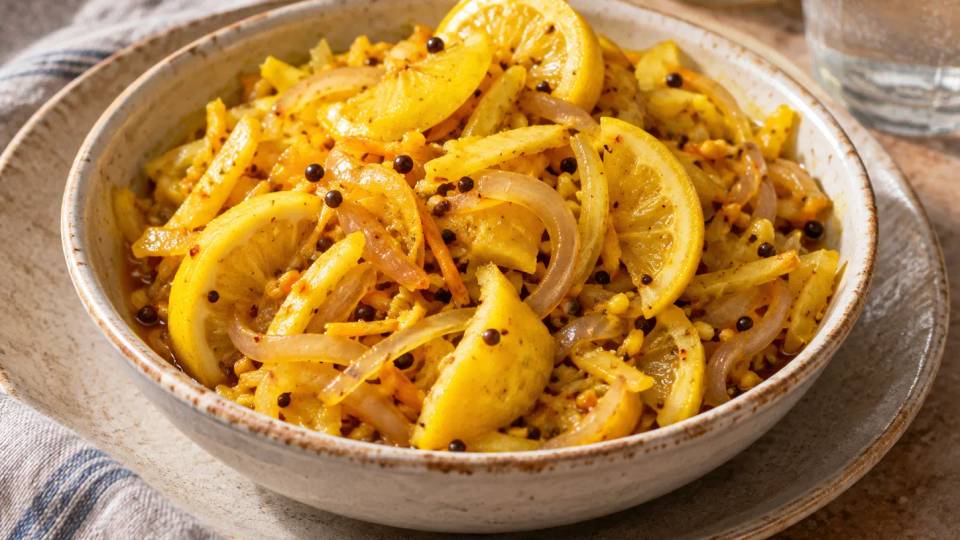
Ingredients
- 400 g well-washed thin-skinned lemons
- 60 g sliced onion
- 10 g minced garlic
- 10 g grated fresh ginger
- 25 ml vegetable oil
- 8 g coarsely crushed mustard seeds
- 2 g ground turmeric
- 50 ml food vinegar with 5% acidity
- 3 g salt, then adjust when serving
- 3 g fresh chilli, optional
Preparation
Wash 400 g lemons, place in water and simmer gently for 15–20 minutes until the skin starts softening without the fruit falling apart.
Drain, cool briefly and cut into small pieces, removing seeds. Pat dry and prepare onion, garlic and ginger with clean utensils.
Crush mustard and mix with turmeric and 20 ml vinegar. Heat oil, soften onion for 3 minutes and add garlic, ginger and optional chilli for 1 minute.
Stir mustard paste into the pan for 30 seconds. Add lemon pieces, salt and the remaining 30 ml vinegar; fold gently for 2 minutes and turn off heat.
Spread in a shallow container, cool promptly and refrigerate for at least 1 hour. Serve small portions, keep refrigerated and preferably use within two days.
Introduction
Precooked lemon pieces make a quick refrigerated achard, distinct from fermented or long-preserved lemons.
This is a quick refrigerated condiment, not a shelf-stable preserve or a controlled fermentation. Vinegar, salt and oil do not establish a safe room-temperature storage life. Make a small batch, use a clean container, date it and keep it refrigerated. An extra covering of oil does not change that requirement.
Drain and dry washed produce with a clean food-safe cloth or paper. Do not dry it outdoors in the sun or use equipment not intended for food. Warm the measured oil and spices gently, without scorching. Mustard is an allergen and its heat is different from chilli. Chilling allows the seasoning to spread; it is not proof of preservation. Use a clean spoon, serve only a small bowl and return the remaining container to the fridge. Preferably use within two days, and discard the whole batch if the cold chain is uncertain or mould appears.
Cultural context
L’Express mentions lemon achards among Mauritius’s appreciated condiments. Precooking and these quantities are a quick home adaptation, without a traditional fermentation or room-temperature preservation claim. Source: https://lexpress.mu/article/267068/gastronomie-insulaire-12-peches-mignons-mauriciens
Tips
Use well-washed thin-skinned lemons; thick white pith contributes bitterness that extra salt or sugar will not reliably remove. Check quality before cutting; seasoning cannot restore a spoiled ingredient.
Simmer only until skin starts softening, drain away cooking water and cool enough for safe cutting before proceeding. Keep the stated prepared weight so the written proportions remain reproducible.
Remove every visible seed and cut spoon-sized quarters; fold tender skins gently so the pulp does not all collapse. Observe the pieces as well as the timer and use gentle, controlled movements.
Lemon juice and vinegar combine; taste after chilling and keep oil measured instead of filling the container with it. Correct gradually rather than adding a large unmeasured amount of liquid or spices.
Quick precooked lemon is not fermented lemon; cold resting does not create a validated transformation or weeks of preservation. Choose portions in relation to the whole meal and leave optional garnishes separate.
Offer tiny portions with mild food and identify mustard; uncertain cold handling or mould means discarding the whole preparation. Keep adaptations clearly named and use clean utensils for handling and serving.
Variations
Follow the base recipe on the first attempt. A different variety or cut can change water needs and cooking time; judge the texture instead of following the timer blindly.
Accompaniments
Serve a small portion within a composed meal, with rice or flatbread prepared separately. Add another element with a different texture and offer extra chilli on the side. Accompaniments are not included in the ingredient list.
Nutrition notes
Vegetables supply fibre and micronutrients that vary with variety, peeling and cooking. Depending on the ingredients, these include B vitamins, vitamin C or carotenoids, and potassium. Oil supplies fat; declare mustard whenever present. No numerical nutrition estimate is calculated here. Actual portions, added salt and accompanying foods determine the meal’s composition. These are culinary observations, without therapeutic promises.