Mauritian red beans
Cooked red beans simmer in a thyme and tomato sauce, served separately from rice.
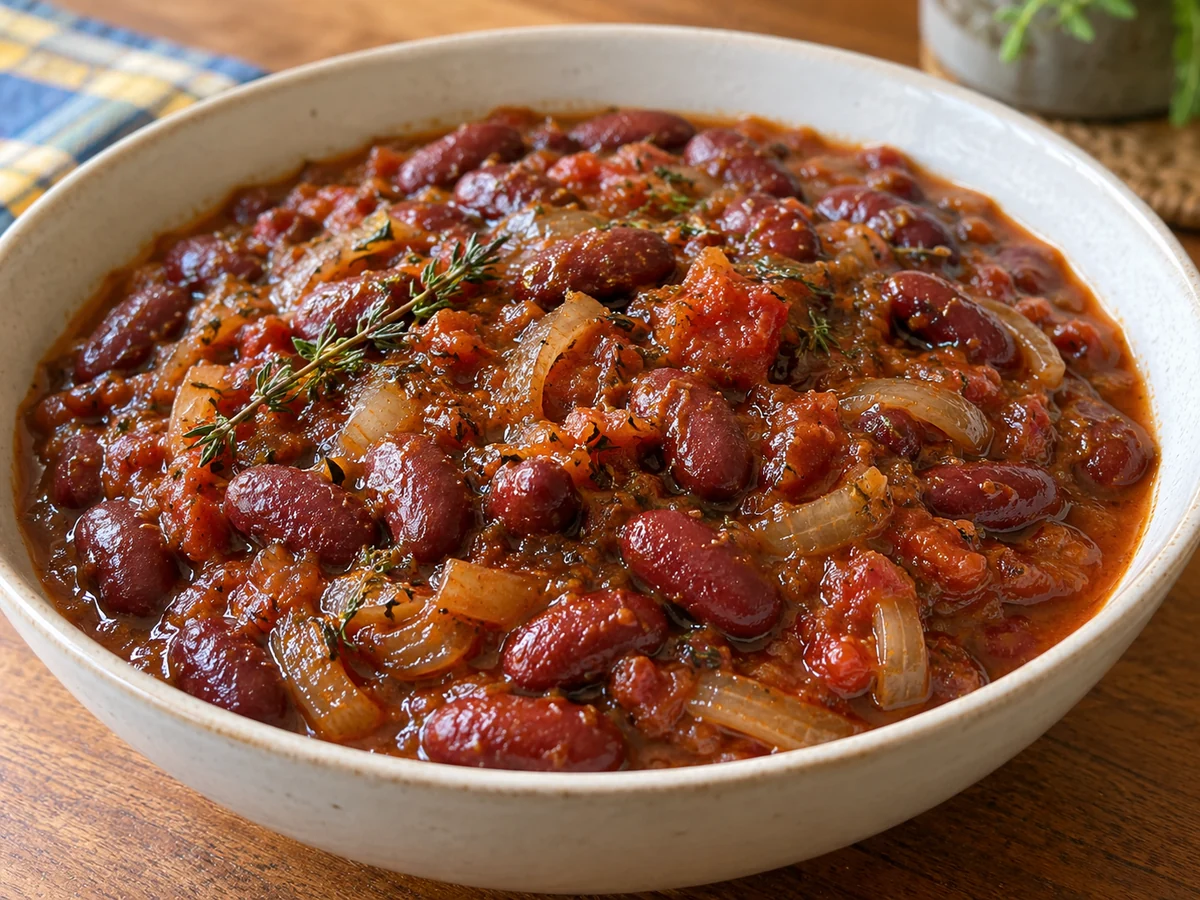
Ingredients
- 750 g canned cooked red kidney beans, rinsed and drained
- 150 g sliced onion
- 10 g minced garlic
- 25 ml vegetable oil
- 350 g chopped ripe tomatoes
- 200 ml drinking water
- 2 g thyme leaves
- 2 g salt, then adjust when serving
- 2 g ground black pepper
Preparation
Rinse canned cooked red beans, drain and weigh 750 g. Slice onion, mince garlic, chop tomatoes and strip thyme leaves.
Heat 25 ml oil and soften onion for 7 minutes. Add garlic and thyme and stir for 1 minute without heavy browning.
Cook the tomatoes in the base for 8 minutes, stirring to soften. Add 200 ml water, then beans, salt and pepper.
Simmer gently for 15–20 minutes, stirring from the bottom. Mash two spoonfuls of beans with sauce and return them if a thicker texture is wanted.
Taste, adjust salt at the end and check the whole mixture is hot. Serve beans separately from rice and refrigerate leftovers promptly.
Introduction
Cooked red beans simmer in a thyme and tomato sauce, served separately from rice.
Use only canned cooked red kidney beans here. Rinse and drain them, and read the drained weight on the label. Dry beans are not a direct substitute: they require proper soaking and cooking, including a vigorous boil. Never put raw dry kidney beans into this short sauce or rely on gentle slow-cooking.
Soften the onion and cook the tomato before adding beans. Fold gently to keep skins intact. Mash a few beans with sauce and return them to the pan if a thicker texture is wanted; flour and cream are unnecessary. Adjust salt at the end because canned beans may already contain it. Stir from the bottom while reheating so the whole mixture becomes hot. Refrigerate leftovers promptly in a shallow container; cook and store any accompanying rice separately.
Cultural context
Mauritian Food Recipes features red beans with tomato and thyme. This version adjusts quantities for four and uses drained canned beans, without reusing the source’s nutrition figures. Source: https://mauritianfoodrecipes.com/all-recipes/red-kidney-beans-haricot-rouge/
Tips
Read drained weights and reject damaged cans or abnormal contents; the short recipe depends on beans already cooked. Check quality before cutting; seasoning cannot restore a spoiled ingredient.
Cooked canned beans need no further soaking; fold gently so skins stay mostly intact and use a few mashed beans for body. Keep the stated prepared weight so the written proportions remain reproducible.
Strip thyme from woody stems and keep the onion base soft; heavy garlic browning is not the aim here. Observe the pieces as well as the timer and use gentle, controlled movements.
Reduce tomato moisture before adding beans, so sauce thickness does not require prolonged bean cooking and broken skins. Correct gradually rather than adding a large unmeasured amount of liquid or spices.
Serve beans, rice, vegetables and a fresh condiment separately so each component can be chosen in a suitable portion. Choose portions in relation to the whole meal and leave optional garnishes separate.
Cool leftovers in small shallow containers and store rice separately; reheat beans with a little water rather than long boiling. Keep adaptations clearly named and use clean utensils for handling and serving.
Variations
Follow the base recipe on the first attempt. A different variety or cut can change water needs and cooking time; judge the texture instead of following the timer blindly.
Accompaniments
Serve a small portion within a composed meal, with rice or flatbread prepared separately. Add another element with a different texture and offer extra chilli on the side. Accompaniments are not included in the ingredient list.
Nutrition notes
Vegetables supply fibre and micronutrients that vary with variety, peeling and cooking. Depending on the ingredients, these include B vitamins, vitamin C or carotenoids, and potassium. Oil supplies fat; declare mustard whenever present. No numerical nutrition estimate is calculated here. Actual portions, added salt and accompanying foods determine the meal’s composition. These are culinary observations, without therapeutic promises.