Potato curry
Tender potatoes in a short curry sauce, served with pulses and a fresh condiment.
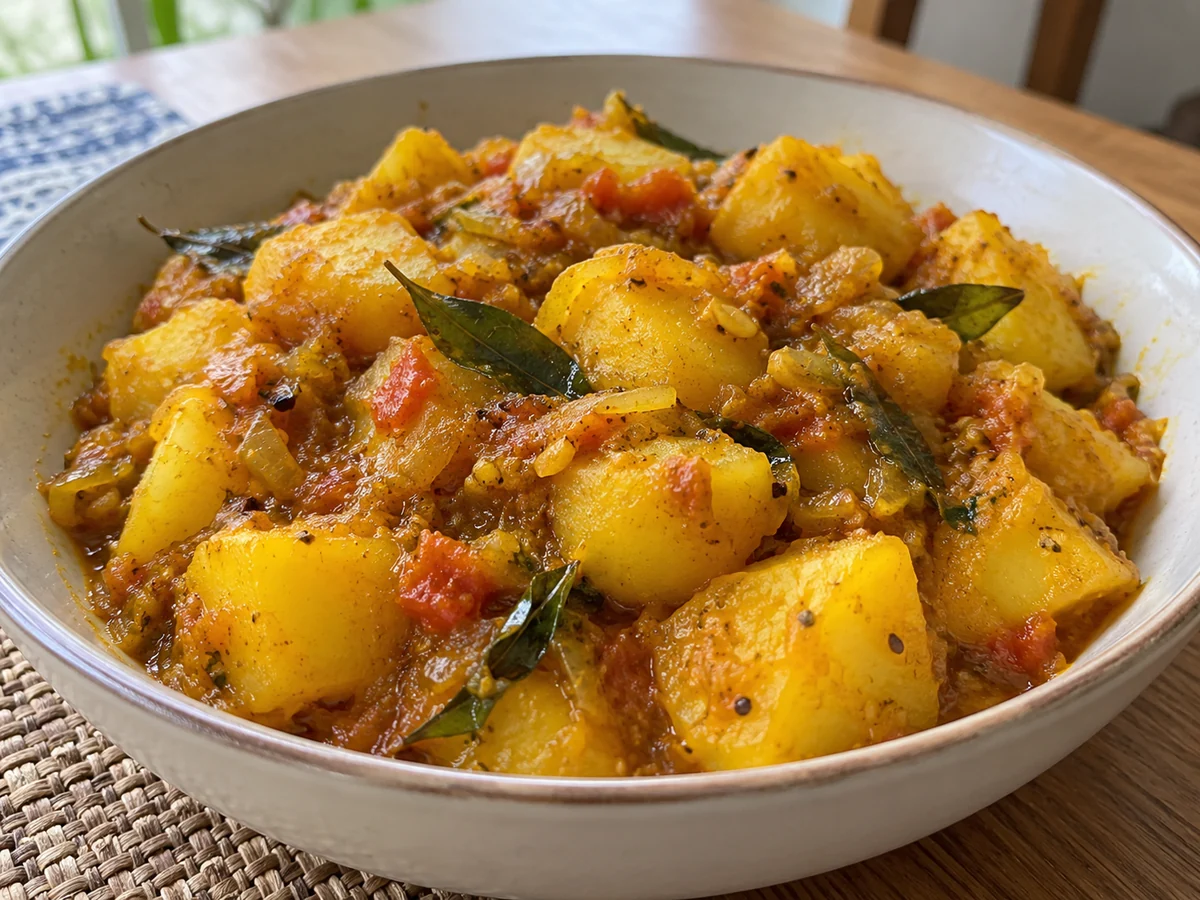
Ingredients
- 900 g peeled potatoes
- 150 g sliced onion
- 10 g minced garlic
- 10 g grated fresh ginger
- 25 ml vegetable oil
- 10 g mild curry powder, without added salt
- 2 g ground turmeric
- 200 g chopped ripe tomatoes
- 350 ml drinking water
- 3 g washed curry leaves
- 4 g salt, then adjust when serving
- 3 g fresh chilli, optional
Preparation
Peel the potatoes, remove green areas and sprouts and weigh 900 g sound flesh. Cut into 2–3 cm cubes, rinse and drain. Prepare aromatics and tomatoes.
Heat the oil and cook onion for 6 minutes. Add garlic, ginger and curry leaves for 1 minute without burning the garlic.
Mix curry powder and turmeric with 50 ml measured water. Heat for 30 seconds, add tomatoes and stir for 5 minutes to form a soft base.
Add potatoes, salt, optional chilli and the remaining 300 ml water. Cover and simmer for 20–30 minutes until a knife enters the centre easily.
Mash two or three cubes into the sauce if a thicker texture is wanted. Reduce uncovered for 3 minutes if needed, taste and serve hot without mashing every piece.
Introduction
Tender potatoes in a short curry sauce, served with pulses and a fresh condiment.
Cook the aromatic base before the vegetable. Soften the onion first, add garlic and ginger briefly, then moisten the curry powder and turmeric with measured water. This prevents dry spices from scorching. Use a broad pan and fold the pieces gently. Cover to soften them, then uncover only if the liquid needs reducing. Add hot water in small amounts rather than flooding the dish.
Test a piece with a knife and taste it after cooling slightly. If the vegetable is tender before the sauce thickens, lift it out and reduce the sauce separately. Refrigerate leftovers promptly in a shallow covered container and reheat only the portion required until hot throughout. Rice or flatbread is a separate accompaniment, not an ingredient of this vegetable curry.
Cultural context
Mauritius Now presents the island’s cuisine as a meeting of traditions. This home potato curry illustrates a vegetarian preparation; the tourism source does not prescribe these quantities. Source: https://mauritiusnow.com/fr/blog/things-to-do/cuisine-mauricienne/
Tips
Select sound potatoes without extensive greening or heavy sprouting, and cut evenly before starting the aromatic base. Check quality before cutting; seasoning cannot restore a spoiled ingredient.
Drain any brief holding water; use fresh measured water for cooking so curry concentration remains predictable. Keep the stated prepared weight so the written proportions remain reproducible.
Finely grate ginger to avoid fibres and add garlic after the onion so it does not scorch. Observe the pieces as well as the timer and use gentle, controlled movements.
Keep a gentle simmer; vigorous boiling breaks edges before the centre is tender and thickens the sauce too early. Correct gradually rather than adding a large unmeasured amount of liquid or spices.
Thicken with a few mashed cooked cubes only at the end, choosing the final consistency for the accompaniment. Choose portions in relation to the whole meal and leave optional garnishes separate.
Potatoes absorb sauce while standing; restore reheated texture with water, and vary the meal with vegetables and pulses. Keep adaptations clearly named and use clean utensils for handling and serving.
Variations
Follow the base recipe on the first attempt. A different variety or cut can change water needs and cooking time; judge the texture instead of following the timer blindly.
Accompaniments
Serve a small portion within a composed meal, with rice or flatbread prepared separately. Add another element with a different texture and offer extra chilli on the side. Accompaniments are not included in the ingredient list.
Nutrition notes
Vegetables supply fibre and micronutrients that vary with variety, peeling and cooking. Depending on the ingredients, these include B vitamins, vitamin C or carotenoids, and potassium. Oil supplies fat; declare mustard whenever present. No numerical nutrition estimate is calculated here. Actual portions, added salt and accompanying foods determine the meal’s composition. These are culinary observations, without therapeutic promises.