Bread pudding
A soft oven-baked pudding of sound stale bread, milk, eggs, vanilla and optional raisins.
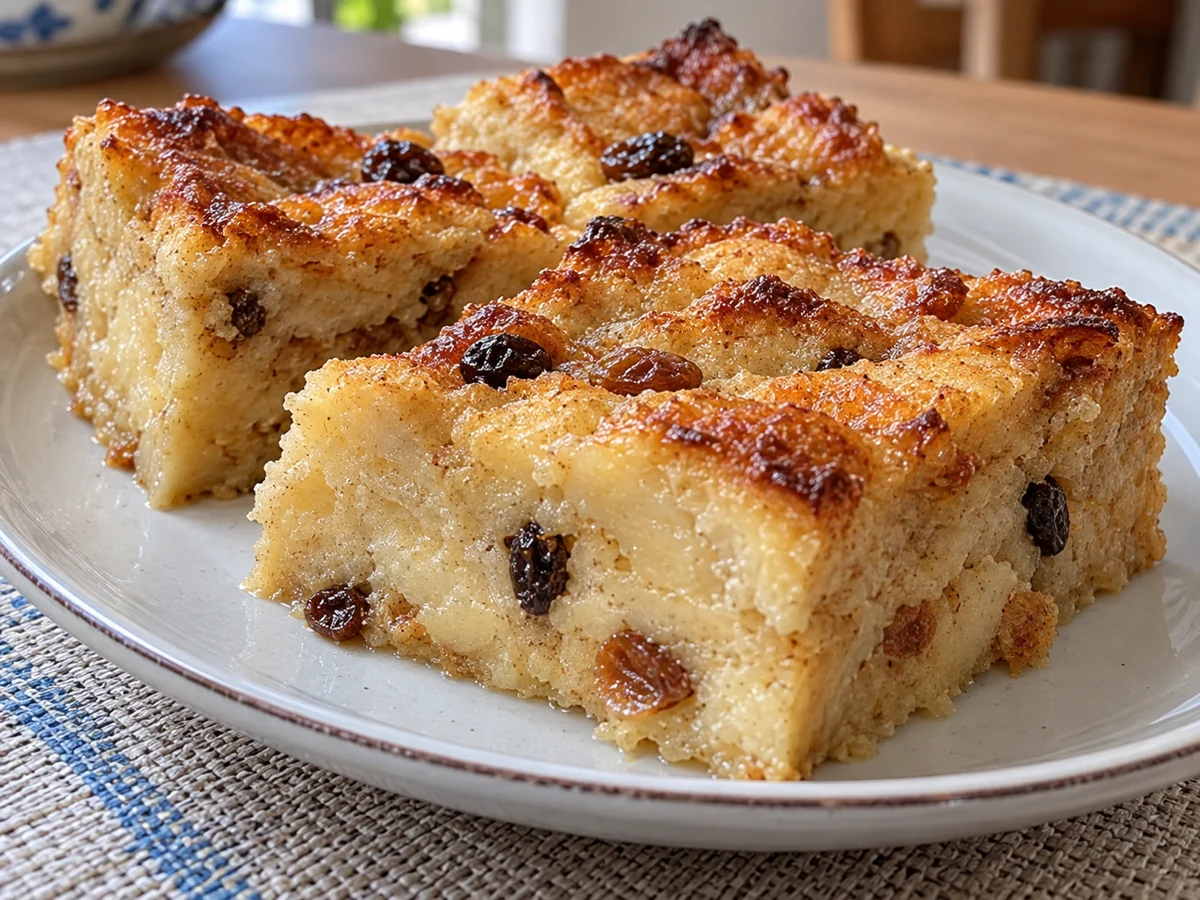
Ingredients
- 300 g sound stale bread without mould
- 750 ml milk
- 3 eggs
- 90 g sugar
- 60 g optional raisins
- 1 vanilla pod or 1 tsp vanilla extract
- 20 g butter for dish and surface
- 1/4 tsp optional cinnamon
- 1 small pinch salt
Preparation
Check bread is sound and cut into 2 cm cubes. Butter a 24 cm dish giving a pudding layer 3–4 cm deep.
Warm milk with vanilla, sugar and salt without boiling. Split and scrape a pod if used, then remove it after infusion.
Pour warm milk over bread and rest 30 min, stirring twice. Mash with a fork, leaving some pieces for rustic texture.
Preheat oven to 170 °C. Ensure bread mixture is no longer hot, then stir in separately beaten eggs, raisins and cinnamon.
Spread in the dish without compressing, keeping moderate depth. Scatter remaining butter in small pieces over the surface.
Bake 45–55 min until golden with a set centre and no liquid rising when gently tilted; protect if browning early.
Check at least 74 °C in the egg-based centre. Rest 20–30 min before cutting into eight portions.
Serve warm or rapidly cool portions for storage, then cover and refrigerate. Do not leave this dairy-and-egg dessert out all day.
Introduction
This is an original domestic formulation for a Mauritian recipe collection. The named local source documents the culinary context or an example, rather than certifying these exact quantities. Prepare the ingredients and serving dishes before heating the pan. Follow the described texture and thickness as well as the approximate time, because different products and equipment do not behave identically. Optional chilli is kept separate when diners prefer different heat levels. Use firm but sound bread; frying or baking does not recover mouldy food. Bread density changes absorption, so check the middle of soaked cubes before adding eggs. Cool the milk mixture enough to avoid irregular egg coagulation. A shallow dish lets the centre cook before the edges dry. Golden colour alone is not a doneness test. Resting helps portions hold together without extra flour. This domestic bread pudding is distinct from savoury pain frire and is not claimed as an exclusively Mauritian invention.
Cultural context
The local reference supports the dish or its culinary setting; it does not establish an exclusive origin or a single mandatory family recipe. The quantities here are an original home version, with the specific starting product and technique stated clearly. Reference: https://mauritiusnow.com/fr/blog/things-to-do/cuisine-mauricienne/
Tips
Use firm but sound bread; frying or baking does not recover mouldy food.
Bread density changes absorption, so check the middle of soaked cubes before adding eggs.
Cool the milk mixture enough to avoid irregular egg coagulation.
A shallow dish lets the centre cook before the edges dry.
Variations
A small amount of grated coconut can replace part of the raisins; name the variation.
Without raisins keep the same milk quantity; the pudding is simply less fruity.
Unsweetened plant drink changes texture, while eggs and bread still need to be considered.
Accompaniments
Serve a small portion with fresh fruit rather than automatically adding a sweet cream. The pudding already contains bread, milk and sugar. Let it cool enough for the vanilla to be apparent, and keep the portions not being served refrigerated. Use a clean knife and spoon when adding fruit or sauce, and bring out only what will be eaten promptly.
Nutrition notes
Bread supplies carbohydrate and variable fibre; milk and eggs contribute protein, calcium from milk and vitamins including B2 and B12. Sugar and raisins add sweetness, so serving size still matters. This dessert contains gluten, milk and egg. Check the bread and flavouring labels for other ingredients or traces. No exact nutrient values are invented without calculation for the products actually used.