Fish in coconut milk
White fish gently poached in coconut milk, tomato, turmeric and ginger sauce.
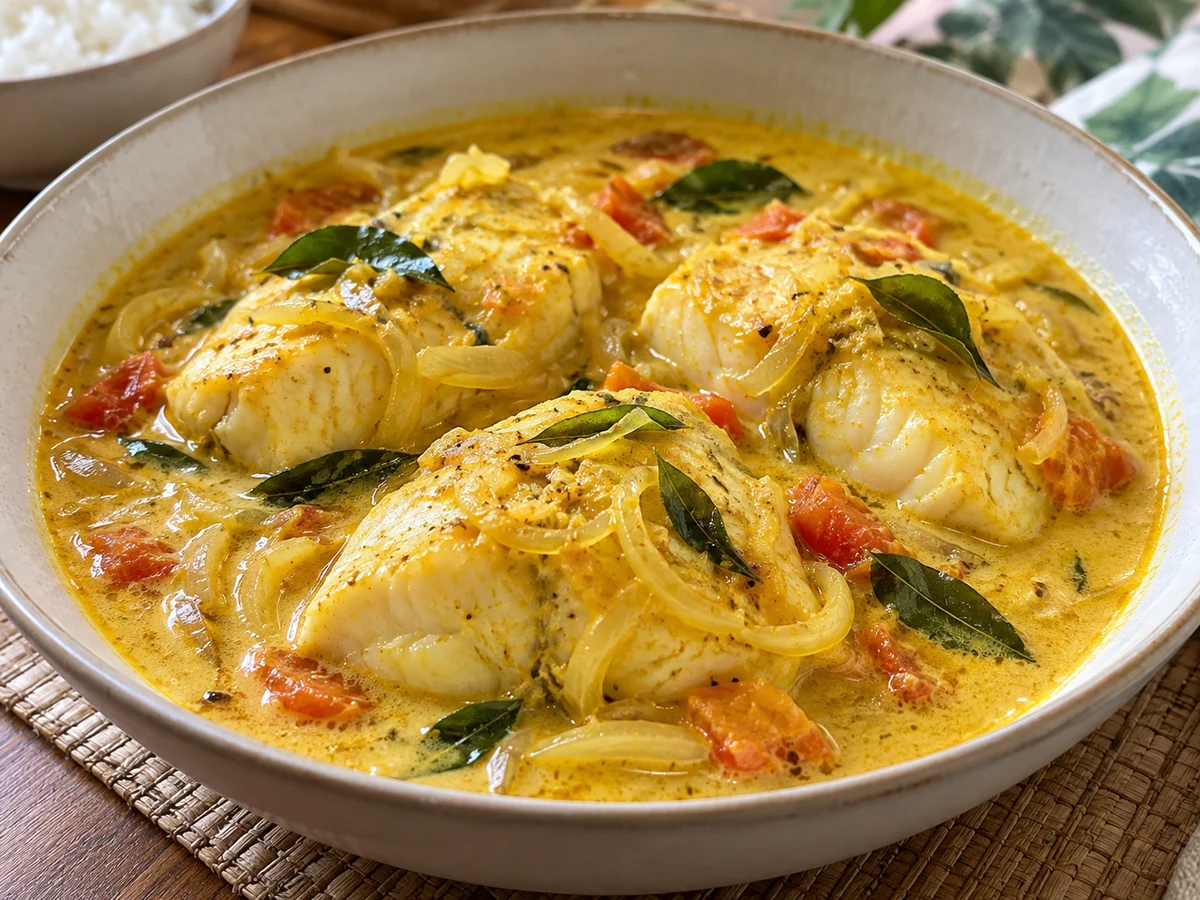
Ingredients
- 700 g firm white-fish fillet in 4 portions
- 300 ml unsweetened coconut milk
- 200 g chopped tomatoes
- 120 g sliced onion
- 2 chopped garlic cloves
- 15 g grated ginger
- 20 ml vegetable oil
- 1/2 tsp turmeric
- 4 optional curry leaves
- 100 ml hot water
- 1/2 tsp salt and 1/4 tsp pepper
- 1 lime
- 10 g chopped coriander
Preparation
Check fillets for bones, divide into four similar-thickness portions, pat dry and refrigerate while making sauce.
Soften onion in oil in a wide pan 6–8 min; add garlic and ginger 1 min, then turmeric and optional curry leaves.
Add tomatoes and cook 8–10 min, stirring to obtain a reduced base before coconut milk is introduced.
Stir in coconut milk and 50 ml hot water. Season lightly and simmer gently 5 min; reserve remaining water.
Lay fish in one layer, spoon sauce over and partly cover. Poach gently 6–10 min without stirring roughly.
Check 63 °C and opaque flesh in the thickest portion. Remove smaller cooked pieces if others need longer.
Taste sauce, then add 1–2 teaspoons lime juice and coriander; adjust acid and salt gradually.
Lift fillets with a wide spatula, distribute sauce around them and serve. Cool leftovers rapidly and refrigerate.
Introduction
This is an original domestic formulation for a Mauritian recipe collection. The named local source documents the culinary context or an example, rather than certifying these exact quantities. Prepare the ingredients and serving dishes before heating the pan. Follow the described texture and thickness as well as the approximate time, because different products and equipment do not behave identically. Optional chilli is kept separate when diners prefer different heat levels. Coconut milk is a deliberate domestic variation, not a required ingredient in every Mauritian fish curry. Make the sauce almost ready before adding fragile fillets. Vigorous boiling may split coconut milk and dry the fish. Stir the coconut milk in its container before measuring, since fat and liquid can separate. Similar-thickness pieces cook more evenly. Lime juice is a measured finishing ingredient, not a long marinade or a substitute for cooking.
Cultural context
The local reference supports the dish or its culinary setting; it does not establish an exclusive origin or a single mandatory family recipe. The quantities here are an original home version, with the specific starting product and technique stated clearly. Reference: https://mauritiusnow.com/fr/blog/things-to-do/cuisine-mauricienne/
Tips
Coconut milk is a deliberate domestic variation, not a required ingredient in every Mauritian fish curry.
Make the sauce almost ready before adding fragile fillets.
Vigorous boiling may split coconut milk and dry the fish.
Stir the coconut milk in its container before measuring, since fat and liquid can separate.
Variations
Skinless fillets are easy to serve; fish steaks need extra attention to bones.
Omit unavailable curry leaves rather than claiming bay leaves taste identical.
Offer chilli at table to keep the basic coconut sauce mild.
Accompaniments
Serve with the suggested simple sides rather than several rich sauces. Rice, vegetables and a small fresh condiment can form a complete plate; for a snack, keep portions modest. Offer lime and chilli separately so each diner adjusts the portion without wetting the whole dish. Prepare sides in advance and use clean serving utensils that have not touched raw seafood or batter.
Nutrition notes
Seafood supplies protein and can provide vitamin B12 and minerals such as iodine, selenium, zinc or copper, depending on the species. The actual product, edible portion and cooking method change the composition; no precise values are invented. Salt is adjusted after tasting, especially with precooked products or prepared stock. Announce fish, crustacean or mollusc allergens as applicable, and check flour, egg, mustard or declared additives in the ingredient list.