Garlic camarons
Large prawns seared with garlic, ginger and lime, cooked just until opaque in a short pan sauce.
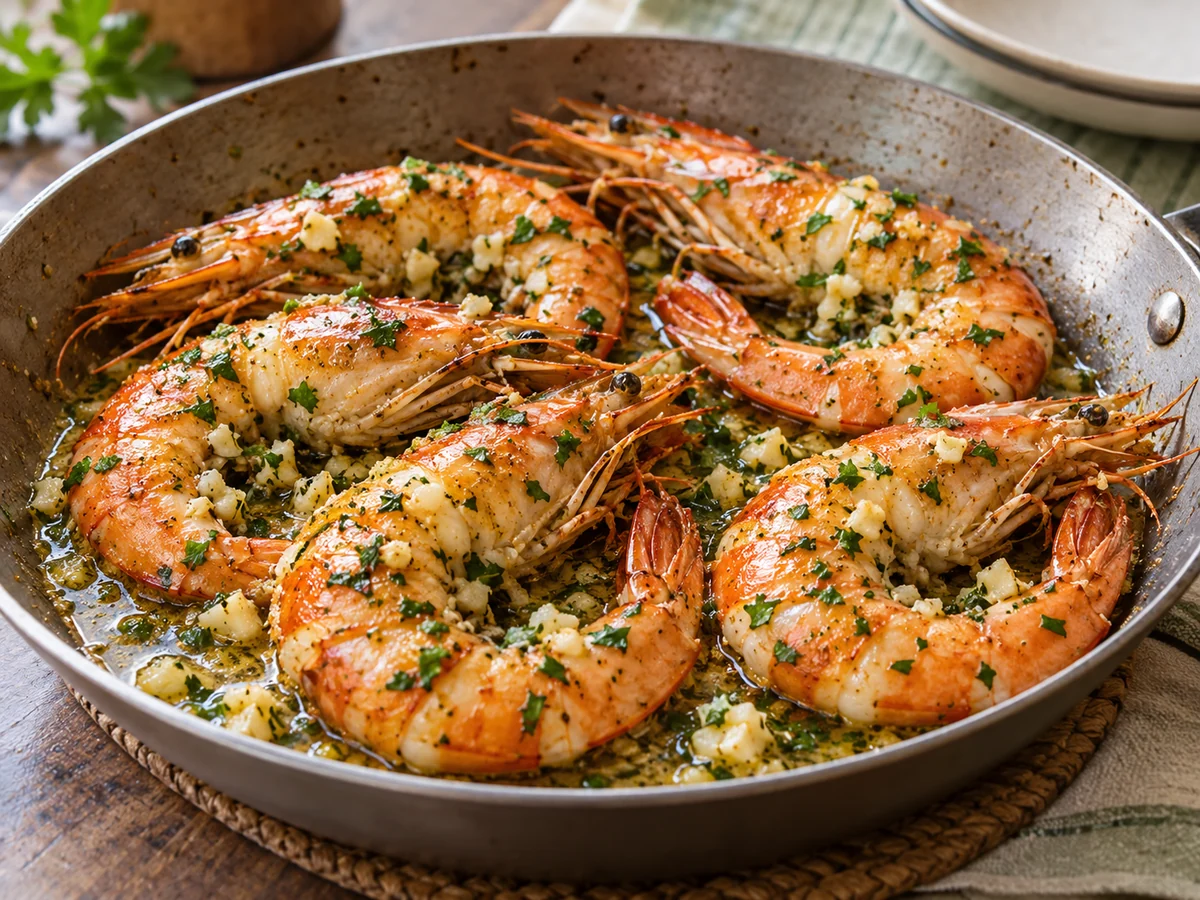
Ingredients
- 8–12 large raw camarons, about 900 g shell-on
- 30 ml vegetable oil
- 5 finely chopped garlic cloves
- 15 g grated ginger
- 1 lime
- 20 ml water
- 10 g chopped coriander or parsley
- 1/2 tsp salt, adjust
- 1/4 tsp pepper
- 1 small optional chilli
Preparation
Thaw prawns in the refrigerator if needed. Slit backs, remove intestinal veins, trim antennae and dry shells.
Prepare aromatics and herbs. Divide garlic into a small starting portion and a larger finishing portion; juice the lime.
Heat oil in a large pan over moderately high heat; stir the small garlic portion and ginger for 20–30 seconds.
Add prawns in one layer. Sear 2–3 min per side, cooking two batches if the pan is crowded.
Reduce heat; add remaining garlic, chilli, pepper and 20 ml water. Cover 1–3 min according to size.
Check thick centres are firm and opaque at 63 °C; shell colour alone is insufficient. Remove small pieces first.
Add 1–2 tablespoons lime juice and herbs. Taste before adjusting salt and briefly toss off the heat.
Serve on a clean platter with remaining lime. Provide shell bowls and never pour raw seafood liquid over cooked prawns.
Introduction
This is an original domestic formulation for a Mauritian recipe collection. The named local source documents the culinary context or an example, rather than certifying these exact quantities. Prepare the ingredients and serving dishes before heating the pan. Follow the described texture and thickness as well as the approximate time, because different products and equipment do not behave identically. Optional chilli is kept separate when diners prefer different heat levels. Camarons generally means large freshwater prawns in Mauritian cooking; ordinary large sea prawns are a clearly named substitute. Size controls cooking, so use the total weight as well as the count. Add garlic in two stages to avoid bitterness. If sauce remains watery, remove cooked prawns and reduce the liquid alone. Shell-on service keeps the juices but needs napkins and a bowl for shells. Do not leave peeled seafood waiting while other dishes are prepared.
Cultural context
The local reference supports the dish or its culinary setting; it does not establish an exclusive origin or a single mandatory family recipe. The quantities here are an original home version, with the specific starting product and technique stated clearly. Reference: https://labonnechuterestaurantandbar.com/menu/
Tips
Camarons generally means large freshwater prawns in Mauritian cooking; ordinary large sea prawns are a clearly named substitute.
Size controls cooking, so use the total weight as well as the count.
Add garlic in two stages to avoid bitterness.
If sauce remains watery, remove cooked prawns and reduce the liquid alone.
Variations
Use large sea prawns if freshwater camarons are unavailable, and name the substitution.
Parsley can replace coriander for a different finish.
Serve without chilli and offer a separate hot paste.
Accompaniments
Serve with the suggested simple sides rather than several rich sauces. Rice, vegetables and a small fresh condiment can form a complete plate; for a snack, keep portions modest. Offer lime and chilli separately so each diner adjusts the portion without wetting the whole dish. Prepare sides in advance and use clean serving utensils that have not touched raw seafood or batter.
Nutrition notes
Seafood supplies protein and can provide vitamin B12 and minerals such as iodine, selenium, zinc or copper, depending on the species. The actual product, edible portion and cooking method change the composition; no precise values are invented. Salt is adjusted after tasting, especially with precooked products or prepared stock. Announce fish, crustacean or mollusc allergens as applicable, and check flour, egg, mustard or declared additives in the ingredient list.