Vegetable baja
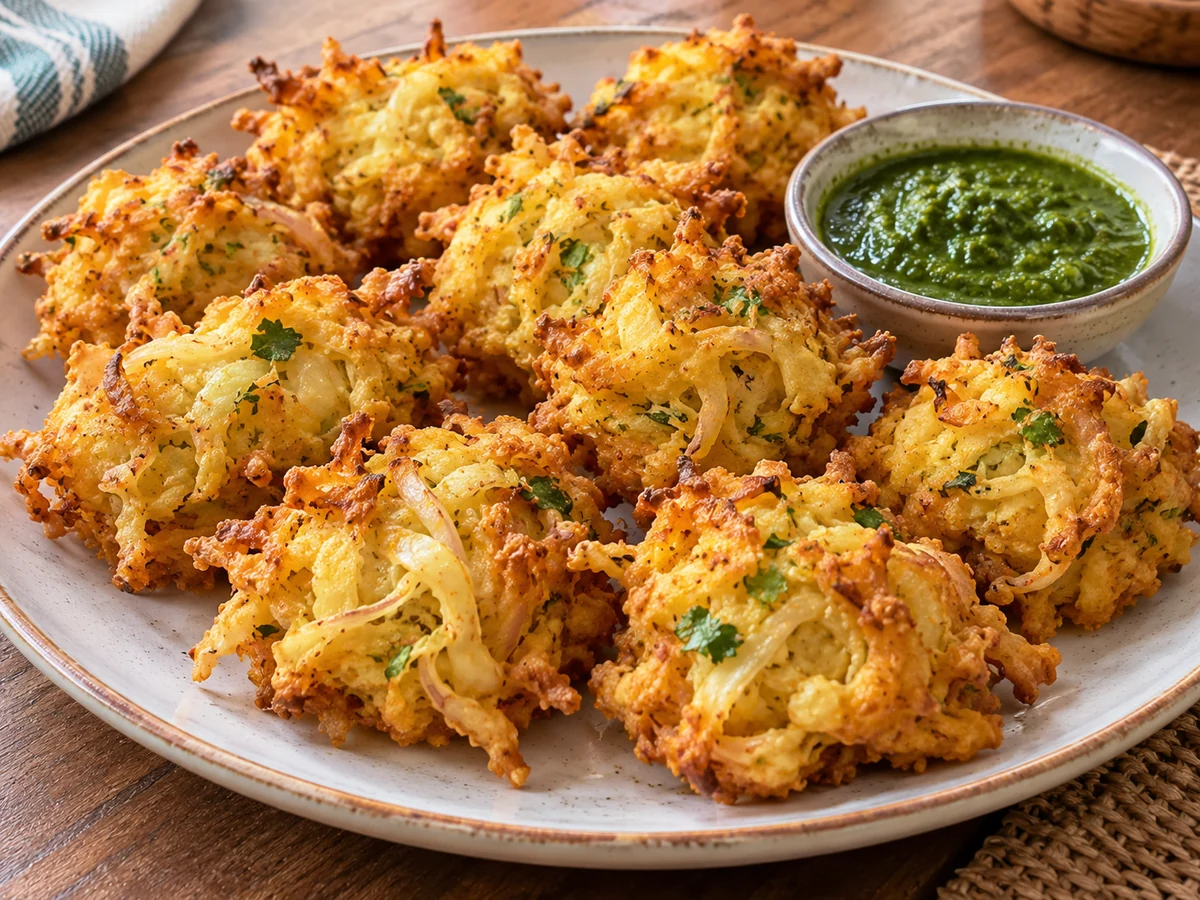
Small vegetable fritters bound with chickpea batter, cumin, coriander and turmeric.
Ingredients
- 150 g chickpea flour
- 30 g rice flour
- 100 g grated carrot
- 100 g finely shredded cabbage
- 100 g finely sliced onion
- 10 g chopped coriander
- 1 tsp ground cumin
- 1/2 tsp turmeric
- 3/4 tsp salt
- 100–140 ml water
- 1 small optional chilli
- 750 ml neutral frying oil, absorption varies
Preparation
Wash and dry vegetables; grate carrot and cut cabbage and onion into very fine, short strips.
Mix vegetables with salt and rest 5 min. Squeeze gently if they release excessive water.
Combine flours and spices with vegetables, coriander and optional chilli. Add 100 ml water; rest 10 min.
A spoonful should hold a soft mound. Add remaining water gradually only to coat all vegetable strips.
Heat oil to 170–175 °C. Lower one level tablespoon of mixture gently into the stable deep pan.
Fry the test piece about 4 min, turning halfway. Open it: vegetables must be tender and batter cooked.
Fry small batches for 3–5 min according to size, leaving space and removing dark fragments.
Drain on a rack and serve hot with separate chatini. Never close steaming fritters in a box.
Introduction
This is an original domestic formulation for a Mauritian recipe collection. The named local source documents the culinary context or an example, rather than certifying these exact quantities. Prepare the ingredients and serving dishes before heating the pan. Follow the described texture and thickness as well as the approximate time, because different products and equipment do not behave identically. Optional chilli is kept separate when diners prefer different heat levels. Keep the vegetables visible rather than burying them in a large ball of flour. Fine cutting gives tender centres and crisp edges. Vegetables release water after salting, so do not add all the liquid at once. The trial fritter checks both consistency and cooking before the whole batch is committed. Rice flour adds a different crust, while chickpea flour gives the principal flavour. These are not gâteaux piments made from soaked split peas.
Cultural context
The local reference supports the dish or its culinary setting; it does not establish an exclusive origin or a single mandatory family recipe. The quantities here are an original home version, with the specific starting product and technique stated clearly. Reference: https://mauritiusnow.com/fr/blog/things-to-do/cuisine-mauricienne/
Tips
Keep the vegetables visible rather than burying them in a large ball of flour.
Fine cutting gives tender centres and crisp edges.
Vegetables release water after salting, so do not add all the liquid at once.
The trial fritter checks both consistency and cooking before the whole batch is committed.
Variations
A small handful of thoroughly dried spinach can replace part of the cabbage.
Replace chilli with pepper for a milder version without changing vegetable amounts.
Avoid unsqueezed courgette, which quickly changes the batter moisture and requires water adjustment.
Accompaniments
Serve with the suggested simple sides rather than several rich sauces. Rice, vegetables and a small fresh condiment can form a complete plate; for a snack, keep portions modest. Offer lime and chilli separately so each diner adjusts the portion without wetting the whole dish. Prepare sides in advance and use clean serving utensils that have not touched raw seafood or batter.
Nutrition notes
Chickpea flour supplies plant protein, fibre and folate, with minerals such as iron and magnesium. Vegetables and herbs add variety, but small garnishes are not equivalent to a full vegetable serving. Frying adds a variable amount of fat: oil placed in the pan is not the amount absorbed. No precise nutrient figures are invented. Check wheat, egg and any other allergens in the actual ingredients and in shared frying oil.