Pain frire
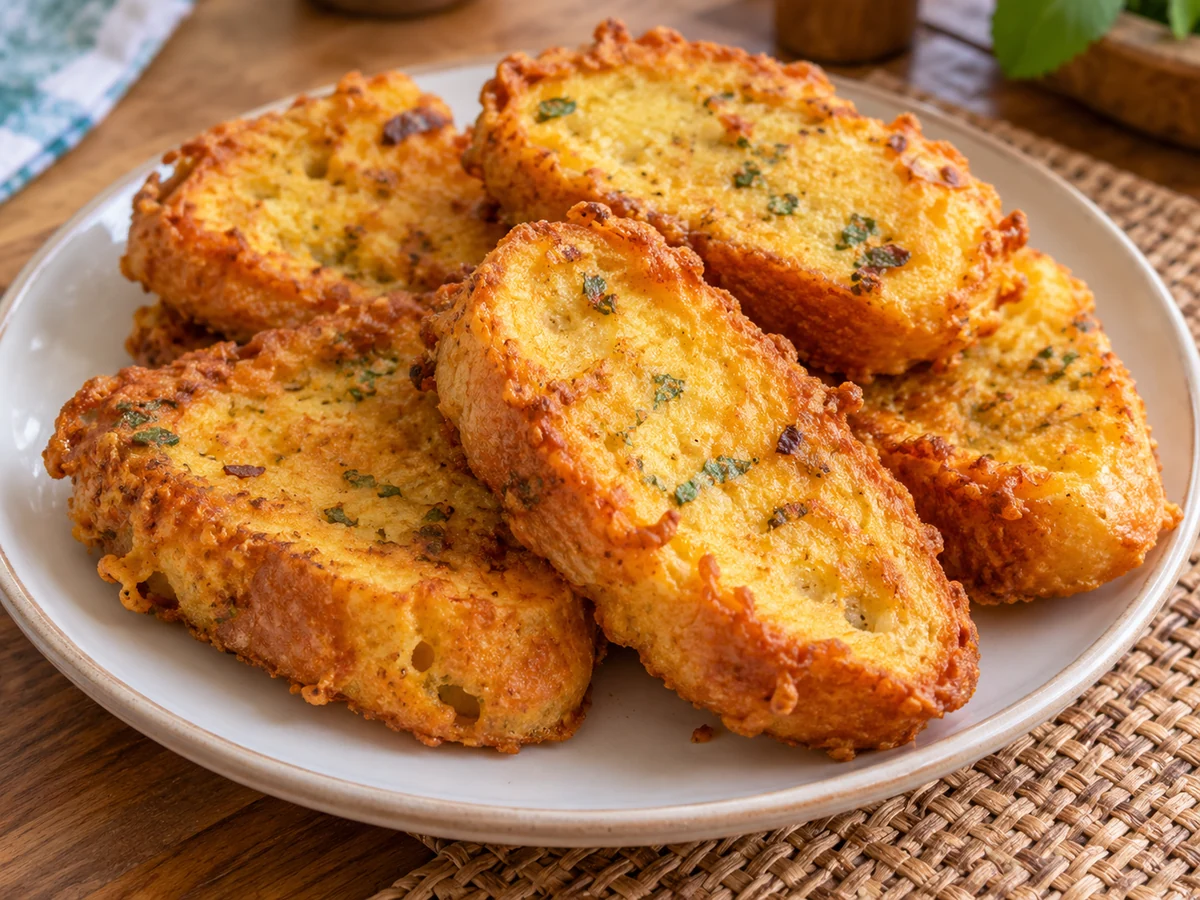
Bread slices in a savoury chickpea batter, fried until crisp while the crumb remains soft.
Ingredients
- 4 slices sound day-old bread, about 240 g
- 120 g chickpea flour
- 30 g wheat flour
- 180–210 ml water
- 40 g finely chopped onion
- 10 g chopped coriander
- 1/2 tsp ground cumin
- 1/4 tsp turmeric
- 1/2 tsp salt
- 1 small optional chilli
- 750 ml neutral frying oil, absorption varies
Preparation
Cut each bread slice in half, keeping pieces about 1.5 cm thick. Set a draining rack over a tray.
Combine flours, cumin, turmeric and salt. Add 180 ml water, then onion, coriander and optional chilli; rest 10 min.
Check that the batter falls in a thick ribbon and coats a spoon. Add remaining water gradually only if needed.
Heat oil to 170–175 °C in a stable deep pan, filled well below halfway. Keep the work area dry.
Dip one bread piece briefly, turn, lift and let excess batter drip away. Lower it gently into the oil.
Fry 2–3 min per side. Open the test piece: the coating must be set without wet flour pockets.
Cook remaining pieces in small batches. Let oil recover its temperature and remove dark batter fragments between batches.
Drain on the rack without stacking or covering. Serve promptly with separate chatini and cool used oil safely.
Introduction
This is an original domestic formulation for a Mauritian recipe collection. The named local source documents the culinary context or an example, rather than certifying these exact quantities. Prepare the ingredients and serving dishes before heating the pan. Follow the described texture and thickness as well as the approximate time, because different products and equipment do not behave identically. Optional chilli is kept separate when diners prefer different heat levels. The coating should cling in a thin layer rather than make a heavy shell. Sound stale bread is suitable; mouldy bread is never recovered by frying. Onion must be very finely chopped so it stays in the batter. A short dip preserves the crumb and prevents breakage. Test one piece before cooking the rest, because bread density and flour absorption change the result. Cumin and coriander provide flavour even when chilli is omitted. Lemon or wet chutney is added only to the portion being eaten, since moisture softens the crust. Keep the bread and hydrated batter separate until the moment of frying.
Cultural context
The local reference supports the dish or its culinary setting; it does not establish an exclusive origin or a single mandatory family recipe. The quantities here are an original home version, with the specific starting product and technique stated clearly. Reference: https://restaurants.mu/fr/recettes-maurice/beignets-de-pain-du-pain-frire
Tips
The coating should cling in a thin layer rather than make a heavy shell.
Sound stale bread is suitable; mouldy bread is never recovered by frying.
Onion must be very finely chopped so it stays in the batter.
A short dip preserves the crumb and prevents breakage.
Variations
Omit chilli but keep cumin and coriander; serve hot condiment separately.
Rice flour can replace the 30 g wheat flour, but bread still contains gluten.
Dense country bread gives a more rustic result than baguette and needs only a very brief dip.
Accompaniments
Serve with the suggested simple sides rather than several rich sauces. Rice, vegetables and a small fresh condiment can form a complete plate; for a snack, keep portions modest. Offer lime and chilli separately so each diner adjusts the portion without wetting the whole dish. Prepare sides in advance and use clean serving utensils that have not touched raw seafood or batter.
Nutrition notes
Chickpea flour supplies plant protein, fibre and folate, with minerals such as iron and magnesium. Vegetables and herbs add variety, but small garnishes are not equivalent to a full vegetable serving. Frying adds a variable amount of fat: oil placed in the pan is not the amount absorbed. No precise nutrient figures are invented. Check wheat, egg and any other allergens in the actual ingredients and in shared frying oil.