Marinated olives
These olives begin with a commercial product already debittered and ready to eat.
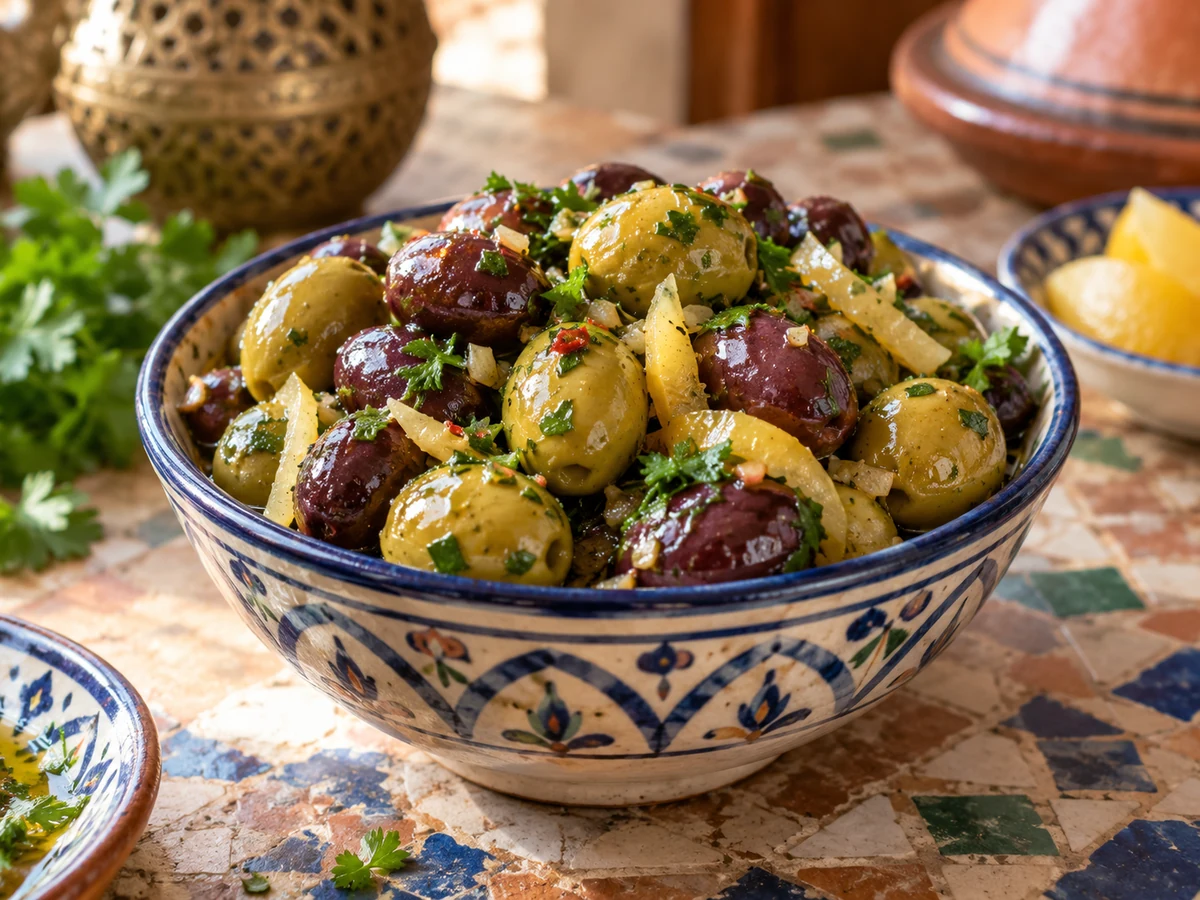
Ingredients
- 400 g drained commercial food-grade olives, already debittered and ready to eat, green or mixed green and black
- 2 tablespoons olive oil
- 1 tablespoon lemon juice
- 1 small garlic clove
- 2 tablespoons washed, dried chopped parsley or coriander
- 1/2 teaspoon ground cumin
- 1/2 teaspoon sweet paprika
- Chilli, optional to taste
- Salt only after tasting
Preparation
Choose commercial ready-to-eat olives and read storage directions. Drain and weigh 400 g edible product, not fresh untreated olives.
Taste one olive. Briefly rinse very salty olives only if product directions allow, then drain and dry; do not improvise prolonged room-temperature soaking.
Peel and crush garlic finely. Wash, dry and chop herbs; prepare a clean wide bowl.
Mix oil, lemon, garlic, cumin and paprika. Taste dressing on an olive and add optional chilli gradually.
Add olives and herbs, turning gently with a broad spoon. Aim for a light coating, not a deep oil bath; do not salt automatically.
Cover in a clean food container and refrigerate about thirty minutes, stirring once if needed. This is not fermentation or shelf-stable bottling.
Taste and adjust lemon or chilli sparingly. Add salt only if genuinely needed; warn about stones and serve a small portion with a clean utensil.
Keep the reserve covered and refrigerated, preferably prepared for the same day. Do not return table-served olives to it; fresh garlic and herbs in oil are not a long ambient-storage preserve.
Introduction
These olives begin with a commercial product already debittered and ready to eat. Oil, lemon, garlic, herbs, cumin and paprika provide a measured final seasoning for near-term service. The method does not treat fresh-picked olives, ferment them or create a shelf-stable preserve. Taste the purchased olives first because saltiness and bitterness vary.
Drained weight excludes brine, whose remaining salt affects final seasoning. Brief rinsing, if permitted, is followed by thorough draining so excess water does not dilute the coating. Crush one small garlic clove finely to distribute its strength and dry washed herbs before chopping. Mix powdered spices into the oil before adding olives to prevent patches of dry seasoning. A broad spoon protects tender black olives. Refrigerate the small batch: an oil layer or a spoonful of lemon does not make fresh garlic and herbs stable on a shelf. Keep the original product instructions and never mask abnormal smell or appearance with spices. Renew a small serving bowl rather than putting the entire reserve on the table.
Cultural context
This is a measured home version for the Moroccan collection, not a claim that every household uses identical proportions. The linked culinary source provides context; the ingredients and steps define the particular version offered here.
Context source: https://choumicha.ma/recette/1236-olives-noires-marinees.html
Tips
Use already debittered ready-to-eat olives.
Weigh after draining and taste before salt.
Dry washed herbs.
Keep refrigerated and prepare for near-term service.
Variations
Use all black olives or a mixture with green ones. Omit garlic for a milder result. Food-grade preserved lemon rind adds salt and requires final seasoning adjustment.
Accompaniments
Offer a small bowl with Moroccan bread, salad or cooked vegetables. Provide a stone bowl and identify any pits to diners.
Nutrition notes
Olives and oil contribute fat. Salt varies by commercial product and brine; homemade seasoning does not guarantee low sodium. Use the label and actual portions as practical guides.