Orange juice
Freshly squeezed orange juice depends chiefly on fruit selection, measured pressing and prompt service.
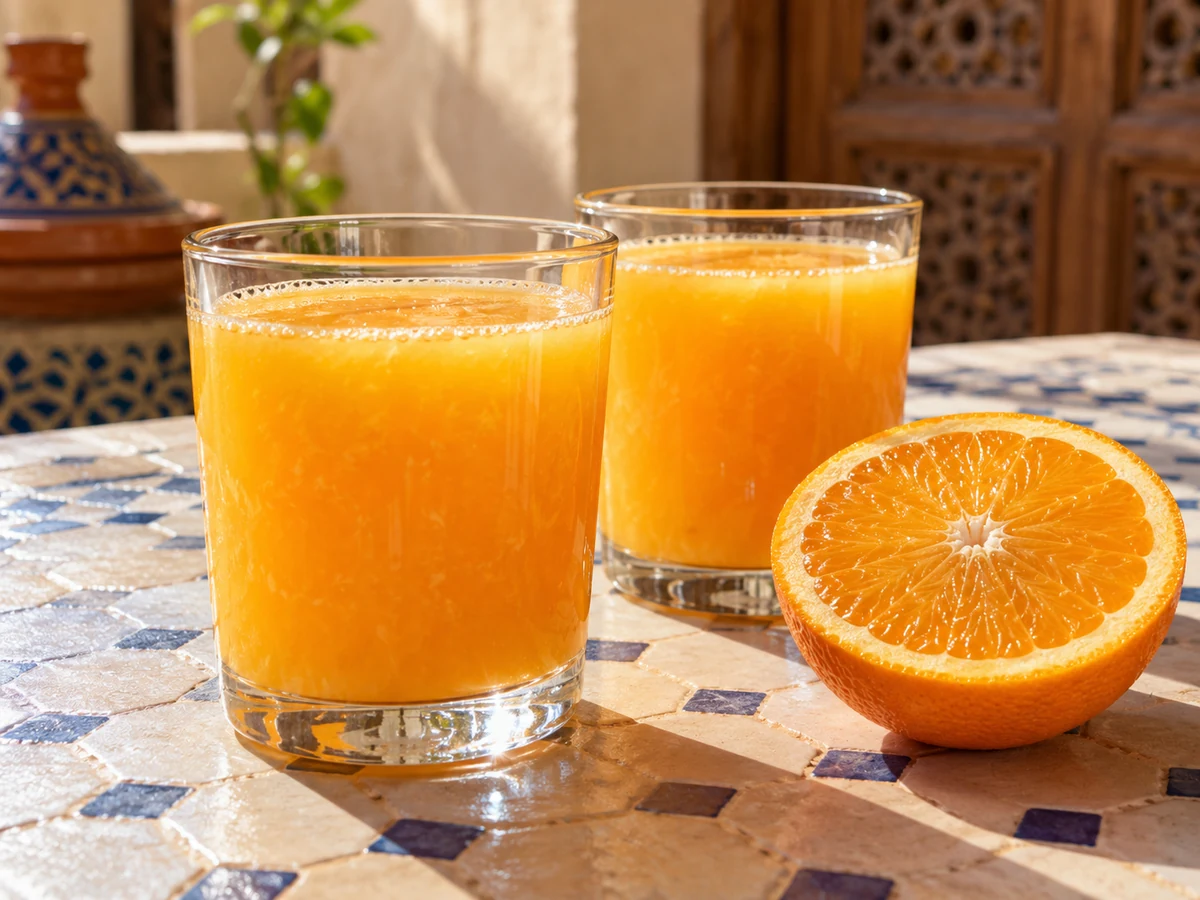
Ingredients
- 1.5 kg juicing oranges, adjusted to obtain about 600 ml juice
- Ice made with drinking water, optional
- Sugar only after tasting, optional with no compulsory amount
Preparation
Choose sound oranges, preferably chilled for immediate cold service. Wash and dry their skin before cutting; prepare a clean jug and four small glasses.
Set a clean manual or electric citrus press on a stable surface. Check its seed filter, capacity and manufacturer directions.
Halve oranges across their middle. Press the first half gently and taste a little juice for sweetness, acidity and bitterness.
Press remaining halves, emptying the receiver regularly. Stop when juice barely flows instead of grinding white pith against the cone.
Remove seeds and choose pulp level. For smoother juice strain once through a fine sieve without forcefully squeezing fibrous remnants.
Measure about 600 ml for four 150 ml glasses. Yield varies; press more fruit if needed rather than silently diluting with water.
Taste at serving temperature before optional sugar. Dissolve any small addition fully; cover and refrigerate for a short wait.
Stir gently if pulp separates and serve promptly, with optional ice whose melting dilutes the drink. Clean equipment afterwards; this homemade juice is not pasteurised or shelf-stable.
Introduction
Freshly squeezed orange juice depends chiefly on fruit selection, measured pressing and prompt service. The 1.5 kg fruit weight is a starting estimate, not a guaranteed yield. Aim for four small glasses totalling about 600 ml. Sugar is not automatically required; taste the first orange before pressing the entire batch.
Whole-fruit colour and size alone do not establish sweetness or juiciness. Reject significantly damaged or mouldy fruit rather than trying to disguise it. Washing matters even when peel is discarded because knife, hands and press touch the skin. Apply gradual pressure and stop before excessive pith extraction increases bitterness. Fine pulp may settle normally; stir to distribute it. Repeated filtering changes texture without making juice fresher. Chilled fruit can avoid ice dilution. For a short delay, cover and refrigerate, and prepare a quantity intended for near-term consumption. Clean pulp from filter crevices before it dries.
Cultural context
This is a measured home version for the Moroccan collection, not a claim that every household uses identical proportions. The linked culinary source provides context; the ingredients and steps define the particular version offered here.
Context source: https://visitmorocco.com/fr/informations-pratiques/d%C3%A9guster
Tips
Wash and dry oranges before cutting.
Stop before rubbing white pith excessively.
Taste before adding sugar.
Prepare small glasses and serve promptly.
Variations
Mix two orange varieties to balance flavour. Added lemon or mandarin makes a citrus blend. Dilution creates an orange drink rather than undiluted freshly squeezed juice.
Accompaniments
Offer a small glass at breakfast or during a break, without automatically pairing it with another sweet drink. Whole fruit is a different serving option.
Nutrition notes
Juice contains natural fruit sugars and variable pulp. Added sugar increases sweetness and energy; exact vitamin or calorie figures require the actual fruit and yield.