Octopus with tomatoes
This is explicitly a home tomato adaptation, not an asserted Moroccan regional tradition.
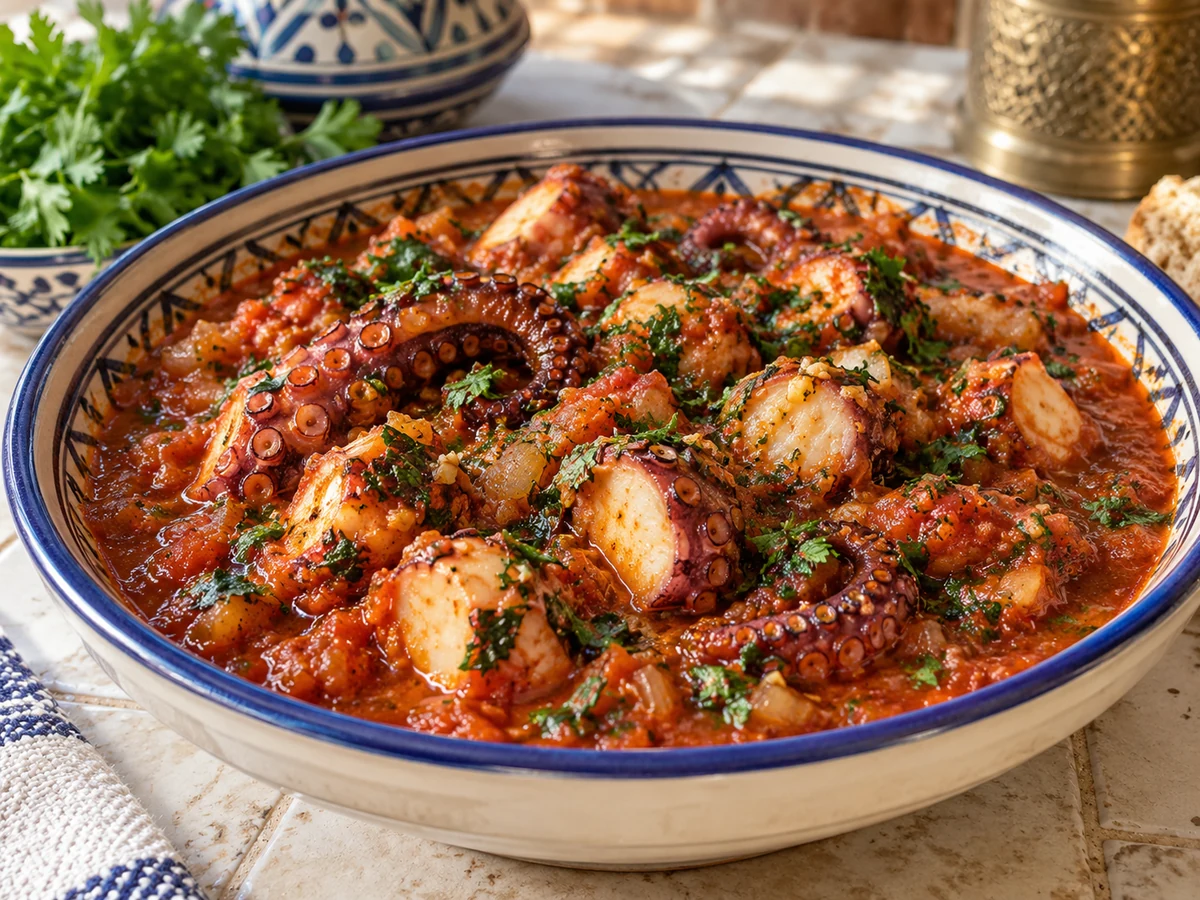
Ingredients
- 700 g food-grade octopus already fully cooked, ready to reheat according to its supplier
- 600 g chopped tomatoes
- 2 medium sliced onions
- 3 chopped garlic cloves
- 3 tablespoons olive oil
- 1 teaspoon sweet paprika
- 1/2 teaspoon cumin
- 150 ml water, then adjust
- 2 tablespoons chopped parsley
- 1 tablespoon lemon juice, optional
- Salt and pepper after tasting
Preparation
Buy explicitly fully cooked octopus and read storage and reheating directions. Refrigerate and cut into even 3–4 cm pieces.
Soften onions in oil ten minutes, add garlic one minute and use a wide pan.
Add spices, tomatoes and 150 ml water. Simmer uncovered 15–20 minutes, stirring down to the bottom.
Taste a cooled spoonful; tomato should taste cooked and coat a spoon. Add small amounts of hot water if too concentrated.
Add cooked octopus and gently reheat about 8–10 minutes or according to the product; these times are not for raw octopus.
Check pieces are hot centrally and taste before salting. Reserve hot octopus if sauce needs further reduction.
Add parsley and optional lemon gradually; return any reserved octopus and stop when thoroughly hot and coated.
Serve promptly. Cool leftovers in a shallow container, refrigerate and respect the original product date and handling instructions.
Introduction
This is explicitly a home tomato adaptation, not an asserted Moroccan regional tradition. The context source documents Moroccan octopus salad, not this tomato dish. Start with fully cooked octopus: raw, cleaned and partly cooked products are not equivalent. Prepare the sauce before introducing the pieces, then reheat gently. Prolonged boiling to reduce watery tomato can toughen already cooked octopus.
Measure ingredients before starting and prepare the equipment in advance. Timings are guides for the size and product described; use the texture and centre-doneness checks in the steps. The portions indicated are a serving guide, not a compulsory quantity for each guest.
Keep the work surface and utensils clean. Read the directions for ready-made pastry or prepared seafood. Do not add all optional liquid automatically, and taste only a cooked sample when the mixture contains raw egg, meat or fish. Cool leftovers promptly and follow the purchased product’s storage directions.
Cultural context
This is explicitly a home adaptation. The cited reference documents a related Moroccan use of seafood, not this exact grilled or tomato preparation; no exclusive regional tradition is claimed.
Context reference: https://choumicha.ma/recette/17-salade-de-poulpe-a-la-marocaine.html
Tips
Check that octopus is fully cooked, not merely cleaned.
Finish the tomato sauce before adding octopus.
Cut similar-sized pieces for even reheating.
Remove hot octopus if sauce still needs reduction.
Variations
Keep the listed base for the first attempt. Optional seasoning can be reduced, but changing the filling or cooking method also changes moisture and timing; name such a version clearly rather than applying the original time automatically.
Accompaniments
Serve with Moroccan bread, a small portion of plain rice or separately cooked potatoes and a simple salad. Spoon the sauce onto accompaniments at service, not long beforehand.
Nutrition notes
Portion size and the full meal determine nutritional intake; no numerical values are claimed without calculation for the actual products. Contains molluscs; check the salt already present in the cooked product.