Vegetable briouates
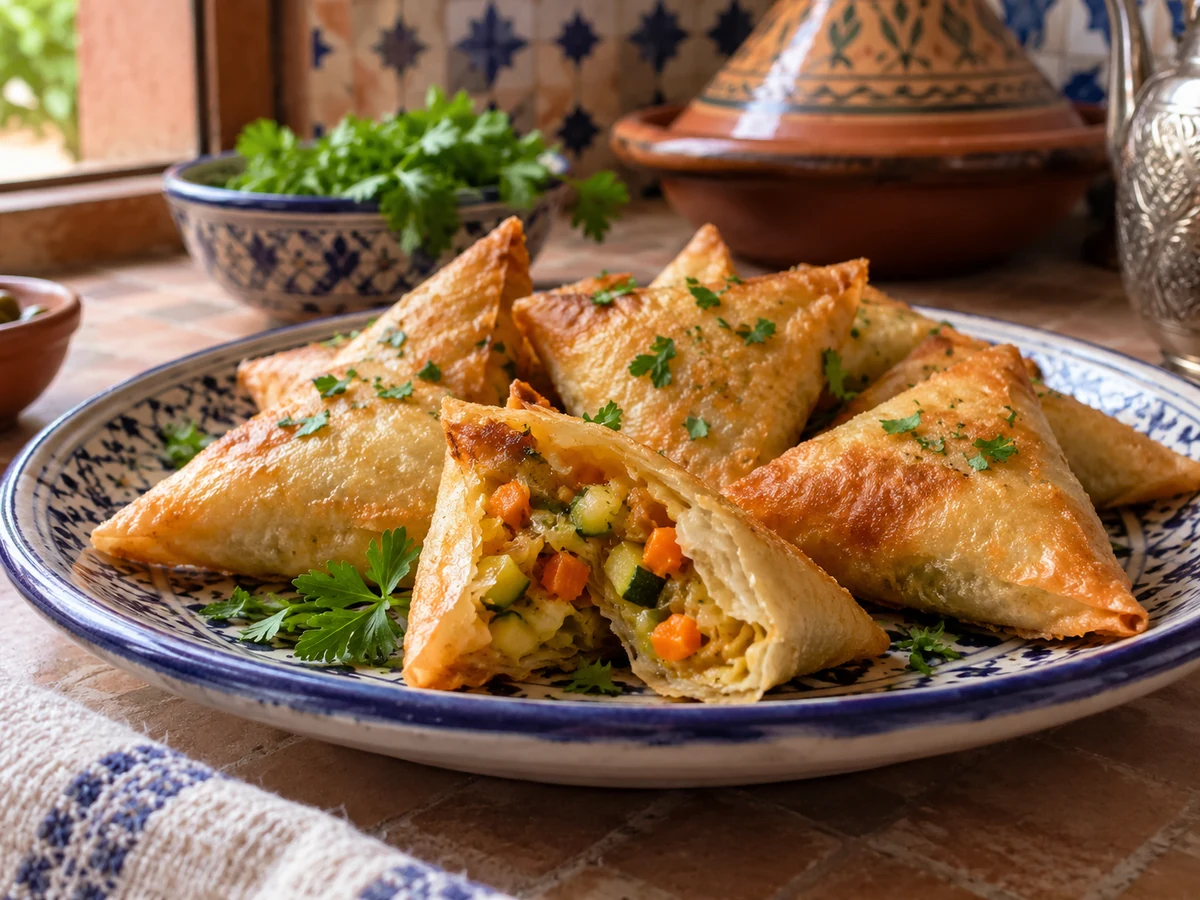
The key is tender vegetables with little free moisture, not extra pastry layers.
Ingredients
- 10 large round brick sheets or equivalent warqa
- 200 g grated carrots
- 200 g grated courgettes
- 150 g finely sliced cabbage
- 1 medium chopped onion
- 1 crushed garlic clove
- 2 tablespoons olive oil
- 1 teaspoon paprika
- 1/2 teaspoon cumin
- 2 tablespoons chopped parsley
- 1/2 teaspoon salt, then adjust
- Pepper
- 2 tablespoons flour and 3 tablespoons water for sealing
- About 700 ml neutral frying oil; absorption varies
Preparation
Wash vegetables before grating, trim hard parts and use a medium grater to keep fine vegetable strands.
Soften onion in olive oil eight minutes, garlic one minute, then add carrots and cabbage for five minutes before courgette.
Add spices, salt and pepper; cook uncovered 8–10 minutes until free liquid evaporates. Add parsley and spread thinly to cool.
Prepare flour-water glue, cut sheets into strips and cover unused ones. Drain cooled filling again if juices have collected.
Place a spoonful back from one end and fold into triangles, keeping long vegetable strands inside.
Glue the final tab, set seam down and check closure. Replace a soaked sheet rather than adding excessive glue.
Fry small batches at about 170°C for 3–4 minutes, turning carefully until golden.
Drain without stacking and rest briefly before serving; refrigerate unfried pieces if service is delayed.
Introduction
The key is tender vegetables with little free moisture, not extra pastry layers. Carrot and cabbage start first; courgette enters later because it releases water quickly. A wide pan evaporates better than a crowded narrow pot. Cooling may release more juice, so check again before folding. Keep strands inside the seams. This version has no meat or cheese, but the pastry ingredients still need checking for dietary requirements.
Measure ingredients before starting and prepare the equipment in advance. Timings are guides for the size and product described; use the texture and centre-doneness checks in the steps. The portions indicated are a serving guide, not a compulsory quantity for each guest.
Keep the work surface and utensils clean. Read the directions for ready-made pastry or prepared seafood. Do not add all optional liquid automatically, and taste only a cooked sample when the mixture contains raw egg, meat or fish. Cool leftovers promptly and follow the purchased product’s storage directions.
Cultural context
This is a measured home version. The reference gives culinary context and is not a claim that every Moroccan family uses the same proportions or finish. Optional changes should be identified separately from this basic preparation.
Context reference: https://www.cookingwithalia.com/vegetarian-filling-briwat-special-episode-2/
Tips
Evaporate juice in a wide pan.
Add courgette after firmer vegetables.
Drain cooled filling again if needed.
Tuck all vegetable strands inside before sealing.
Variations
Keep the listed base for the first attempt. Optional seasoning can be reduced, but changing the filling or cooking method also changes moisture and timing; name such a version clearly rather than applying the original time automatically.
Accompaniments
Serve with Moroccan salad or soup. Offer yoghurt or chilli sauces separately and identify any allergens they add; do not wet the crisp triangles in advance.
Nutrition notes
Portion size and the full meal determine nutritional intake; no numerical values are claimed without calculation for the actual products. Contains wheat; a vegetable filling does not make a fried pastry automatically low in fat.