Chermoula
Chermoula is the herb, garlic, lemon and spice condiment itself, distinct from the dishes it seasons.
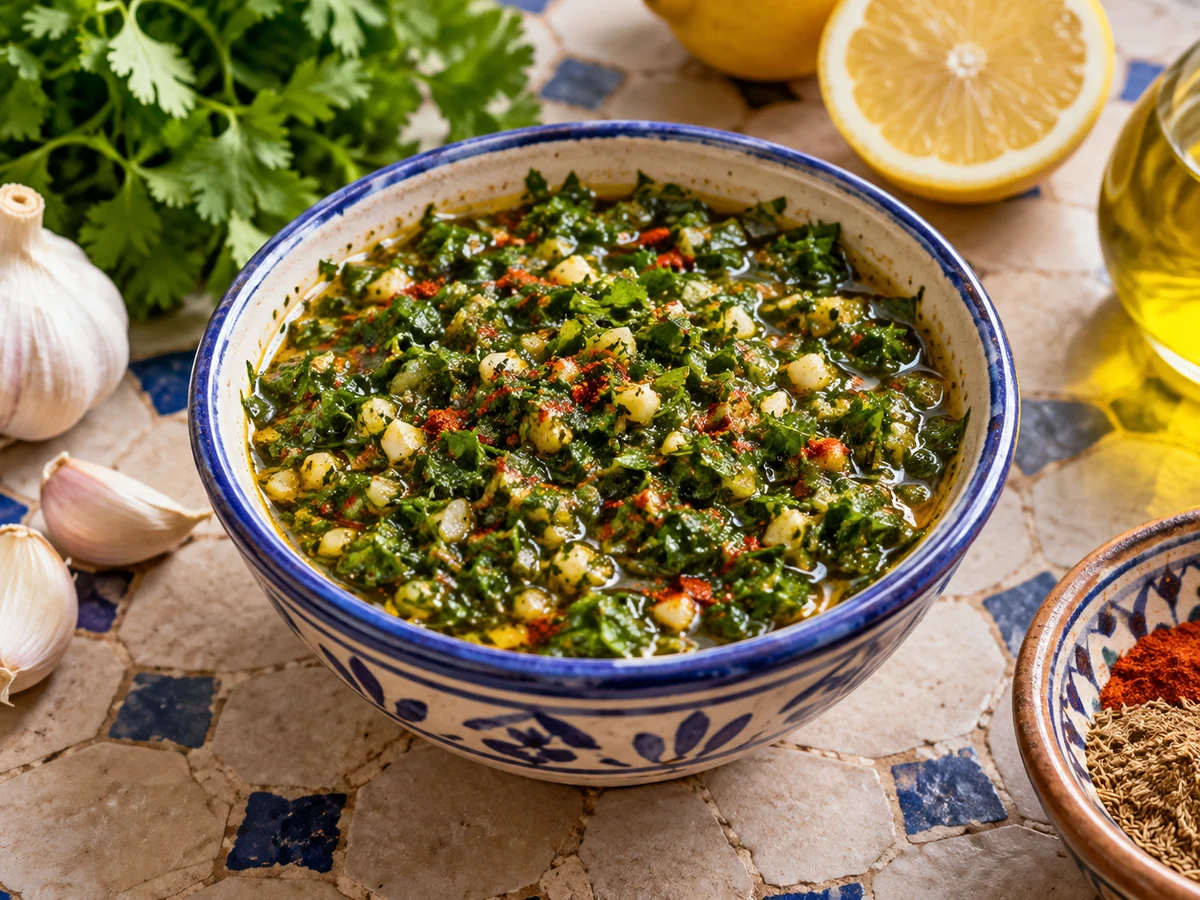
Ingredients
- 40 g fresh coriander leaves
- 30 g fresh parsley leaves
- 3 garlic cloves
- 3 tablespoons olive oil
- 2 tablespoons lemon juice
- 1 teaspoon ground cumin
- 1 teaspoon sweet paprika
- 3 g salt, then adjust
- 1–2 tablespoons water, optional for consistency
Preparation
Sort herbs, remove damaged leaves and tough stems, wash and dry thoroughly.
Peel and chop garlic; prepare a clean mortar or small processor and separate table-serving container.
Pound garlic with some salt, then briefly work in cumin and paprika.
Add herbs by handfuls, pounding or pulsing briefly and scraping sides with a clean spatula.
Gradually mix in oil and lemon; add one tablespoon water only if too compact for its use.
Taste a small clean portion with its intended accompaniment and adjust seasoning.
Reserve the table portion before using the rest with raw fish or meat; used marinade follows cooking, never returns to the bowl.
Refrigerate promptly for near-term use or freeze labelled portions immediately; never leave garlic and herb oil as a room-temperature preserve.
Introduction
Chermoula is the herb, garlic, lemon and spice condiment itself, distinct from the dishes it seasons. Weigh usable leaves after trimming; fine coriander stems may remain but thick parsley stems are fibrous. A mortar gives visible pieces; brief processor pulses avoid warming herbs. Add water if the use allows rather than always increasing oil. Reserve a clean table portion before raw-food contact. Lemon and salt do not validate long-term storage.
Dry washed herbs well and remove tough stems. Pulse a food processor briefly rather than warming the herbs through prolonged blending. Judge seasoning with the food the condiment will accompany. Reserve the clean table portion before any contact with raw fish or meat; used marinade must follow the food’s cooking, never return to the serving bowl. Garlic, herbs and oil with lemon are not a validated preserve. Refrigerate promptly for near-term use or freeze small labelled portions immediately.
Use clean equipment and the specified food-grade ingredients. Weigh the usable product and measure liquid gradually. Times are guides: the centre and texture determine when cooking is finished. Let very hot food cool enough for safe handling. Cool leftovers promptly, refrigerate when needed and follow the purchased product’s storage directions. A fresh homemade mixture is not a shelf-stable preserve.
Cultural context
This is a home adaptation of a preparation documented in the Moroccan culinary repertoire. Ingredient proportions, sizes and serving habits vary between households. The linked source supports the culinary context; the measured formula here is intended for a domestic kitchen rather than as a claim to one exclusive regional tradition.
Context source: https://tasteofmaroc.com/moroccan-chermoula-recipe/
Tips
Reserve the table portion before raw contact.
Weigh drained usable herbs.
Pulse briefly instead of prolonged blending.
Refrigerate promptly; this is not a preserve.
Variations
Keep the listed base for a first attempt. Changing flour, fat or liquid can alter absorption and texture. Adjust one element at a time and identify any new allergens rather than assuming that an alternative gives an identical result.
Accompaniments
Serve the stated portions according to appetite, with an appropriate meal or drink. Offer optional sweet or spicy accompaniments separately so the main preparation keeps its own flavour. Assemble moist fillings only at serving time.
Nutrition notes
Nutritional composition depends on the ingredients and actual portion. Wheat contains gluten; milk, butter, eggs and sesame are allergens whenever listed. Added oil, sugar and serving accompaniments change the complete meal. No numerical calorie or micronutrient values are claimed without an appropriate calculation.