Beetroot salad
Use cooked beetroot without an existing vinegar marinade so the listed acidity remains meaningful.
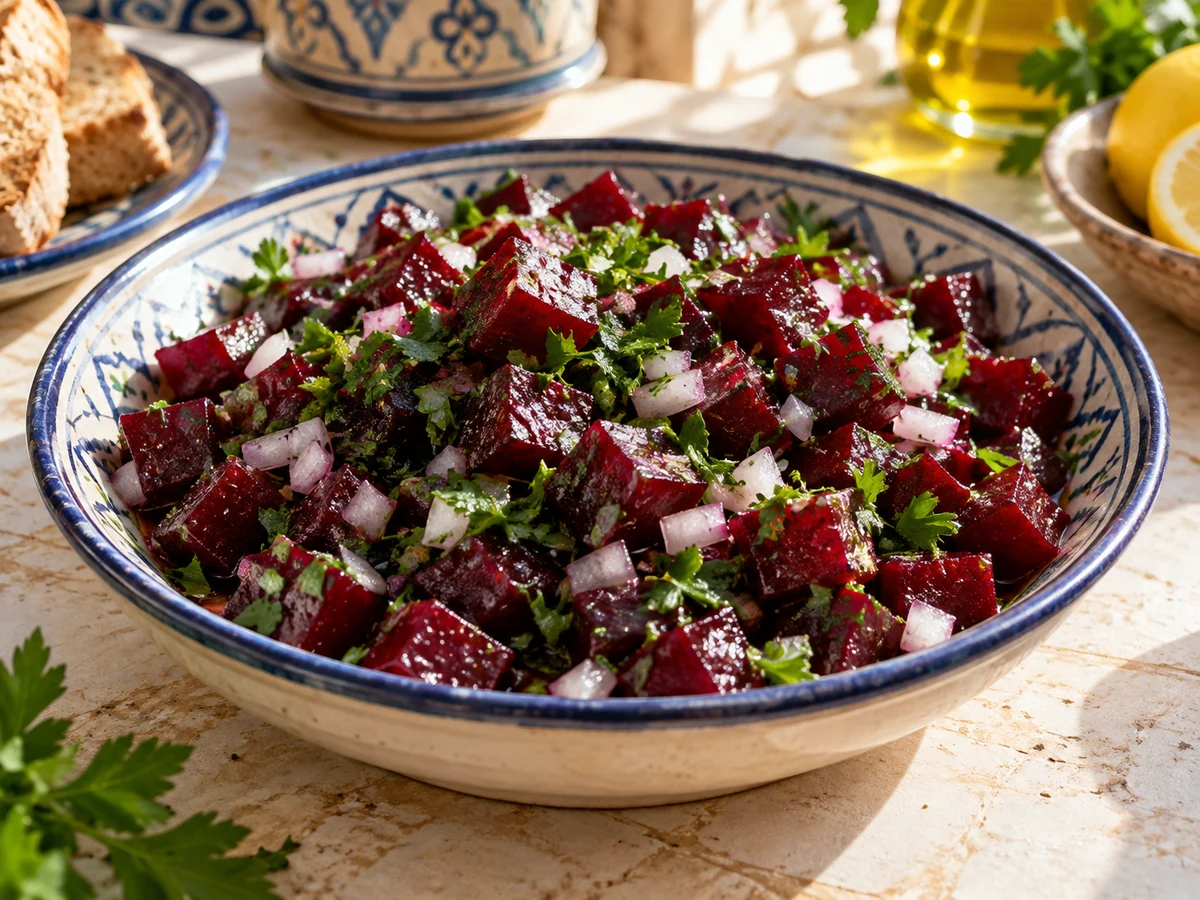
Ingredients
- 600 g plain cooked beetroot without sauce
- 1 small red onion, approximately 60 g
- 2 tablespoons chopped parsley
- 2 tablespoons olive oil
- 1–2 tablespoons lemon juice
- 1/2 teaspoon ground cumin, optional
- 3 g salt, then adjust
- Pepper to taste
Preparation
Choose plain cooked beetroot, read storage directions and drain packaged liquid; this method does not cook raw roots.
Trim firm parts and cut 1.5 cm cubes on a stable clean board.
Finely chop peeled onion, briefly rinse if strong and drain; wash parsley and chop tender leaves.
Mix oil, one tablespoon lemon, salt, pepper and optional cumin in a small bowl.
Combine beetroot and onion, pour dressing over and gently lift pieces without crushing.
Add half the parsley and refrigerate fifteen minutes; resting does not make a preserve.
Taste a cube with onion, adjust lemon and add remaining parsley.
Serve chilled with a clean spoon; refrigerate unserved salad and respect the opened cooked product’s storage limit.
Introduction
Use cooked beetroot without an existing vinegar marinade so the listed acidity remains meaningful. Drain rather than leave it drying for hours. Even cubes hold their shape and season more evenly; red juices after mixing are normal and do not require more oil. Onion should be finely distributed, not dominate whole bites. Lemon does not extend the purchased product’s storage life. Orange, cheese or nuts would create a different composition and possible allergens.
Wash vegetables before cutting and use a board reserved for ready-to-eat food. Drain well so retained washing water does not dilute the dressing. Keep pieces similar in size. Taste a complete bite with its dressing rather than the juice alone. Add acid and salt gradually; tomatoes and cucumber release more liquid once salted. Serve promptly or refrigerate in shallow containers, keeping the unserved portion cold. Use a clean serving spoon.
Use clean equipment and the specified food-grade ingredients. Weigh the usable product and measure liquid gradually. Times are guides: the centre and texture determine when cooking is finished. Let very hot food cool enough for safe handling. Cool leftovers promptly, refrigerate when needed and follow the purchased product’s storage directions. A fresh homemade mixture is not a shelf-stable preserve.
Cultural context
This is a home adaptation of a preparation documented in the Moroccan culinary repertoire. Ingredient proportions, sizes and serving habits vary between households. The linked source supports the culinary context; the measured formula here is intended for a domestic kitchen rather than as a claim to one exclusive regional tradition.
Context source: https://tasteofmaroc.com/moroccan-beet-salad/
Tips
Choose plain cooked beetroot.
Keep cubes even and recognisable.
Add lemon in stages.
Respect opened-product storage directions.
Variations
Keep the listed base for a first attempt. Changing flour, fat or liquid can alter absorption and texture. Adjust one element at a time and identify any new allergens rather than assuming that an alternative gives an identical result.
Accompaniments
Serve the stated portions according to appetite, with an appropriate meal or drink. Offer optional sweet or spicy accompaniments separately so the main preparation keeps its own flavour. Assemble moist fillings only at serving time.
Nutrition notes
Nutritional composition depends on the ingredients and actual portion. Wheat contains gluten; milk, butter, eggs and sesame are allergens whenever listed. Added oil, sugar and serving accompaniments change the complete meal. No numerical calorie or micronutrient values are claimed without an appropriate calculation.