Sfenj
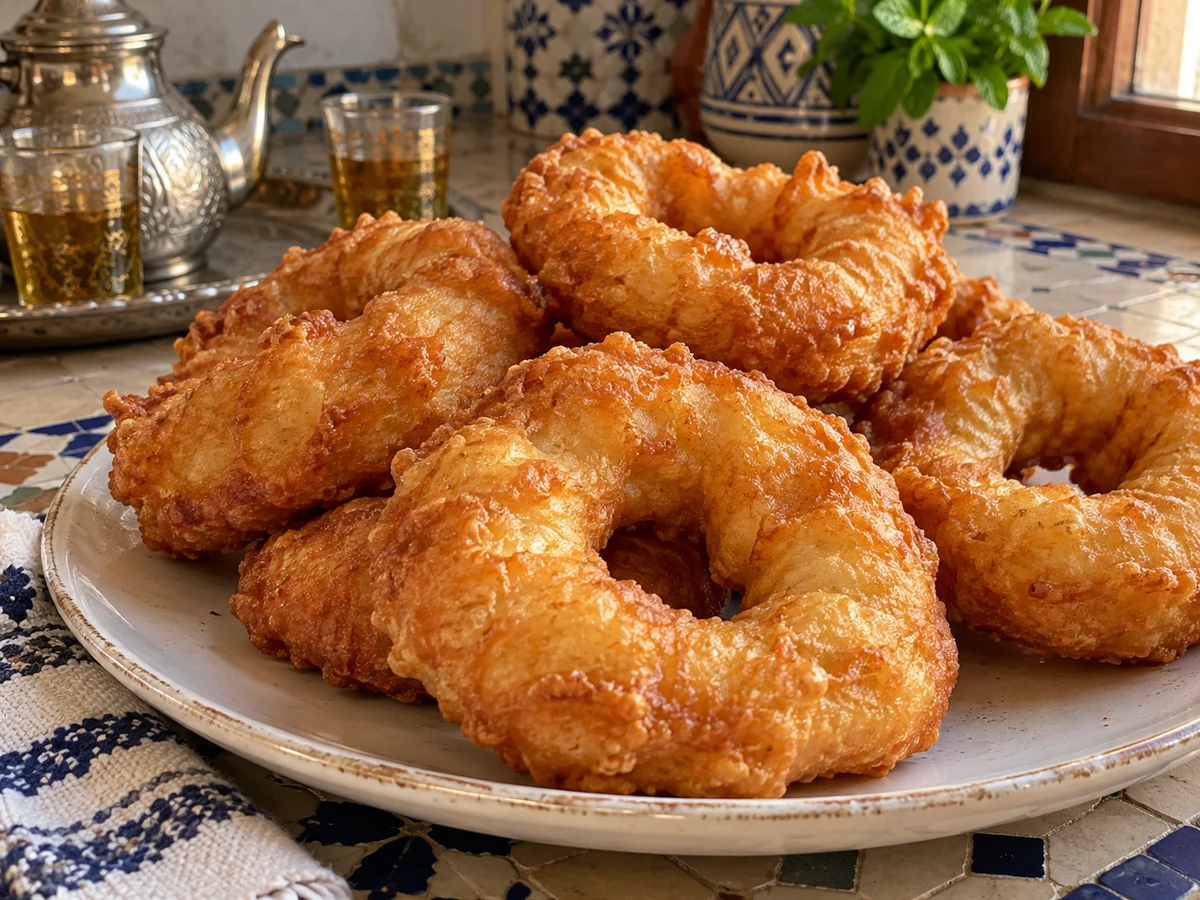
Sfenj uses a very wet lean yeast dough, not enriched dough with eggs and butter.
Ingredients
- 500 g wheat flour
- 380–420 ml lukewarm water
- 7 g instant dry baker’s yeast
- 8 g salt
- 1 teaspoon sugar
- Approximately 1 litre neutral frying oil, according to the pan
- 30 g sugar, optional for serving
Preparation
Mix flour, yeast and sugar with 380 ml water until no dry flour remains.
Add salt and beat by lifting and folding 5–8 minutes; add water gradually to a sticky elastic dough.
Cover and ferment 90–120 minutes until well expanded and aerated; allow longer if still dense.
Prepare draining space and heat oil to 170–175°C with ample headroom; dampen fingers and shake off droplets.
Take a small portion, open a central hole and gently lower the ring close to the oil surface.
Fry two or three at a time about two minutes per side, turning with a dry skimmer.
Cool the first briefly and open it: crumb must be airy and cooked, not sticky raw dough.
Drain without stacking and serve promptly plain or with optional sugar; do not seal hot fritters in a bag.
Introduction
Sfenj uses a very wet lean yeast dough, not enriched dough with eggs and butter. Do not keep adding flour to make it easy to roll: rings are shaped with lightly dampened fingers immediately before frying. Small irregular rings are acceptable if their thickness allows complete cooking. Water must not drip into the oil. This home method uses one controlled frying stage rather than claiming to reproduce every professional stall’s equipment.
Prepare dry utensils and draining space before heating oil. Leave ample room below the pan rim. Keep water away from hot oil and never pour water onto an oil fire. Check temperature and work in small batches so it does not drop excessively. Open the first piece after cooling slightly to check the centre. Adjust thickness and heat rather than only increasing temperature. Drain without stacking, and do not seal hot fritters where steam will soften them.
Use clean equipment and the specified food-grade ingredients. Weigh the usable product and measure liquid gradually. Times are guides: the centre and texture determine when cooking is finished. Let very hot food cool enough for safe handling. Cool leftovers promptly, refrigerate when needed and follow the purchased product’s storage directions. A fresh homemade mixture is not a shelf-stable preserve.
Cultural context
This is a home adaptation of a preparation documented in the Moroccan culinary repertoire. Ingredient proportions, sizes and serving habits vary between households. The linked source supports the culinary context; the measured formula here is intended for a domestic kitchen rather than as a claim to one exclusive regional tradition.
Context source: https://www.jewishfoodsociety.org/recipes/moroccan-sfenj
Tips
Open the first slightly cooled ring.
Keep the dough sticky rather than flour-dry.
Shake water off fingers before approaching oil.
Do not seal hot fritters in a bag.
Variations
Keep the listed base for a first attempt. Changing flour, fat or liquid can alter absorption and texture. Adjust one element at a time and identify any new allergens rather than assuming that an alternative gives an identical result.
Accompaniments
Serve the stated portions according to appetite, with an appropriate meal or drink. Offer optional sweet or spicy accompaniments separately so the main preparation keeps its own flavour. Assemble moist fillings only at serving time.
Nutrition notes
Nutritional composition depends on the ingredients and actual portion. Wheat contains gluten; milk, butter, eggs and sesame are allergens whenever listed. Added oil, sugar and serving accompaniments change the complete meal. No numerical calorie or micronutrient values are claimed without an appropriate calculation.