Meloui
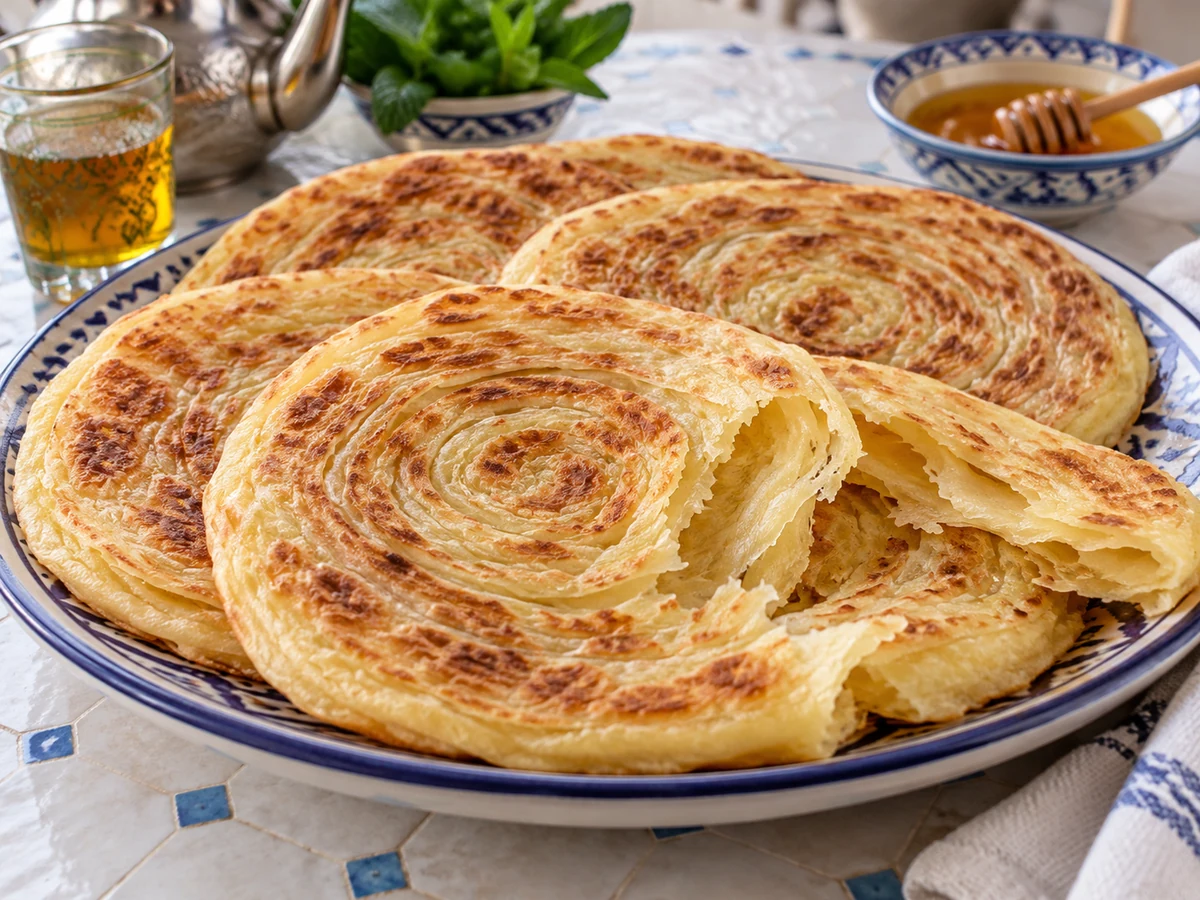
Meloui is round and spiral-laminated, distinct from square-folded msemen.
Ingredients
- 350 g wheat flour
- 150 g extra-fine durum semolina
- 300–330 ml lukewarm water
- 7 g salt
- 60 ml oil for shaping
- 50 g melted butter, cooled slightly
- 40 g fine semolina between layers
Preparation
Mix flour, extra-fine semolina and salt with 300 ml water; knead 10–15 minutes, adjusting gradually.
Divide into eight oiled balls using measured oil; cover and rest thirty minutes.
Mix remaining oil and butter; stretch a ball thinly on an oiled surface.
Brush with a thin fat film, lightly dust semolina and fold into a long layered band.
Roll loosely into a spiral, tuck the end underneath and rest covered 15–20 minutes.
Flatten gently into a 15–18 cm disc; heat a heavy pan moderately.
Cook 5–7 minutes, turning several times until golden patches and a cooked centre develop.
Cool on a rack; loosen edges when safe to handle and freeze spare galettes only after cooling.
Introduction
Meloui is round and spiral-laminated, distinct from square-folded msemen. Keep the extra-fine semolina for the dough separate from the small amount sprinkled between layers. Rest retracting dough instead of tearing it. Tiny holes can be folded inside; repeated large tears suggest dryness or inadequate rest. Thin measured fat films separate layers without flooding the pan. Flatten spirals gently to retain their rings. Serve with optional honey separately.
Rest is essential for stretching the dough thinly without tearing. Oil the work surface instead of dusting heavily with flour. Spread the measured fat as thin films and use only a light dusting of semolina between layers. Roll the band into a spiral without compressing it, rest again and flatten gently. Cook on moderate heat, turning repeatedly; dark patches should be golden, not burned. Loosen the edges only when safe to handle.
Use clean equipment and the specified food-grade ingredients. Weigh the usable product and measure liquid gradually. Times are guides: the centre and texture determine when cooking is finished. Let very hot food cool enough for safe handling. Cool leftovers promptly, refrigerate when needed and follow the purchased product’s storage directions. A fresh homemade mixture is not a shelf-stable preserve.
Cultural context
This is a home adaptation of a preparation documented in the Moroccan culinary repertoire. Ingredient proportions, sizes and serving habits vary between households. The linked source supports the culinary context; the measured formula here is intended for a domestic kitchen rather than as a claim to one exclusive regional tradition.
Context source: https://tasteofmaroc.com/moroccan-meloui-recipe/
Tips
Rest spirals before flattening.
Separate dough and layering semolina.
Do not force retracting dough.
Loosen layers only once safe to handle.
Variations
Keep the listed base for a first attempt. Changing flour, fat or liquid can alter absorption and texture. Adjust one element at a time and identify any new allergens rather than assuming that an alternative gives an identical result.
Accompaniments
Serve the stated portions according to appetite, with an appropriate meal or drink. Offer optional sweet or spicy accompaniments separately so the main preparation keeps its own flavour. Assemble moist fillings only at serving time.
Nutrition notes
Nutritional composition depends on the ingredients and actual portion. Wheat contains gluten; milk, butter, eggs and sesame are allergens whenever listed. Added oil, sugar and serving accompaniments change the complete meal. No numerical calorie or micronutrient values are claimed without an appropriate calculation.