Khobz
Two round loaves combine wheat flour and semolina for a supple but substantial crumb.
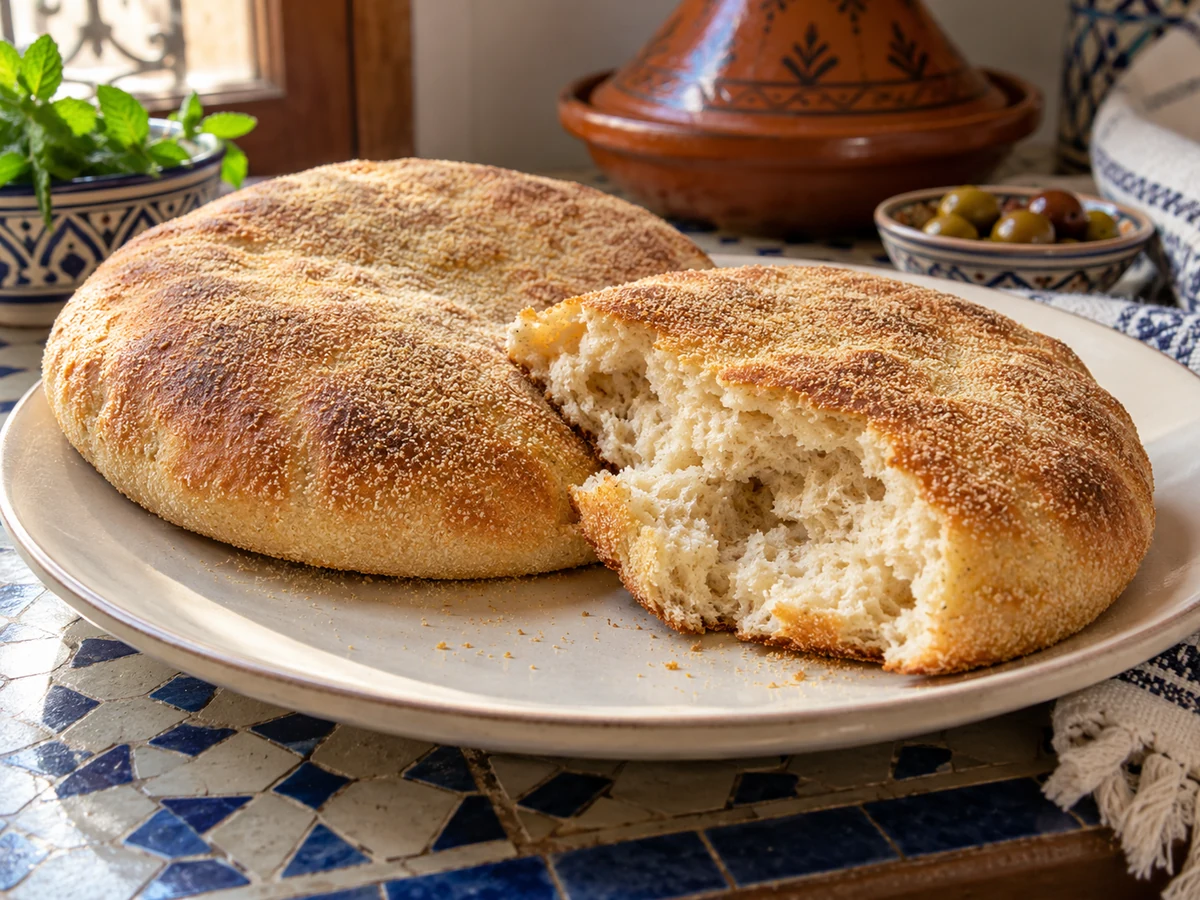
Ingredients
- 400 g wheat flour
- 100 g fine durum semolina
- 320–340 ml lukewarm water
- 7 g instant dry baker’s yeast
- 8 g salt
- 1 teaspoon sugar
- 1 tablespoon olive oil
- 20 g semolina for shaping
Preparation
Mix flour, semolina, yeast and sugar; add 300 ml water and hydrate ten minutes.
Add salt and oil; knead 10–12 minutes, gradually adding reserved water until supple.
Cover and rise about one hour until noticeably enlarged; allow longer in a cool room.
Gently deflate, divide in two, round and rest covered ten minutes.
Flatten into 20 cm discs about 1.5 cm thick; proof covered 30–40 minutes on lined trays.
Preheat conventional oven to 220°C and prick each loaf in three or four places.
Bake 20–25 minutes until golden underneath and cooked inside; lower heat if browning too quickly.
Cool on a rack at least twenty minutes before cutting; freeze the second loaf only once fully cooled.
Introduction
Two round loaves combine wheat flour and semolina for a supple but substantial crumb. Add the final water only after hydration; different flours absorb differently. Keep discs even rather than stretching thin like pancakes. Pricking releases steam without requiring a regular pocket. The crumb can seem gummy if cut while very hot. Serve with a tagine or soup; bread already supplies a cereal accompaniment.
For leavened dough, use lukewarm rather than hot liquid. Allow flour and semolina to hydrate before adding more flour. Knead until supple, then judge fermentation by increased volume rather than the clock alone. Keep dough covered to prevent a dry skin. Rest divided pieces briefly before shaping; a dough that retracts needs more relaxation. Use an even thickness and test the first cooked piece. Cool bread on a rack before sealing or freezing it.
Use clean equipment and the specified food-grade ingredients. Weigh the usable product and measure liquid gradually. Times are guides: the centre and texture determine when cooking is finished. Let very hot food cool enough for safe handling. Cool leftovers promptly, refrigerate when needed and follow the purchased product’s storage directions. A fresh homemade mixture is not a shelf-stable preserve.
Cultural context
This is a home adaptation of a preparation documented in the Moroccan culinary repertoire. Ingredient proportions, sizes and serving habits vary between households. The linked source supports the culinary context; the measured formula here is intended for a domestic kitchen rather than as a claim to one exclusive regional tradition.
Context source: https://tasteofmaroc.com/moroccan-bread-khobz-recipe/
Tips
Cool before cutting.
Add final water after hydration.
Keep thickness even.
Freeze only when completely cool.
Variations
Keep the listed base for a first attempt. Changing flour, fat or liquid can alter absorption and texture. Adjust one element at a time and identify any new allergens rather than assuming that an alternative gives an identical result.
Accompaniments
Serve the stated portions according to appetite, with an appropriate meal or drink. Offer optional sweet or spicy accompaniments separately so the main preparation keeps its own flavour. Assemble moist fillings only at serving time.
Nutrition notes
Nutritional composition depends on the ingredients and actual portion. Wheat contains gluten; milk, butter, eggs and sesame are allergens whenever listed. Added oil, sugar and serving accompaniments change the complete meal. No numerical calorie or micronutrient values are claimed without an appropriate calculation.