Green tea with mint
This simple single-infusion home method does not reproduce every step of social tea service in Mali. Green teas vary; taste instead of imposing a long infusion. Do not squeeze mint hard in the filter. Filter promptly to stop extraction. More mint cannot repair an excessively bitter infusion. Tea contains caffeine; sugar depends on the chosen dose. Serve alone or with a small peanut or pancake accompaniment, identifying its allergens.
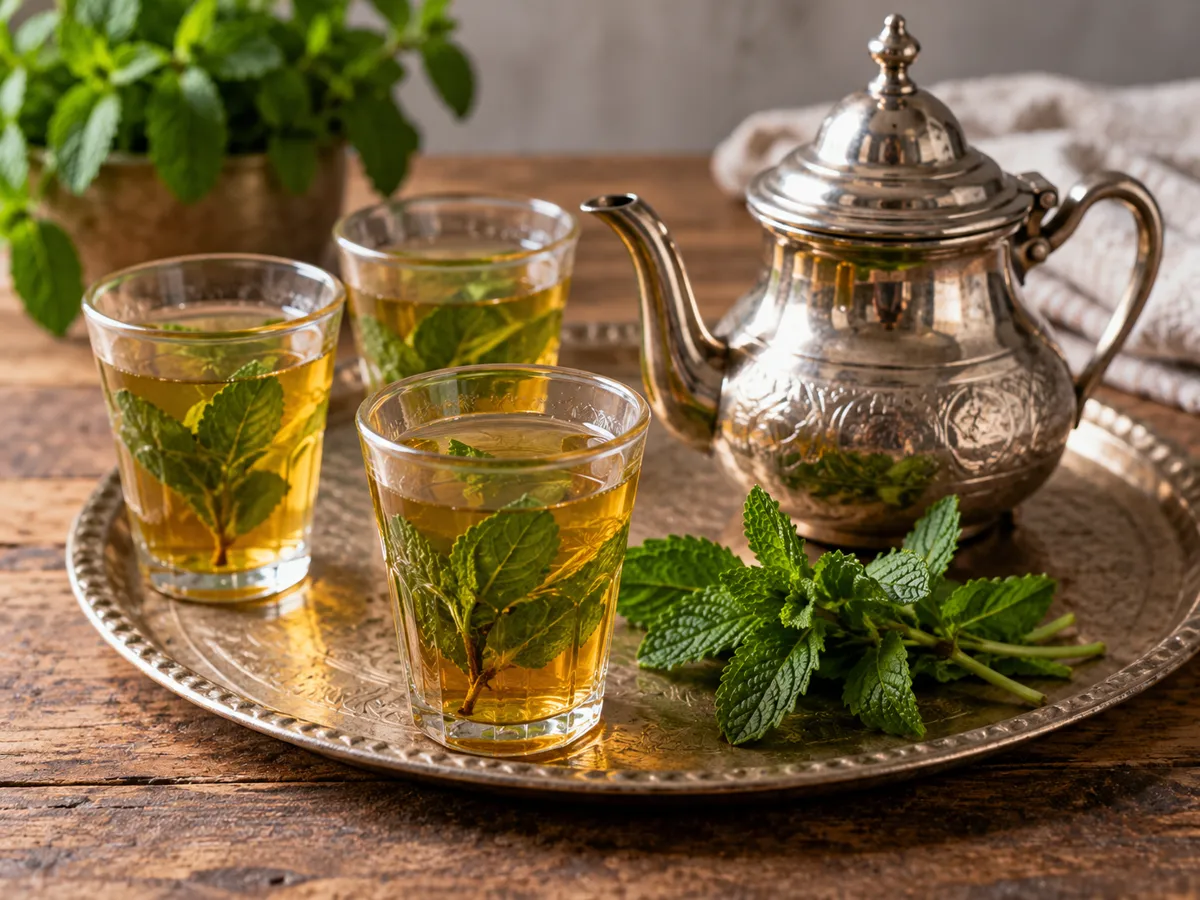
Ingredients
- 8 g food-grade green tea
- 600 ml drinking water
- 20 g washed fresh mint
- 20–40 g sugar, optional and adjusted to taste
- Small heat-resistant glasses
Preparation
Wash mint, discard damaged parts and prepare a heat-safe teapot.
Heat 600 ml water, then cool briefly towards 80–85°C or follow tea directions.
Put tea in pot, add hot water and start with a two-minute infusion.
Add mint, infuse another 1–2 minutes and taste a small sample.
Remove or strain leaves when the flavour is right, before excessive bitterness develops.
Dissolve optional sugar gradually, tasting before using the maximum.
Reheat gently only if necessary, without prolonged boiling.
Serve in small heat-resistant glasses and warn that they are hot.
Introduction
This simple single-infusion home method does not reproduce every step of social tea service in Mali. Green teas vary; taste instead of imposing a long infusion. Do not squeeze mint hard in the filter. Filter promptly to stop extraction. More mint cannot repair an excessively bitter infusion. Tea contains caffeine; sugar depends on the chosen dose. Serve alone or with a small peanut or pancake accompaniment, identifying its allergens.
Prepare and measure all ingredients before starting. Cooking times are guides: check tenderness, moisture and seasoning with the actual product. The quantities serve the number of portions indicated on the recipe.
Strain the mint when the tea reaches the flavour you want. Keep the teapot covered between servings and offer sugar separately if desired.
Cultural context
This is a home adaptation for the Mali recipe collection. Its quantities and method describe this particular preparation; they do not establish an exclusively Malian origin or a single ancestral regional tradition. Optional accompaniments remain separate from the basic recipe.
Tips
Check texture as well as the timer.
Adjust liquid in small amounts and taste before adding more salt.
Prepare accompaniments before the final cooking stage.
Filter as soon as the flavour is right: leaves left in the teapot keep infusing during service.
Planning
Use clean utensils and drinking water. Keep raw fish and meat refrigerated and separate from ready-to-eat food. Adjust water gradually rather than adding the entire allowance automatically. Taste a slightly cooled sample and check the centre of the thickest pieces before serving. Cool leftovers promptly in shallow portions, refrigerate and reheat only the amount needed.
Variations
Keep the listed ingredients for the basic version. Substitutions change flavour, cooking time and sometimes allergens. Scale solid ingredients proportionally, then adjust liquid to the pan and product; doubling the quantity does not automatically double the cooking time.
Accompaniments
Serve a small portion at the intended temperature, alone or with a modest snack. Check peanut, wheat or other allergens in any accompaniment.
Nutrition notes
The nutritional profile depends on ingredients, portions and the complete meal. Added oil and sugar change energy intake. No exact calorie or micronutrient figures are claimed without a calculation for the actual ingredients; check allergens when substituting products.