Néré fruit-pulp drink
The drink uses naturally sweet yellow fruit pulp, not the fermented seeds used for soumbala. These products are not interchangeable. Some settling is normal; stir the jug to distribute pulp evenly. Reject an abnormally smelling or tasting product rather than masking it with sugar. Serve a small chilled portion; extra dilution can be adjusted glass by glass.
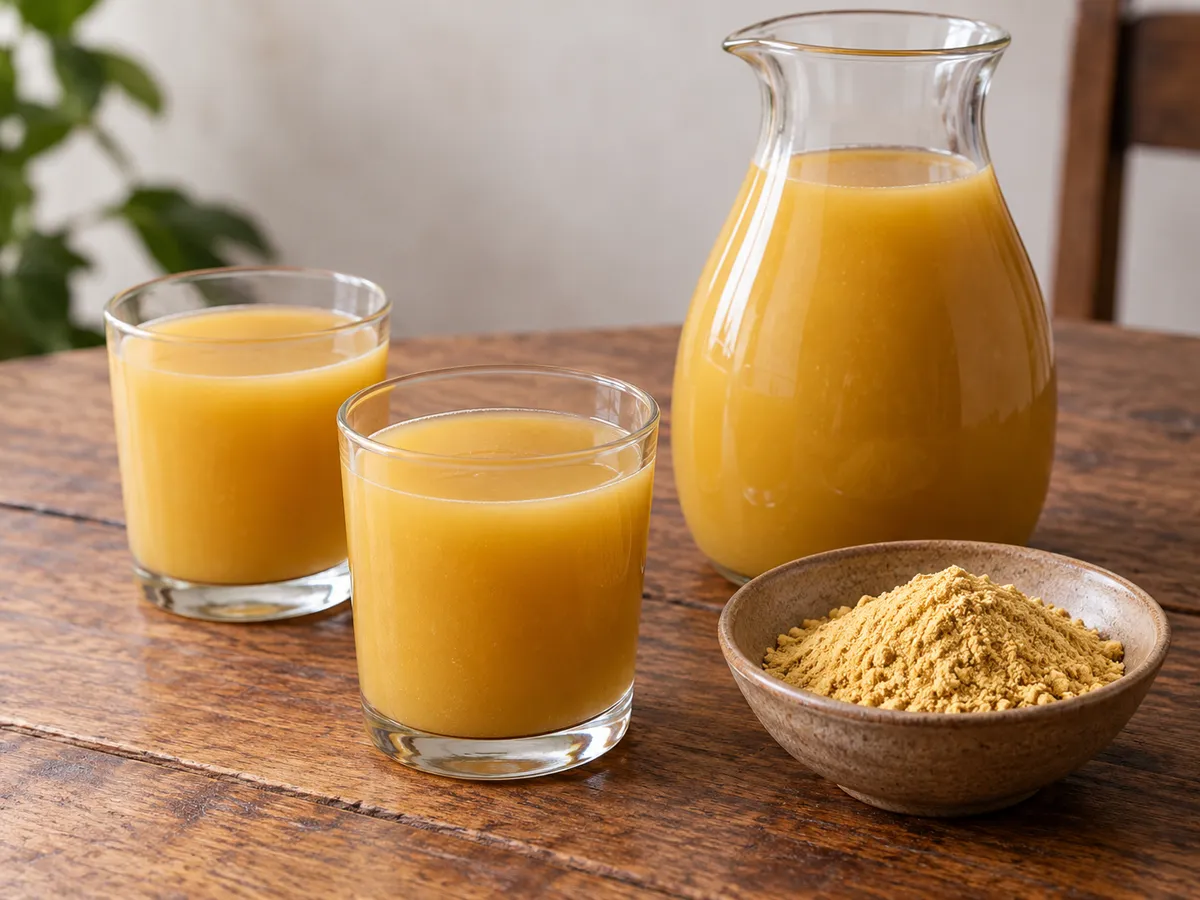
Ingredients
- 100 g dry food-grade yellow néré pulp, without seeds
- 1 litre cool drinking water
- 0–30 g sugar, only if needed
- 1 teaspoon lemon juice, optional
Preparation
Buy identified yellow edible néré pulp intended for drinks; check for seeds and foreign matter.
Pour 300 ml drinking water over pulp in a clean bowl.
Break up clumps and hydrate fifteen minutes in the refrigerator.
Gradually mix in the remaining 700 ml water.
Strain through a fine sieve or clean food-grade cloth to the desired smoothness.
Taste and add small, fully dissolved amounts of sugar only if needed.
Add optional lemon a few drops at a time, tasting between additions.
Pour into a clean jug, refrigerate and stir before serving if sediment appears.
Introduction
The drink uses naturally sweet yellow fruit pulp, not the fermented seeds used for soumbala. These products are not interchangeable. Some settling is normal; stir the jug to distribute pulp evenly. Reject an abnormally smelling or tasting product rather than masking it with sugar. Serve a small chilled portion; extra dilution can be adjusted glass by glass.
Prepare and measure all ingredients before starting. Cooking times are guides: check tenderness, moisture and seasoning with the actual product. The quantities serve the number of portions indicated on the recipe.
Test dilution, sugar and lemon in one cold glass first. Stir the pitcher before serving if the pulp has settled.
Cultural context
This is a home adaptation for the Mali recipe collection. Its quantities and method describe this particular preparation; they do not establish an exclusively Malian origin or a single ancestral regional tradition. Optional accompaniments remain separate from the basic recipe.
Tips
Check texture as well as the timer.
Adjust liquid in small amounts and taste before adding more salt.
Prepare accompaniments before the final cooking stage.
Stir the jug just before pouring so the first and last glasses have a similar concentration.
Planning
Use clean utensils and drinking water. Keep raw fish and meat refrigerated and separate from ready-to-eat food. Adjust water gradually rather than adding the entire allowance automatically. Taste a slightly cooled sample and check the centre of the thickest pieces before serving. Cool leftovers promptly in shallow portions, refrigerate and reheat only the amount needed.
Variations
Keep the listed ingredients for the basic version. Substitutions change flavour, cooking time and sometimes allergens. Scale solid ingredients proportionally, then adjust liquid to the pan and product; doubling the quantity does not automatically double the cooking time.
Accompaniments
Serve a small portion at the intended temperature, alone or with a modest snack. Check peanut, wheat or other allergens in any accompaniment.
Nutrition notes
The nutritional profile depends on ingredients, portions and the complete meal. Added oil and sugar change energy intake. No exact calorie or micronutrient figures are claimed without a calculation for the actual ingredients; check allergens when substituting products.