Goat stew with tomatoes
The cut and age of goat determine cooking time; allow a margin. If meat is still firm, maintain liquid and continue gently instead of increasing heat sharply. Add carrots according to the actual progress. Aubergine can replace carrots but usually enters later. Serve with rice, fonio or cereal couscous to absorb the sauce.
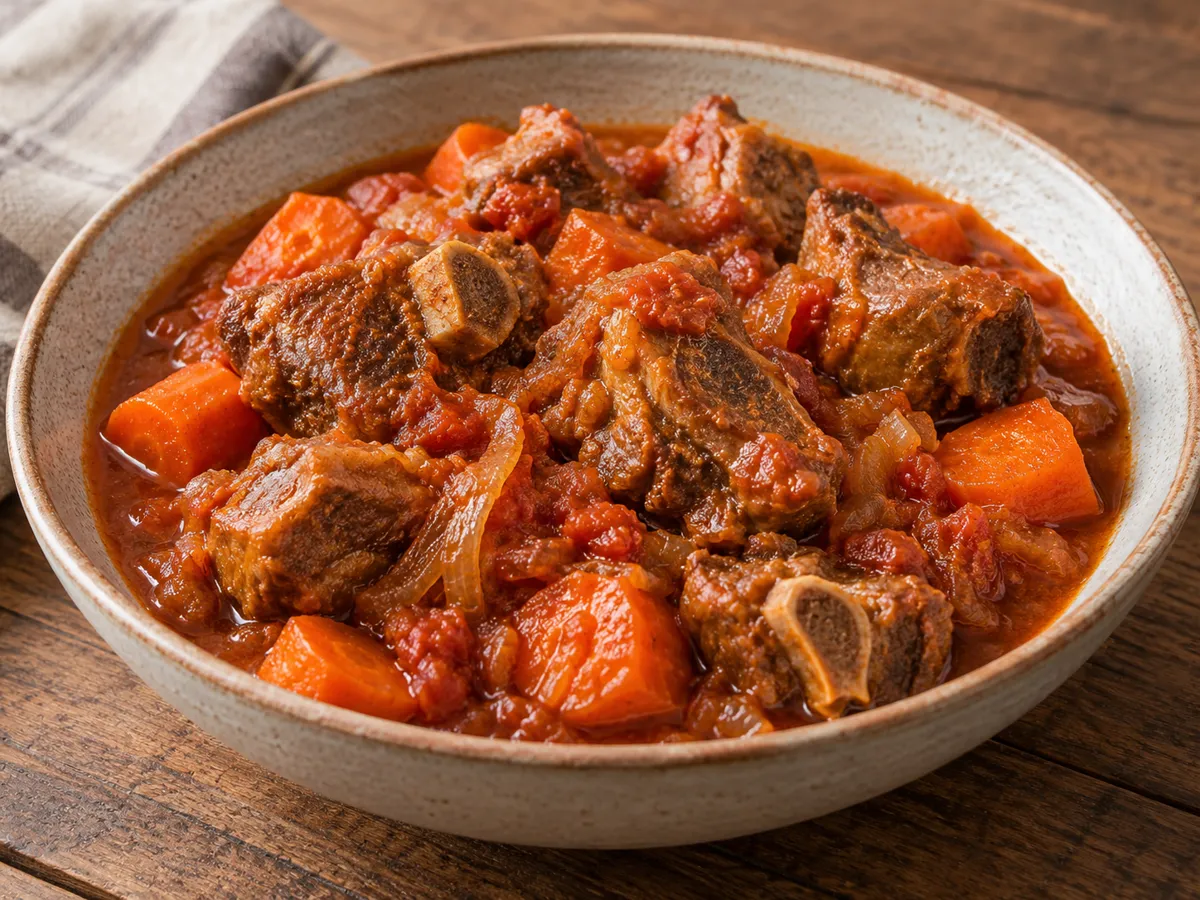
Ingredients
- 800 g goat pieces suitable for stewing
- 500 g chopped tomatoes
- 2 onions
- 2 garlic cloves
- 2 carrots
- 2 tablespoons oil
- 750 ml water, then adjust
- 1 bay leaf
- Salt
- Pepper
Preparation
Pat goat dry, slice onions, crush garlic and cut carrots into chunks.
Brown meat in hot oil in batches; reserve.
Soften onions in the casserole eight minutes, then add garlic and tomatoes.
Cook tomatoes ten minutes; return meat and add 750 ml water and bay leaf.
Bring to a simmer, cover and cook gently 1 1/2 hours, checking liquid.
Test meat and continue if necessary; add carrots about thirty minutes before the expected finish.
Once tender, reserve pieces if the sauce needs a short uncovered reduction.
Remove bay leaf, season and return meat to the hot sauce to serve.
Introduction
The cut and age of goat determine cooking time; allow a margin. If meat is still firm, maintain liquid and continue gently instead of increasing heat sharply. Add carrots according to the actual progress. Aubergine can replace carrots but usually enters later. Serve with rice, fonio or cereal couscous to absorb the sauce.
Prepare and measure all ingredients before starting. Cooking times are guides: check tenderness, moisture and seasoning with the actual product. The quantities serve the number of portions indicated on the recipe.
Test the goat meat before adding carrots. If the meat is tender and the sauce is thin at the end, remove the meat briefly and reduce the sauce.
Cultural context
This is a home adaptation for the Mali recipe collection. Its quantities and method describe this particular preparation; they do not establish an exclusively Malian origin or a single ancestral regional tradition. Optional accompaniments remain separate from the basic recipe.
Tips
Check texture as well as the timer.
Adjust liquid in small amounts and taste before adding more salt.
Prepare accompaniments before the final cooking stage.
Reserve cooked meat before reducing sauce, then return it without stirring roughly.
Planning
Use clean utensils and drinking water. Keep raw fish and meat refrigerated and separate from ready-to-eat food. Adjust water gradually rather than adding the entire allowance automatically. Taste a slightly cooled sample and check the centre of the thickest pieces before serving. Cool leftovers promptly in shallow portions, refrigerate and reheat only the amount needed.
Variations
Keep the listed ingredients for the basic version. Substitutions change flavour, cooking time and sometimes allergens. Scale solid ingredients proportionally, then adjust liquid to the pan and product; doubling the quantity does not automatically double the cooking time.
Accompaniments
Serve with plain rice, fonio or cereal couscous to absorb the sauce. Offer chilli separately.
Nutrition notes
The nutritional profile depends on ingredients, portions and the complete meal. Added oil and sugar change energy intake. No exact calorie or micronutrient figures are claimed without a calculation for the actual ingredients; check allergens when substituting products.