Maize porridge
Fine flour makes a smoother porridge than coarse meal; their water and cooking requirements differ. Follow shorter packet directions for precooked flour. Porridge thickens on standing, so test a slightly cooled spoonful before adding more flour. Never stir raw flour in just before serving.
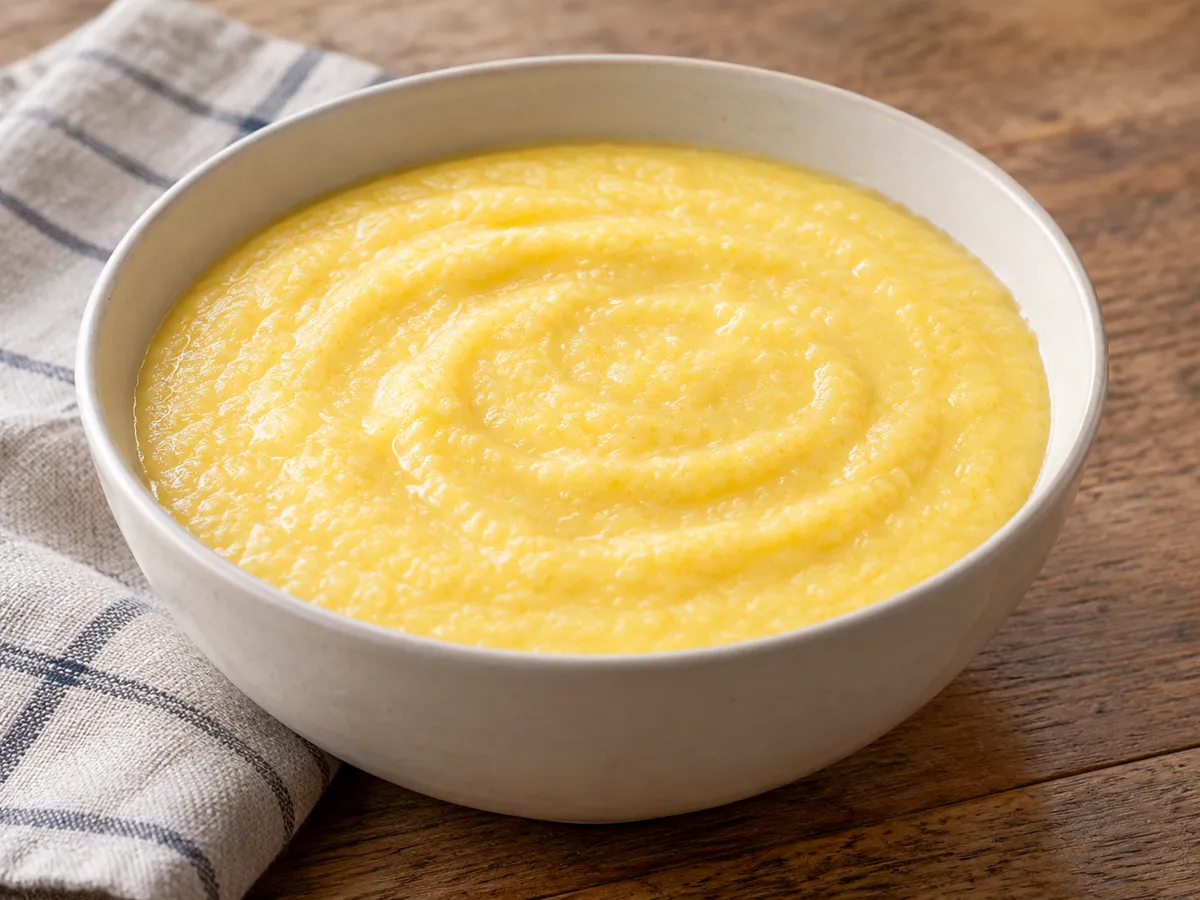
Ingredients
- 100 g fine food-grade maize flour, not precooked
- 1 litre water
- 20–40 g sugar, optional and to taste
- 1 pinch salt
- 1 small pinch cinnamon, optional
Preparation
Weigh flour and measure 250 ml from the litre of water.
Whisk flour into the cold water until no dry pockets remain.
Bring remaining 750 ml water to a simmer in a heavy pan with salt.
Whisk the flour mixture again and pour slowly into the hot water while whisking.
Reduce heat after thickening and cook 20–25 minutes, stirring down to the bottom.
Cool a spoonful slightly and taste; continue cooking if floury.
Add optional sugar gradually and cinnamon if desired; loosen with hot water if needed.
Divide between four bowls and let cool briefly before eating.
Introduction
Fine flour makes a smoother porridge than coarse meal; their water and cooking requirements differ. Follow shorter packet directions for precooked flour. Porridge thickens on standing, so test a slightly cooled spoonful before adding more flour. Never stir raw flour in just before serving.
Prepare and measure all ingredients before starting. Cooking times are guides: check tenderness, moisture and seasoning with the actual product. The quantities serve the number of portions indicated on the recipe.
Whisk the slurry again just before pouring it in. Check the thickness in a cool bowl and offer sugar and cinnamon separately.
Cultural context
This is a home adaptation for the Mali recipe collection. Its quantities and method describe this particular preparation; they do not establish an exclusively Malian origin or a single ancestral regional tradition. Optional accompaniments remain separate from the basic recipe.
Tips
Check texture as well as the timer.
Adjust liquid in small amounts and taste before adding more salt.
Prepare accompaniments before the final cooking stage.
Use a sufficiently tall pan and reduce heat as soon as thick bubbles appear to limit splashes.
Planning
Use clean utensils and drinking water. Keep raw fish and meat refrigerated and separate from ready-to-eat food. Adjust water gradually rather than adding the entire allowance automatically. Taste a slightly cooled sample and check the centre of the thickest pieces before serving. Cool leftovers promptly in shallow portions, refrigerate and reheat only the amount needed.
Variations
Keep the listed ingredients for the basic version. Substitutions change flavour, cooking time and sometimes allergens. Scale solid ingredients proportionally, then adjust liquid to the pan and product; doubling the quantity does not automatically double the cooking time.
Accompaniments
Serve warm in small bowls for breakfast or a snack. Offer sugar and lemon separately when listed, rather than sweetening or acidifying the whole pan heavily.
Nutrition notes
The nutritional profile depends on ingredients, portions and the complete meal. Added oil and sugar change energy intake. No exact calorie or micronutrient figures are claimed without a calculation for the actual ingredients; check allergens when substituting products.