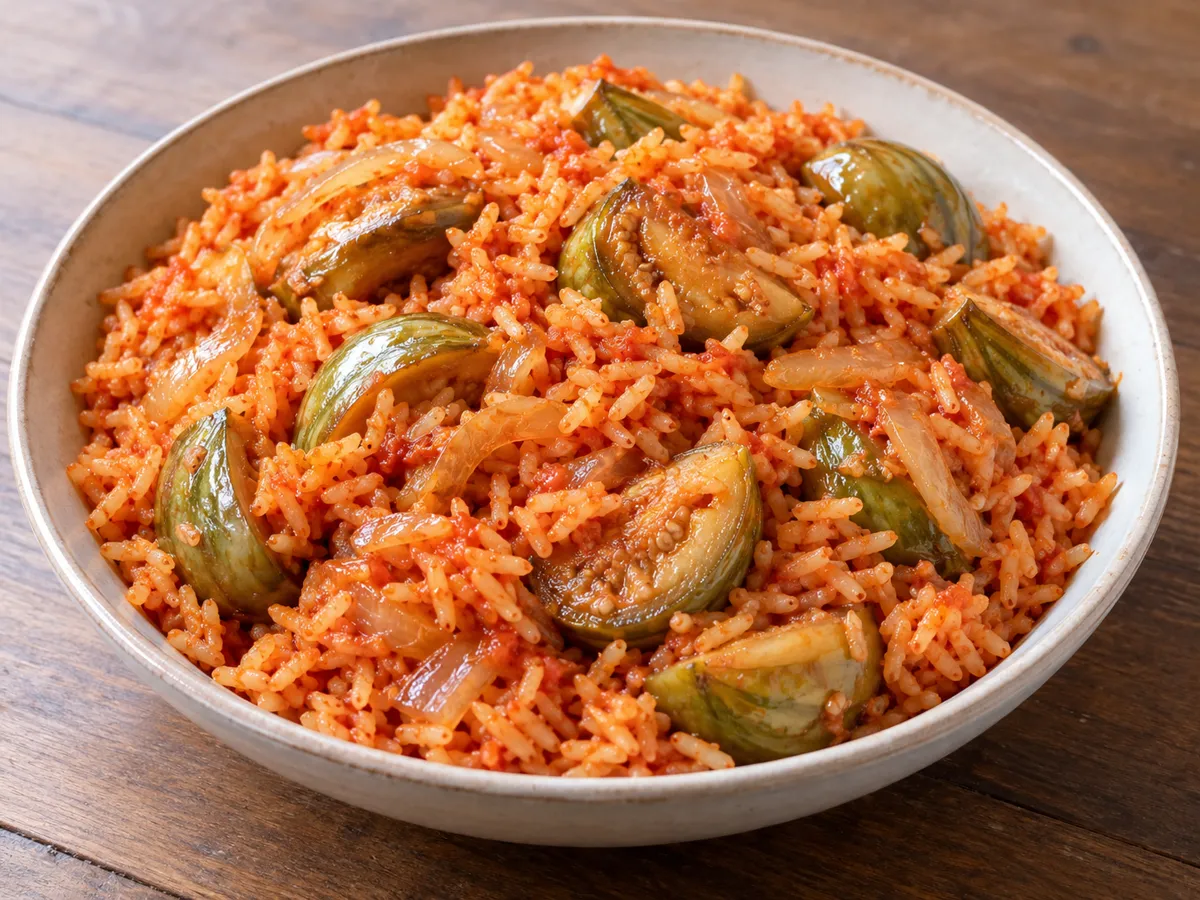
Rice with African aubergines
Precooking the aubergines in tomato and reserving them during rice absorption keeps visible pieces. Include tomato juices when measuring the rice liquid. Bitterness varies: taste cooked aubergine and ensure tenderness before changing seasoning. Remove some seeds if the centre is very spongy. Serve with cowpeas or separately grilled meat.
Ingredients
- 300 g uncooked long-grain rice, not parboiled
- 400 g edible African aubergines
- 250 g chopped tomatoes
- 1 onion
- 2 tablespoons oil
- 450–550 ml water, adjusted to rice and tomato juices
- Salt
- Chilli, optional
Preparation
Wash aubergines, remove stalks and cut even wedges; rinse rice.
Soften sliced onion in oil for eight minutes.
Add tomatoes and reduce ten minutes, stirring occasionally.
Add aubergines and 150 ml water; cover and cook fifteen minutes until beginning to soften.
Reserve tender wedges; measure remaining juices and top up to the liquid volume required for 300 g rice.
Add drained rice to simmering liquid, salt lightly, cover and cook gently as directed.
Return aubergines on top during the last five minutes to finish and warm through.
Check rice, rest five minutes off the heat and serve without breaking the wedges.
Introduction
Precooking the aubergines in tomato and reserving them during rice absorption keeps visible pieces. Include tomato juices when measuring the rice liquid. Bitterness varies: taste cooked aubergine and ensure tenderness before changing seasoning. Remove some seeds if the centre is very spongy. Serve with cowpeas or separately grilled meat.
Prepare and measure all ingredients before starting. Cooking times are guides: check tenderness, moisture and seasoning with the actual product. The quantities serve the number of portions indicated on the recipe.
Set aside any eggplant wedges that soften early and return them over the cooked rice. If the tomato sauce is already sticking, loosen it with some of the cooking water first.
Cultural context
This is a home adaptation for the Mali recipe collection. Its quantities and method describe this particular preparation; they do not establish an exclusively Malian origin or a single ancestral regional tradition. Optional accompaniments remain separate from the basic recipe.
Tips
Check texture as well as the timer.
Adjust liquid in small amounts and taste before adding more salt.
Prepare accompaniments before the final cooking stage.
Cover cooked aubergine wedges while waiting for the rice so they do not dry out.
Planning
Use clean utensils and drinking water. Keep raw fish and meat refrigerated and separate from ready-to-eat food. Adjust water gradually rather than adding the entire allowance automatically. Taste a slightly cooled sample and check the centre of the thickest pieces before serving. Cool leftovers promptly in shallow portions, refrigerate and reheat only the amount needed.
Variations
Keep the listed ingredients for the basic version. Substitutions change flavour, cooking time and sometimes allergens. Scale solid ingredients proportionally, then adjust liquid to the pan and product; doubling the quantity does not automatically double the cooking time.
Accompaniments
Serve with cooked vegetables and an appropriate fish, meat or legume accompaniment; avoid adding redundant starchy sides automatically. Offer lemon or chilli separately.
Nutrition notes
The nutritional profile depends on ingredients, portions and the complete meal. Added oil and sugar change energy intake. No exact calorie or micronutrient figures are claimed without a calculation for the actual ingredients; check allergens when substituting products.