Mango juice
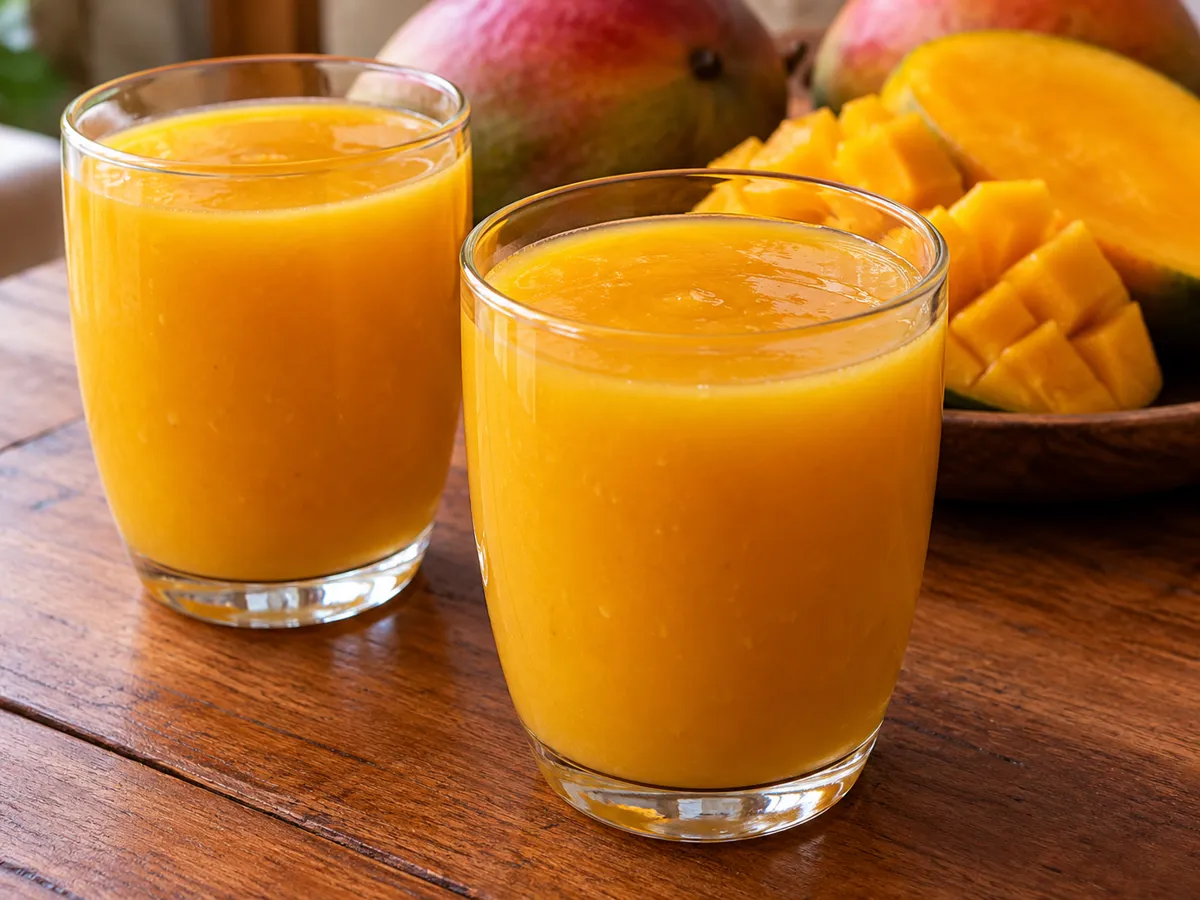
A velvety drink of ripe mango pulp blended with water, sweetened only after tasting.
Ingredients
- 800 g ripe mango flesh, without skin or stones
- 600 ml fresh drinking water, added gradually
- 10 ml strained lime juice, optional
- 0–30 g sugar, only after tasting
Preparation
Wash and dry the whole mangoes. Prepare a clean board, suitable knife and separate containers for usable flesh and waste. Dry skin is easier to hold safely than wet, slippery fruit.
Cut the cheeks alongside the flat stone. Scoop out or peel the flesh, remove damaged parts and tough fibres, and weigh 800 g usable flesh. Cut pieces small enough for the blender.
Blend some flesh with about 250 ml fresh water, pulsing first and then blending until smooth. Work in batches if necessary, keeping within the appliance’s stated capacity.
Add the remaining water gradually, blending briefly between additions. Stop when the drink pours in a soft ribbon. Do not automatically use every millilitre, and do not try to correct excessive dilution with sugar.
Taste for long fibres. If needed, push through a fine sieve with the back of a spoon. This is optional for low-fibre mangoes and removes some pulp; the drink need not become transparent.
Taste before sweetening. Add optional lime a little at a time, then small amounts of sugar only if needed. Dissolve and taste again; 30 g is a working upper amount, not a mandatory addition.
Pour into a clean jug and refrigerate until serving if not drinking immediately. Stir gently if pulp separates. Ice is unnecessary; use only ice made with safe drinking water if you add it.
Stir between pouring six small glasses so pulp is distributed evenly. Offer additional sugar separately. Make a quantity suited to the meal: this uncooked method is not pasteurisation or long-term bottling.
Introduction
This drink keeps mango pulp rather than extracting a clear juice. Ripe fruit supplies its main flavour, and added water controls the texture. Weigh the flesh after removing skin and stones: whole-fruit weight is not interchangeable. The quantities make six small glasses. Water, lime and sugar are adjusted gradually, with sugar remaining optional.
Cultural context
MaliTourisme includes mango juice among local drinks. This supports including it in the Mali collection without claiming an exclusively Malian origin. These weighed proportions are a home adaptation.
Context source: https://malitourisme.com/index.php/decouvrir/gastronomie
Tips
Weigh usable flesh, not whole fruit.
Add water gradually.
Taste before adding lime or sugar.
Stir the jug before serving.
Planning
Use a knife, board, scales, blender and clean jug; a sieve is optional. Active preparation takes about 20 minutes, excluding chilling. Use clean equipment, safe water and prompt service.
Variations
Ginger, milk or yoghurt changes the drink and should be named as a variant. Plain frozen pulp is possible when prepared according to its label; check for added sugar. Industrial concentrate requires different proportions.
Accompaniments
Serve a small glass with a meal or snack. Its fruity flavour can accompany spicy food without heavy sweetening. A tasting can compare mango, ginger and hibiscus drinks as distinct preparations.
Nutrition notes
Mango supplies carbohydrates and micronutrients depending on fruit and portion. Retaining pulp preserves more plant material than intensive filtering. No calorie or vitamin figures are claimed without calculations for the actual ingredients.