Torshi
Torshi refers to a family of pickled vegetables that are found in various forms in several regional cuisines.
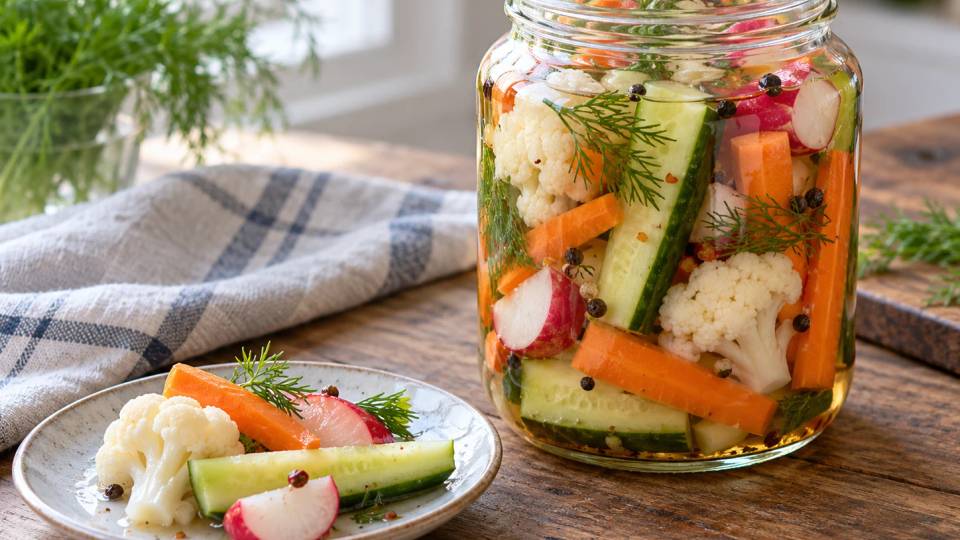
Ingredients
- 600 g mixed vegetables: 200 g carrots, 150 g cauliflower, 150 g cucumber and 100 g radishes
- 300 ml of 5% acidity food vinegar
- 300 ml of water
- 15 g fine salt
- 15 g of sugar optional
- 1 teaspoon coriander seeds
- 1 bay leaf
- 1 small chilli pepper, optional
Preparation
Prepare a clean jar and a suitable lid. This is a vinegar pickle to keep in the refrigerator, not a shelf-stable preserve or a fermentation left at room temperature. Check the label to make sure the food vinegar has 5 % acidity, and do not replace it with homemade vinegar of unknown acidity.
Wash the vegetables, remove damaged parts and cut even pieces. Cut the carrots into thin sticks and the cauliflower into small florets. The cucumber and radishes can remain raw. If you prefer a less firm texture, blanch the carrot and cauliflower for two minutes, then cool and drain them thoroughly.
Bring the water, vinegar, salt and optional sugar to a gentle simmer in a non-reactive saucepan. Stir to dissolve, add the coriander seeds and bay leaf, then remove from the heat. Avoid prolonged reduction, which would make the volume and balance of the liquids less predictable.
Arrange the vegetables in the jar without crushing them. Add the optional chilli pepper and pour in the liquid so it surrounds the vegetables well. Their shape may make an additional jar necessary: do not arbitrarily reduce the proportion of vinegar to make a large container easier to fill.
Let the strongest heat dissipate without leaving the jar on the worktop all day, then cover and refrigerate promptly. Wait at least overnight for the flavour. Cold storage is part of this method; merely closing the lid does not sterilise the contents.
Use a clean utensil to take out a portion and keep the remainder in the refrigerator. Make this small batch for meals over the following days, without claiming an unvalidated long storage time. Serve small amounts and do not put vegetables that have already been exposed on the table back in the jar.
Introduction
Torshi is a family of marinated vegetables found in various forms in many regional cuisines. This sheet for the Libya heading chooses a clearly defined domestic method: vegetables in vinegar, kept cold, intended to be served in small portions. It does not promise months of storage in a closet.
Carrots, cauliflower, cucumber and radish provide different textures. Regular cutting and slight blanching of the harder vegetables helps to adjust the crunch. Vinegar should be food grade and of known acidity. Sugar is optional and is only for taste; it does not make the preparation a long-lasting product. To preserve beyond a short refrigerated consumption, it would be necessary to follow a recipe and treatment validated for this use.
Preparation notes
Distinguish between methods. This torshi is a pickled pickle kept in the fridge. It is neither a fermentation left at room temperature nor a canned product treated for storage in a cupboard. The closed lid, the perceived acidity or the presence of salt are not sufficient to certify a long shelf-life. The cold and a small amount prepared for nearby meals are part of the chosen organization.
The vinegar must be food grade and of known acidity. Read the label and use the product indicated. A homemade vinegar with an unknown acidity is not automatically a substitute for a five percent vinegar. For long-lasting canning, a tested recipe must be followed in its entirety, including proportions, packaging and processing. This sheet does not claim to provide such a protocol.
The crunch depends on the vegetable and how it is cut. Carrots and cauliflower are firmer than cucumbers. Thin sticks and small flowers allow for a more even result. A brief blanching of hard vegetables can be chosen for texture, but it does not sterilize the entire jar and does not replace cold keeping. Drain carefully after this step.
Cleaning the container and utensils is still important. Wash the jar, lid, and tools before using them. Don’t press the vegetables so hard that they block the liquid from flowing. If your container is too small, take a second smaller jar rather than changing the proportions of the liquid just to fill a larger container.
Seasoning is regulated by the flavours, without transforming a random preservation method. Optional sugar softens the perception of vinegar but does not replace acidity. Chili remains a taste choice. A bay leaf or a few coriander seeds are often enough; an accumulation of spices can mask the differences between vegetables without improving their texture.
When serving, use a clean spoon or tongs and take only the amount needed. Keep the rest in the refrigerator. Do not pour into stock served pieces or liquid from another jar. Prepare a small new quantity when necessary rather than prolong an old batch indefinitely. These vegetables provide a tart contrast in small portions; they are not intended to replace all the fresh garnishes of the meal.
Cultural context
Pickled vegetables are a shared condiment and not an exclusively Libyan specialty; the name is retained as a general culinary reference, while the vinegar-and-refrigerator method is explicitly described to avoid confusion with fermentation or processed canning.
Variations
Choose fewer varieties for a small first batch and keep the proportions of the liquid. A small amount of garlic would change the flavor, but is not necessary here. For a milder result, do not randomly dilute the vinegar in a preparation that you want to store for a long time; instead, serve a smaller portion.
Accompaniments
A few pieces go with rice, dumplings or bread with filling. They add acidity and crispness, but are not a substitute for a large portion of fresh vegetables. Serve them in a small separate bowl so that they don’t spill their liquid over the whole meal.