Date rub
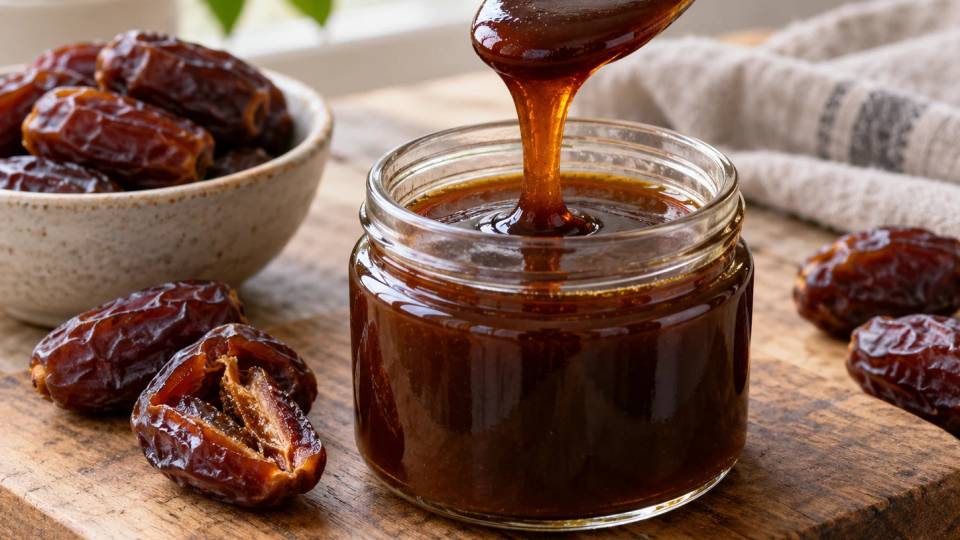
Date rub is a syrup obtained by extracting the fruits in water and then reducing the filtered liquid.
Ingredients
- 1 kg pitted dates, flesh weight
- 2 liters of drinking water at the start
- Additional hot water only if needed for extraction
- No added sugar in this version
Preparation
Check the dates and remove any pits or damaged parts. Cut the fruit into pieces. The weight is for the pulp, not the whole dates with their pits. Prepare a large pot, a colander and clean food tissue to separate the liquid from the pulp.
Pour the dates and two liters of water into the pan. Bring gently to a boil and cook for forty-five minutes to an hour, stirring regularly. The fruit must become soft and unfold. If the water evaporates too strongly before this step, add only a little hot water to continue the extraction.
Crush the dates with a clean spoon or crusher to release more matter into the liquid. Remove from heat and let it simmer enough to handle without burning. Do not press a cloth bag filled with burning pulp directly with your hands.
Strain through the colander lined with cloth. Gently squeeze to collect the liquid, then allow to drain. The amount obtained depends on the dates and the pressure applied. Finer filtration results in a smoother syrup; passing through a lot of pulp results in a thicker, cloudier sauce.
Put the filtered liquid back into a clean saucepan and reduce to a low heat, uncovered. Stir more when the volume decreases. Take a spoon and let it cool to judge the texture: the hot syrup appears more fluid than the cold product. Stop before it turns into a sticky burnt mass.
Pour into small, clean containers suitable for heat, let the most intense heat dissipate and then refrigerate quickly. Yield may be about a few hundred milliliters, but there is no guarantee that all dates will yield the same amount. This method is not a validated cupboard canning; prepare a small stock and freeze surplus if necessary.
Introduction
Date rub is a syrup made by extracting the fruits in water and then reducing the filtered liquid. This sheet describes a homemade version without added sugar to accompany an asida or a small portion of bread, for example. The product is concentrated in flavor and softness; it is served in small amounts rather than as a drink to be drunk from the glass.
The ripeness, variety and humidity of the dates influence the yield. It would therefore be misleading to guarantee exactly the same final volume for each preparation. Texture control on a cooled spoon is more reliable than a rigid reduction time. If the bottom of the pot becomes very dark, the smell is burnt or the boiling is too strong, you should check the heat before losing the fruit’s flavor.
Preparation notes
Understanding extraction. Syrup is made in two phases: water collects some of the soluble matter from the dates, then reduction removes water to concentrate this liquid. Simply adding fruits in very little water and heating until you get a paste is not the same method. The latter preparation can be useful as a stuffing, but it will not give the filtered syrup sought here.
The quality of the fruit is still decisive. Very dry dates may take longer to soften. Fruits that are moist will decompose quickly. The cores and damaged parts should be removed before cooking, without relying on filtration to correct misclassification. A small test preparation allows the yield of the available variety to be known before processing a large volume.
Filtration determines the smoothness. Allow the mixture to cool sufficiently before pressing, to prevent burns. A clean food-safe cloth retains the pulp while letting the liquid pass through; a mesh that is too coarse lets through more particles. Press moderately, without trying to force all the flesh through. The recovered pulp is moist: it cannot be stored as a whole dried date and must be processed separately.
During the reduction, the width of the pan changes the evaporation. A wide container reduces faster than a narrow one; a strong heat increases the risk of sticking when the volume becomes small. Stir more at the end of cooking and observe the bottom. The color depends on the dates and should not be obtained by burning the sugars. A bitter caramel taste that is too strong cannot be corrected by adding more fruit.
To judge the texture, cool a small spoon on a plate. Hot syrup flows more than cold syrup. Stop cooking when it retains a consistency that will still allow pouring. Excessive reduction results in a product difficult to dose, when the goal is to serve a few spoons on an asida or with bread. This condiment is not intended to be drunk as a fruit juice.
The sugar concentration is not sufficient to certify long-term domestic storage. Use small, clean containers, keep the product in cold storage, and freeze the leftovers in portions if you are preparing a lot. A stable canning method would require a recipe and treatment validated for this use. Always use a clean spoon and do not pour into the jar what has already been served at the table.
Cultural context
Date rub is different from carob molasses. Both can accompany a sweet preparation, but they have neither the same fruit nor the same taste. This data sheet names the product actually used and does not bring them together under a single identity.
Variations
A less fine filtration gives a more rustic syrup, to be announced according to the use. Honey does not replace this extraction and constitutes another garnish. Do not prolong a cooking until caramel to obtain artificially a dark color: the sweetness and the fragrance must remain those of the date.
Accompaniments
Pour a few spoons over an asida or offer the syrup in a small bowl with bread. A preparation that is already very sweet does not need much additional watering. Use a clean spoon and quickly close the refrigerated container.