Rice with meat
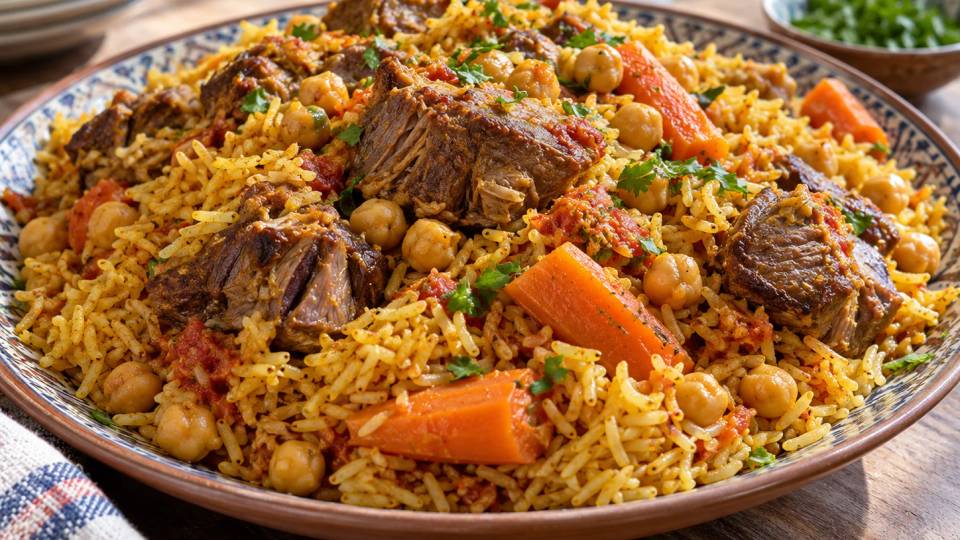
A family rice inspired by the Libyan table, with stewed lamb, chickpeas, carrot and sweet spices. The meat is tenderized before cooking the rice.
Ingredients
- 450 g uncooked long-grain rice
- 750 g boneless lamb shoulder, cut into 3 cm cubes
- 250 g of chickpeas already cooked and drained
- 2 medium carrots, about 250 g
- 2 medium onions, about 250 g
- 3 cloves of garlic
- 300 g crushed tomatoes
- 1 tablespoon tomato paste, about 20 g
- 3 tablespoons olive oil, about 45 ml
- 1 teaspoon of turmeric
- 1 teaspoon sweet paprika
- 1/2 teaspoon cumin
- 1/2 teaspoon black pepper
- 1 level teaspoon salt initially, then adjust to taste
- 1.2 liters of hot water for simmering, plus a reserve to adjust
- 2 tablespoons chopped parsley, optional
Preparation
Prepare the set-up. Cut the meat into regular cubes and sponge them. Chop the onions, chop the garlic and cut the carrots into comparable small pieces. Drain the chickpeas. Keep the dry rice aside for now: it will be rinsed during the simmering. Measure the spices before heating the oil so you can add them quickly without letting the base burn.
Heat the oil in a saucepan over medium-high heat. Brown the lamb in two or three batches, then set aside. Reduce the heat slightly and add the onions. Melt them for six to eight minutes, peeling off the juices with a spoon. Add the garlic and spices, stir for thirty seconds, then stir in the tomato paste. Cook for a minute before pouring in the crushed tomatoes.
Return the meat to the pot, add the 1.2 litres of hot water and salt moderately. Bring to a gentle simmer, partly cover and cook for about one hour to one hour and twenty minutes. The time depends on the cut and the size of the pieces. The meat must yield to the tip of a knife before the rice is added. If it remains firm, extend this stage; do not count on the fifteen minutes of rice to soften it.
Add the carrots during the last 15 minutes of the meat simmering. Meanwhile, rinse the rice in several waters until the water is less cloudy, then allow it to drain well for ten minutes. Check the cooking instructions on the package. Not all varieties of long rice require exactly the same volume of liquid; the mark below corresponds to an absorption cooking in a covered casserole.
Remove the meat and carrots with a skimmer. Pour the cooking broth into a graduated container, keeping the onions and tomatoes with the liquid. Measure about 750 ml of broth for the 450 g of rice. Top up with hot water if you are short of liquid. If there is more, set aside the excess instead of automatically putting everything back in. The broth should be fluid, not reduced to a thick puree.
Pour the drained rice into the pot with the measured broth. Stir once to spread it evenly. Place the meat and carrots on top, then add the cooked chickpeas. Bring to a slight simmer, cover and reduce to minimum. Cook for about fifteen to eighteen minutes, depending on the rice and the package. Avoid constantly opening the lid: steam helps to cook the beans.
Check near the end of the line. If the rice is still firm and the bottom is dry, add two or three tablespoons of warm water to the dry areas, cover and continue for a few minutes. If the rice is tender but a little liquid remains, leave a short finish uncovered. Do not stir the grain to make it disappear, or you will break the grain. Turn off the heat and let stand for ten minutes covered.
Gently lift the rice with a fork or large spoon, working from the edges. Spread meat, carrots and chickpeas in serving dish. Add optional parsley and taste a full serving before offering more salt. Serve quickly with fresh salad. The reserved broth can be presented separately for those who prefer a more flexible plate, without soaking the whole dish.
Introduction
A rice with meat may seem simple until the moment when you need to get, in the same dish, tender meat and distinct grains. Lamb takes time, while rice cooks relatively quickly. This family version, inspired by the Libyan table, therefore separates the two decisions: first the meat is tenderized in a tomato and spices base, then the liquid is measured before adding the rice. This intermediate measure protects the final texture.
The recipe uses long rice, lamb shoulder, already cooked chickpeas and carrot. It is not presented as a single formula for all of Libya. The choice of this composition makes it possible above all to define a precise, separate sheet from rice to fish, steamed rice to herbs and rice to dried fruits. The tomato remains sized enough to flavor the beans without turning the dish into liquid stew. Turmeric gives a warm color, while paprika and cumin complete the base of the flavor.
Use a large saucepan with a tight-fitting lid. The lamb pieces should be able to brown in several small batches, then the rice should form a fairly even layer. A very narrow container increases the thickness and makes the cooking less homogeneous. Keep a colander, a graduated container and a supply of hot water nearby: they are used to recover the broth and set the useful amount before the rice arrives.
Cultural context
Rice is a staple in many Libyan households, but its preparations are not limited to a single national model. This sheet chooses a cooking by absorption after a lamb chopping. It should not be confused with steamed rice, enriched with liver and dried fruits or flavoured with fish smoke. Describing the method and products of this family version is more accurate than assigning it a regional name without verification.
Tips
The tenderness of the meat determines when the rice can enter. A time on the clock is no substitute for this check.
Measure the broth after simmering, as evaporation varies with the lid and the width of the pot.
Rinse and drain the rice before measuring cooking; very incomplete drainage adds water that is difficult to count.
Do not mix the rice like a risotto; limited brewing protects the shape of the grains and rest completes their moisture distribution.
Variations
Beef stew can replace lamb, but the time required to soften it will have to be reviewed. A chicken version requires a different approach and should not automatically keep the long simmering of this sheet. For a meat-free preparation, the broth must be built differently and the place of vegetables and legumes increased; it deserves a separate recipe. Grapes and almonds are not added here, in order to keep a clear and different composition from the rice with liver and dried fruits scheduled.
Accompaniments
A tomato and cucumber salad or a small amount of pickled vegetables can provide a contrast. Rice and chickpeas make the systematic addition of bread unnecessary. The pepper may be served separately. For a large table, first serve the meat pieces, then the rice, so that the first plates don't get all the toppings. Water and, if desired, a few quarters of lemon are enough to serve.