Rice with fish
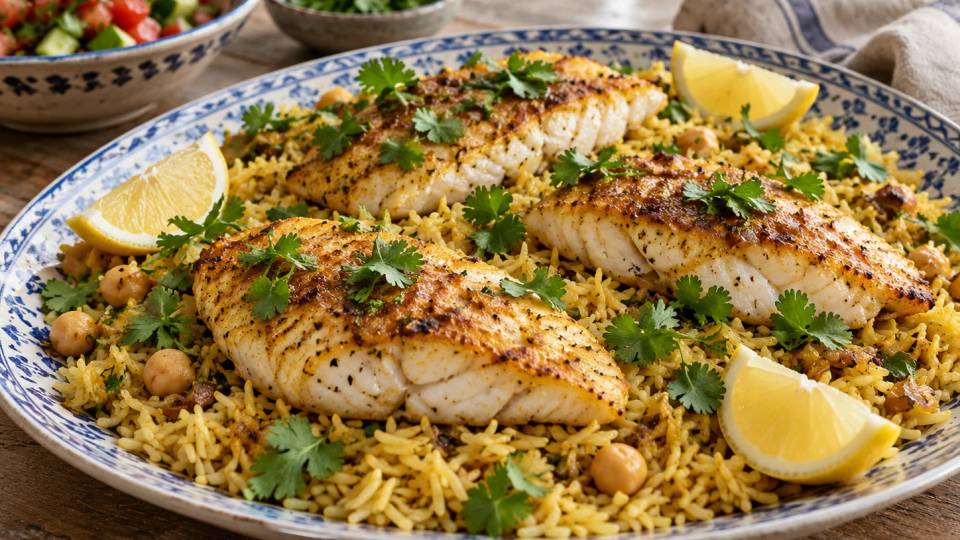
This rice with fish combines grains flavoured with fish stock and coriander with fillets cooked separately.
Ingredients
- 450 g uncooked long-grain rice
- 800 g boneless firm white fish fillets
- 200 g cooked chickpeas
- 1 onion (150 g), chopped
- 250 g crushed tomatoes
- 3 cloves garlic, chopped
- 3 tablespoons olive oil
- 1 teaspoon ground coriander seeds
- 1 teaspoon cumin
- 1/2 teaspoon turmeric
- 750 ml low-salt fish stock, adjusting the amount to suit the rice
- 1 lemon
- 25 g fresh coriander
- Salt and pepper, with restraint
Preparation
Check the fillets with your fingers and remove any remaining bones with tweezers. Cut into six portions of approximate size, then sponge them. Mix a tablespoon of oil with cumin, a clove of garlic and a small pinch of salt. Cover the fillets and keep them in the cold.
Rinse and drain the rice. Heat a tablespoon of oil in a large saucepan with lid. soften the onion for six minutes. Add the remaining garlic, ground coriander and turmeric, then stir briefly without letting the spices burn.
Add the tomatoes and reduce them uncovered for eight to ten minutes. The base should lose much of its water and raw flavour. If the fish stock is already well seasoned, do not add salt yet: the concentration of the stock will determine the final balance.
Add the drained rice, chickpeas and hot fish stock. Bring to a gentle simmer, cover and reduce the heat. Cook for about fifteen to eighteen minutes, following the packet instructions. Add a few spoonfuls of hot fish stock only if the grains are still firm and the bottom of the pan is dry.
During the last few minutes of the rice, heat the last spoonful of oil in a non-stick pan or a prepared pan. Lay the fish portions in one layer. Let the first side cook for three to five minutes depending on the thickness before trying to turn them over.
Turn with a wide spatula and cook for another two to four minutes. The flesh should be opaque and flake easily; check the centre of the thickest portion. Avoid overcooking every portion because one piece is larger: remove each piece as soon as it is ready.
Let the rice sit for ten minutes off the fire, then gently air it. Add some fresh coriander and taste before salting. Spread it out on a plate and place the fish on top of it rather than mixing it and breaking it in the pan.
Finish with the remaining coriander and slice the lemon. Let each guest add the acidity he wants. Serve immediately . The arrangement is to finish the fish while the rice rests so that both arrive at the table together.
Introduction
This rice with fish combines grains flavoured with fish stock and coriander with fillets cooked separately. Keeping them separate protects the texture: the fish should not wait throughout the rice’s absorption cooking. The recipe draws on Libyan coastal cooking, where rice and spices also accompany seafood, while remaining distinct from fish couscous.
Choose a low-salt fish stock and a firm-fleshed fish. Very thin fillets can cook almost instantly, while thicker pieces take longer. Chickpeas remain a measured garnish and should not mask the grain. Cumin flavors the fillets; ground coriander and fresh herbs play complementary roles in the rice and serving.
Preparation notes
References for separate grains. The cooking of rice begins before the fire: choose a defined variety, measure it dry and read its instructions. Two long rice of different brands can absorb slightly different volumes. The rinsing removes some of the surface starch; It does not require careful drainage. A rice that has been rinsed but still covered with water provides an additional liquid that is difficult to measure. A thin strainer and a few minutes of waiting make the result more consistent.
The width of the pot also influences the result. In a narrow pot, the layer of grains is thicker; in a very wide and barely covered sauté pan, evaporation increases. Use the indicated pot and a suitable lid. Once the simmering resumes, reduce the heat: a strong boiling does not cook the grains evenly, but can dry out and burn the bottom. Avoid mixing like for a risotto when the recipe seeks separate grains.
Taste the beans near the expected end of cooking. If the grains are firm and the bottom is dry, a small amount of hot water added to the dry areas will allow you to continue under a lid. Pour in a few spoons and then observe; a large ladle added by reflex may create a mash. If the beans are already tender, prolonged cooking to remove excess liquid may cause them to become uncooked. Initial measurement and fire control avoid this situation.
Resting off the heat distributes moisture. Leave the lid on for the time indicated, then lift the grains with a fork or large spoon. Do not compress the rice in the serving dish. Spread fragile toppings separately so that they do not break when trying to mix them. For a large table, prefer two well-controlled pots to an overloaded container whose behavior you do not know.
Preparing in advance requires a different organization. Often, you can advance a sauce or garnish and then cook the rice close to the meal. After serving, do not let a rice pot warm up on the worktop for long. Spread leftovers into shallow containers and refrigerate quickly. When reheating, moisten slightly if necessary and heat the entire portion. Appearance and smell alone do not certify the safety of poorly preserved rice.
Cultural context
The preparation called ruz hoot bil kusbur provides a reference for rice, fish and coriander in Libyan cooking. This recipe gives its own family version, with pan-fried fillets and ready-to-use fish stock, without claiming to reproduce every local variation.
Variations
Thick cod, firm hake or a suitable local fish can be used, with cooking times adjusted accordingly. For a version without chickpeas, simply omit them without automatically increasing the water. Do not replace the fish stock with a very concentrated, salty stock that would overpower the fish.
Accompaniments
A fresh salad and a few slices of lemon complete the dish. Present the nets in full so that everyone can check for any bones. Keep a serving spatula next to the rice spoon.