Chickpea rice
Chickpea rice is a meat-free family dish, built around a base of tomatoes, onion and sweet spices.
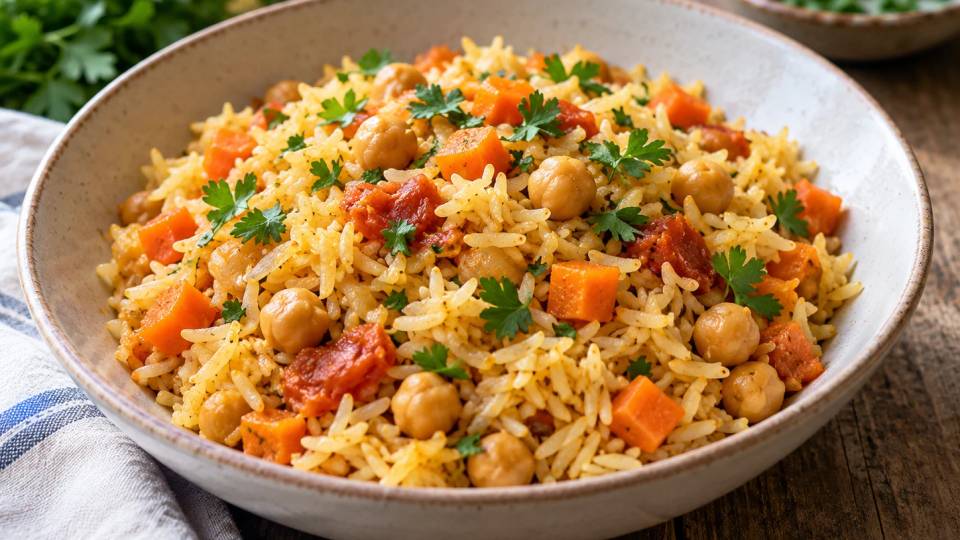
Ingredients
- 450 g uncooked long-grain rice
- 400 g cooked chickpeas, rinsed and drained
- 2 medium onions, about 250 g
- 2 carrots, about 200 g, diced
- 250 g crushed tomatoes
- 1 tablespoon tomato paste
- 3 tablespoons olive oil
- 2 cloves of garlic, chopped
- 1 teaspoon of turmeric
- 1 teaspoon sweet paprika
- 1/2 teaspoon cumin
- 750 ml of hot water or vegetable broth with little salt, to adapt to the rice
- No more than 1 level teaspoon salt initially
- 2 tablespoons chopped parsley
Preparation
Slice the onions, chop the garlic and cut the carrots into regular small cubes. Rinse the rice until the water is less cloudy, then let it drain. The chickpeas should already be tender: this cooking of rice is not enough to cook dried chickpeas.
Heat the oil in a large saucepan. soften the onion for six to eight minutes over medium heat without blackening them. Add the garlic, turmeric, paprika and cumin. Mix for thirty seconds, then add the tomato paste and cook for one minute.
Add the tomatoes and carrot cubes. Let reduce for eight minutes uncovered, stirring occasionally. This base should be scented and concentrated enough not to bring an unpredictable amount of water to the rice. Reduce the heat if the base colours too quickly.
Pour the rice well drained and gently stir for a minute to spread the aromas. Add the chickpeas and the 750 ml of warm liquid. Just go up a little. The volume indicated is a reference for this preparation; Also check the requirements of your rice variety on the package.
Bring to a gentle simmer, stir once more and cover. Immediately reduce to low heat. Cook for fifteen to eighteen minutes, avoiding repeated opening of the lid. The steam should stay inside the pot, and the base should not make the crackling sound of dry frying.
Check a grain and the presence of liquid near the end of the advertised time. If it is still firm and the bottom is dry, add two or three tablespoons of hot water. Cover for a few minutes. If the rice is tender, stop cooking without looking for coloration from below.
Let the rice rest off the heat for ten minutes, with the lid on. Then gently fluff the grains with a fork, working from the edges towards the centre without crushing the chickpeas. Taste a complete mouthful, adjust the salt if needed and add the fresh parsley.
Serve in a large, shallow dish so that the fillings remain visible. Divide the carrots and chickpeas between the portions. A crunchy salad and the pepper served separately are enough to complete this rice, without having to add a second cereal.
Introduction
Chickpea rice is a meatless family dish, built around a base of tomatoes, onions and sweet spices; the legumes remain whole among the grains; the carrot adds a sweet note and distinct color. This version for Libya is a precise domestic adaptation, rather than a formula claimed to be unique to the country.
The choice of already cooked chickpeas makes the organisation simpler. They just need to warm up and smell the sauce. With dried chickpeas, allow for separate soaking and cooking before starting the rice. The absence of meat should not lead to overloading the dish with very salty broth: the cooking of the aromatics, the reduction of the tomato and the final parsley provide a sufficiently expressive base.
Preparation notes
References for separate grains. The cooking of rice begins before the fire: choose a defined variety, measure it dry and read its instructions. Two long rice of different brands can absorb slightly different volumes. The rinsing removes some of the surface starch; It does not require careful drainage. A rice that has been rinsed but still covered with water provides an additional liquid that is difficult to measure. A thin strainer and a few minutes of waiting make the result more consistent.
The width of the pot also influences the result. In a narrow pot, the layer of grains is thicker; in a very wide and barely covered sauté pan, evaporation increases. Use the indicated pot and a suitable lid. Once the simmering resumes, reduce the heat: a strong boiling does not cook the grains evenly, but can dry out and burn the bottom. Avoid mixing like for a risotto when the recipe seeks separate grains.
Taste the beans near the expected end of cooking. If the grains are firm and the bottom is dry, a small amount of hot water added to the dry areas will allow you to continue under a lid. Pour in a few spoons and then observe; a large ladle added by reflex may create a mash. If the beans are already tender, prolonged cooking to remove excess liquid may cause them to become uncooked. Initial measurement and fire control avoid this situation.
Resting off the heat distributes moisture. Leave the lid on for the time indicated, then lift the grains with a fork or large spoon. Do not compress the rice in the serving dish. Spread fragile toppings separately so that they do not break when trying to mix them. For a large table, prefer two well-controlled pots to an overloaded container whose behavior you do not know.
Preparing in advance requires a different organization. Often, you can advance a sauce or garnish and then cook the rice close to the meal. After serving, do not let a rice pot warm up on the worktop for long. Spread leftovers into shallow containers and refrigerate quickly. When reheating, moisten slightly if necessary and heat the entire portion. Appearance and smell alone do not certify the safety of poorly preserved rice.
Cultural context
Rice and chickpeas are used in many cuisines of the region. This recipe is different from rice with meat because it is entirely vegetable, provided that a vegetable broth is chosen. It is different from couscous with vegetables because it is cereal and because it is cooked by absorption.
Variations
Replace the carrot with small, firm squash dice, keeping an eye on their hold. For a more citrusy taste, add a few drops of juice to the serving. Pre-cooked lentils may form another adaptation, but they will not give exactly the same texture as chickpeas.
Accompaniments
A salad of tomatoes and cucumbers or grilled vegetables adds freshness and contrast. Water simply accompanies this meal; a chili sauce can remain in a small separate container. For a lunch box, keep the salad aside to prevent it from wetting the grains.