Spiced potatoes
These spicy potatoes are roasted in the oven and not stewed in a sauce.
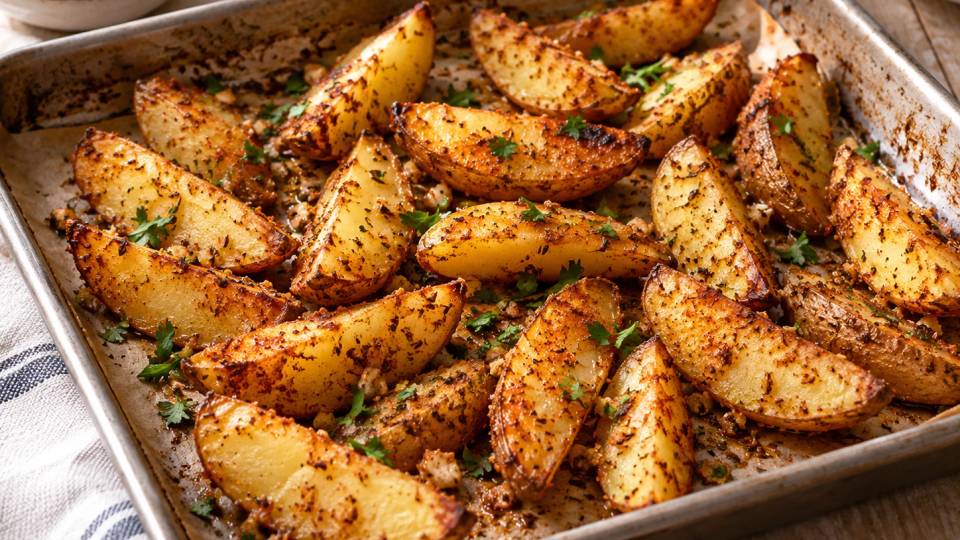
Ingredients
- 1.2 kg of firm potatoes
- 3 tablespoons olive oil, or 45 ml
- 3 cloves of garlic, crushed
- 1 teaspoon sweet paprika
- 1 teaspoon ground cumin
- 1/2 teaspoon ground coriander
- 1/2 teaspoon black pepper
- 1 level teaspoon salt
- 20 g of parsley
- 1 lemon optional
Preparation
Preheat the oven to 210 °C with conventional heat. Wash the potatoes and peel them if the skins are not thin and even. Remove damaged, green or sprouted areas. Cut into similar-sized wedges, thick enough to retain a soft centre while their edges brown.
Rinse the quarters quickly and dry them very carefully. Mix the oil with paprika, cumin, ground coriander, pepper and salt. Cover the potatoes in a large bowl by lifting the pieces upwards. You need an even layer, not a puddle of oil left at the bottom.
Spread over a large plate in one layer, with a little space. Use two plates if necessary rather than forming a pile. The hot air must be able to circulate; Tight quarters cook mostly in their own steam and give fewer golden edges.
Bake for 20 minutes, then return with a spatula. Add the crushed garlic cloves at this time to reduce the risk of burning them from the start. Continue for 15 to 20 minutes, depending on the size, and keep an eye on the areas of the plate that heat up the most.
Prick a large quarter: the center should be tender and the edges colored. If the top darkens too quickly, lower the temperature slightly and finish the tenderization. A potato that is well browned but still hard should not be considered ready for service.
Remove the pieces of garlic that are too dark, add the chopped parsley and taste before sautéing. Serve quickly in a hot dish without covering tightly. Have optional lemon slices next to it, so that each person can choose without moistening all the crispy edges.
Introduction
These spicy potatoes are roasted in the oven, not stewed in a sauce. They thus complete the directory of the Libya heading without reproducing the already existing marqat batata. Cumin, paprika and coriander give a family version of the scent, while the measured oil and the space on the plate allow for better control of the result.
The contrast is simple: soft flesh on the inside and golden bones. Temperature alone is not enough. The drying of the quarters and the absence of overloading are important. For a large table, two plates may be useful, by alternating them if the oven does not heat evenly. Once the potatoes are taken out, they lose their contrast if they are immediately put in a closed container.
Preparation notes
Give a specific place to the vegetables. The size of the pieces determines how regularly the food is cooked. Similar pieces end up together; The very different sizes of the parts make it necessary to choose between parts that are still firm and other defects. Also decide what you want to achieve: a filling that retains its shape, a melting texture, or a sauce that is bound by part of the vegetable. These objectives do not require the same fire or the same mixing.
The spices build a base before the water comes in. Onion needs to become soft; garlic, added later, burns faster. Dry spices release their flavor after brief contact with the fat, but should not blacken. If the recipe contains tomato paste, a short cooking removes some of its raw taste. This construction gives relief without having to continually increase the salt.
Adapt the liquid to the container. A covered cocotte retains more water than a wide hopper left open. Add the liquid gradually and watch the bottom. For a sauce that is too light, a controlled reduction is more useful than a large amount of flour added at random. If the preparation is too dry, a few tablespoons of hot water can be used to start cooking again. Don’t drown an already tender vegetable in the hope of getting it back to a lost hold.
The timing of the seasoning changes the outcome. Salt becomes concentrated when water evaporates. Lemon added at the end keeps a fresher impression and may require less quantity than juice that has been steamed for a long time. Fresh herbs add their fragrance without necessarily having to be cooked as much as roots or legumes. Taste a portion with its sauce to evaluate the whole, then correct one thing at a time.
Vegetable preparations benefit from being presented in a simple way. Spread the pieces and their sauce rather than hiding the vegetable under numerous toppings. The chili can be kept apart. To prepare in advance, keep fresh items, herbs and final seasonings separate when this protects their texture. After cooking, spread the leftovers in shallow containers and place them quickly in the cold. A salad served at room temperature is not meant to remain exposed all day.
Practical organization
If using two baking trays, swap their positions halfway through cooking if your oven heats more strongly at the top or at the back. Keep the quarters in one layer on each. An overloaded plate is not corrected by simply increasing the temperature: the pieces continue to give off their steam and their edges may burn before the centres are tender.
Cultural context
This recipe is advertised as an accompanying adaptation, without being a national exclusive. It is distinguished from mbattan stuffed potatoes by the absence of pocket, meat and frying.
Variations
A pinch of chili can replace some of the sweet paprika. Sweet potatoes would require a different kind of monitoring: they colour and soften differently and deserve a clearly named variant. For a more herbaceous version, add the parsley only after cooking to preserve its aroma.
Accompaniments
Serve with grilled fish, dumplings, or a vegetable salad. The potatoes are already bringing the starch from the bowl; It is not necessary to add rice and bread every time. Water and the optional lemon will do.