Chickpeas in sauce
The chickpeas in sauce give a central place to the legumes, with a base of tomatoes and spices sweet or spicy depending on the table.
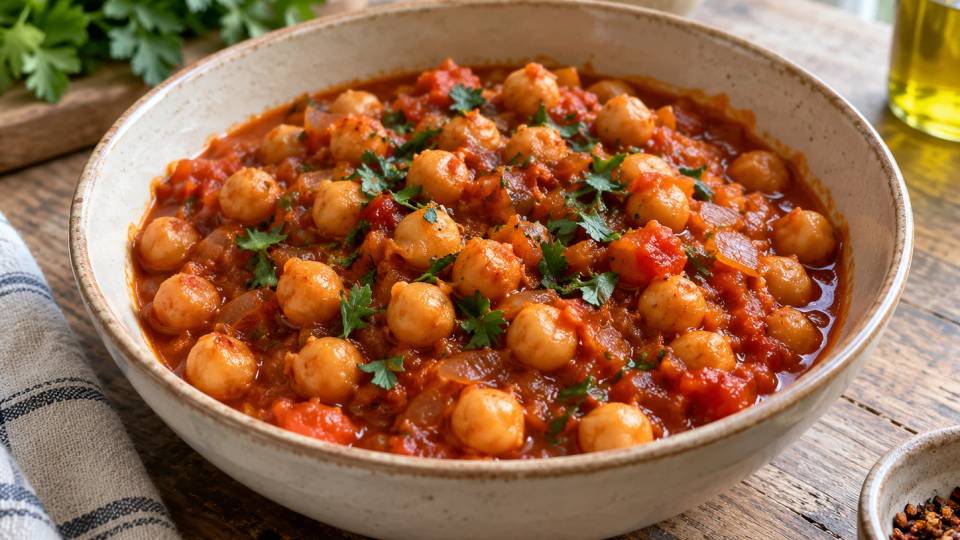
Ingredients
- 800 g of pre-cooked chickpeas, drained weight
- 700 g crushed tomatoes
- 2 medium onions, about 250 g
- 3 cloves of garlic
- 2 tablespoons tomato paste
- 3 tablespoons olive oil
- 1 teaspoon cumin
- 1 teaspoon sweet paprika
- 1/2 teaspoon ground coriander
- 250 ml of hot water or vegetable broth with little salt
- 1 small chilli pepper, optional
- 20 g of parsley
- 1 lemon optional
- Salt and pepper
Preparation
Drain the chickpeas and rinse them if they are from a can. Try one to see if it's really tender. With dried chickpeas, soak and cook separately before this recipe; Twenty minutes in the sauce is not gonna replace cooking the beans.
Slice the onions and chop the garlic. Heat the oil in a frying pan and soften the onion for six to eight minutes. Add the garlic and spices, stir for thirty seconds, then add the concentrate. Cook for one minute, scraping the bottom to spread the flavors.
Pour the tomatoes and let them steep for ten minutes in the open. Add the optional pepper and the 250 ml of hot liquid. Start with a small amount of salt, especially if the broth is seasoned. Shake for five minutes to obtain a homogeneous sauce before adding the chickpeas.
Add the chickpeas, mix gently and simmer for fifteen to twenty minutes. The sauce should surround them without forming a soup. For a slightly more cohesive texture, crush a small spoonful of chickpeas against the wall and then mix without turning the whole pot into a mash.
Taste a mouthful of sauce and chickpeas together. Adjust the salt and pepper after the sauce has reduced. If it is too thick, add one or two spoonfuls of hot water. Remove the whole chilli pepper and add the parsley off the heat. Lemon is optional, depending on the tomatoes’ actual acidity.
Serve warm in shallow bowls. Spread the sauce between the portions and offer some bread to collect it. Chickpeas are the main ingredient of the dish. They are not just a decoration on a couscous or a stew.
Introduction
Chickpeas are the main ingredient in this tomato-based sauce, which can be seasoned mildly or with chilli to suit the meal. This family version without meat is proposed for the Libya heading. It is distinguished from couscous accompaniment: the proportions are designed to serve chickpeas as a dish in its own right.
The time indicated presupposes already cooked chickpeas. This precision changes the whole organization. A legume that is initially firm does not necessarily become melted in an acidic sauce after a few minutes. So check the tenderness before you start and keep a reserve of hot water to adjust the consistency, rather than uncontrollably extending the cooking time of a ready sauce.
Preparation notes
Give a specific place to the vegetables. The size of the pieces determines how regularly the food is cooked. Similar pieces end up together; The very different sizes of the parts make it necessary to choose between parts that are still firm and other defects. Also decide what you want to achieve: a filling that retains its shape, a melting texture, or a sauce that is bound by part of the vegetable. These objectives do not require the same fire or the same mixing.
The spices build a base before the water comes in. Onion needs to become soft; garlic, added later, burns faster. Dry spices release their flavor after brief contact with the fat, but should not blacken. If the recipe contains tomato paste, a short cooking removes some of its raw taste. This construction gives relief without having to continually increase the salt.
Adapt the liquid to the container. A covered cocotte retains more water than a wide hopper left open. Add the liquid gradually and watch the bottom. For a sauce that is too light, a controlled reduction is more useful than a large amount of flour added at random. If the preparation is too dry, a few tablespoons of hot water can be used to start cooking again. Don’t drown an already tender vegetable in the hope of getting it back to a lost hold.
The timing of the seasoning changes the outcome. Salt becomes concentrated when water evaporates. Lemon added at the end keeps a fresher impression and may require less quantity than juice that has been steamed for a long time. Fresh herbs add their fragrance without necessarily having to be cooked as much as roots or legumes. Taste a portion with its sauce to evaluate the whole, then correct one thing at a time.
Vegetable preparations benefit from being presented in a simple way. Spread the pieces and their sauce rather than hiding the vegetable under numerous toppings. The chili can be kept apart. To prepare in advance, keep fresh items, herbs and final seasonings separate when this protects their texture. After cooking, spread the leftovers in shallow containers and place them quickly in the cold. A salad served at room temperature is not meant to remain exposed all day.
Cultural context
Chickpeas, tomatoes and spices are found in many cuisines of the Maghreb and Mediterranean. The recipe describes a family composition without attributing these ingredients to an exclusively Libyan origin. The broth must be vegetable to preserve this meatless version.
Variations
A little bit of washed and chopped spinach can be added at the end and cooked for a few minutes: announce this variant, which changes the proportion of vegetables. A drier version accompanies a compound plate; a slightly more fluid sauce is suitable for serving with bread.
Accompaniments
Serve with a fresh salad and a measured amount of bread. If you prefer rice, a small portion will suffice. A lemon wedge can be offered separately, as well as the extra pepper for those who wish.