Marinated olives
Marinated olives are a table condiment, prepared here with ready-to-eat green olives, oil, lemon and spices.
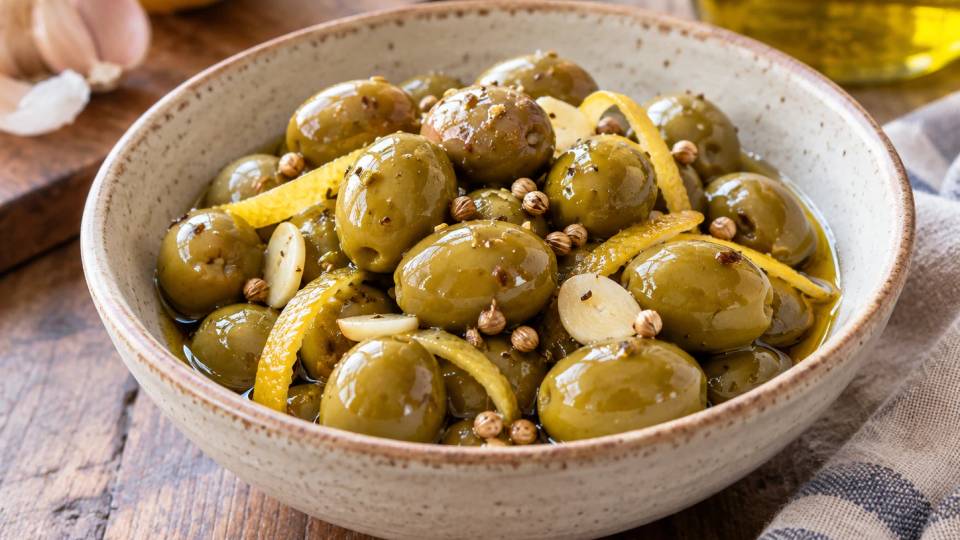
Ingredients
- 500 g of already prepared and edible green table olives, drained weight
- 3 tablespoons olive oil
- 1 untreated or thoroughly washed lemon
- 1 small clove of garlic
- 1 teaspoon coriander seeds
- 1/2 teaspoon cumin
- 1 small dried chilli pepper, optional
- 1 tablespoon chopped parsley optional
Preparation
Choose table olives that have already been de-saturated and preserved as directed by the manufacturer. This recipe doesn't start with raw olives picked from the tree. You can drink them and taste one. If they are very salty, rinse them briefly and then dry the amount used well, without improvising a long storage in unsalted water.
Wash the lemon and remove the thin strips of pulp, avoiding as much as possible the bitter white part. Squeeze the garlic cloves lightly. Heat the dried coriander seeds for a minute on low heat, just to scent them, then let them cool and crush them roughly.
Mix the oil with cumin, crushed coriander, garlic and lemon strips. Add optional chili pepper if desired. Do not salt this mixture: olives usually already provide enough salt. Prepare a clean container with a lid for a cold marinade.
Add the olives and mix with a clean spoon to coat all the faces. Cover and refrigerate for at least two hours, stirring once. Marinade is used to flavor a small amount of ready-to-eat product, not to create a can of closet.
Before serving, take the necessary amount from a small bowl. Add the optional parsley at this point rather than leaving it in the oil for several days. Taste and remove the garlic if its scent seems strong enough already. The presence of a stone should be visible and announced.
Serve with small, clean spoons or pickles. Store the rest in the refrigerator and consume this small preparation quickly. Oil, garlic and lemon do not allow prolonged storage at room temperature. Instead, prepare new small batches according to meals.
Introduction
Marinated olives are a table condiment, prepared here with green olives already ready to eat, oil, lemon and spices. This family version for the Libya heading is not a method of de-Americanization of freshly picked olives. This difference is essential to ensure that the list of ingredients and the preparation time remain consistent.
The purpose is to add flavor to a product that has already been processed. The strength of the salt, size and texture of the olives vary from manufacturer to manufacturer. Taste before adding anything and don’t try to compensate for a very salty olive with a large amount of lemon. The zest gives an aromatic note without adding as much acidity as the juice. A small amount of crushed seeds is enough to spread the fragrance.
Preparation notes
Choosing the olives to start with. This recipe involves table olives that are already prepared and ready to eat. Freshly harvested fruit requires a separate desiccation and preservation protocol. A quick oil and lemon marinade is no substitute for this work. Check the product and manufacturer's instructions before starting, including how to store it after opening.
The initial taste commands the seasoning. Some olives are very salty, others are sweeter or slightly sour. Taste a piece before adding the spices. A short rinsing may remove excess brine from the surface, but a long stay in a large amount of water changes the product and its preservation. After rinsing, drain thoroughly to avoid adding too much water to the small batch of marinade.
The lemon gives a flavor when used with the zest. Take a thin layer and avoid as much as possible the bitter white part. Juice is not required in this version. Strips too thick or long contact can change the flavor; a small preparation allows you to judge what you like without immediately treating a large jar.
The spices should remain noticeable without covering the olive. A lightly crushed coriander seed diffuses better than a completely intact seed, while a large amount of powder can make the surface dry and pasty. Chilli is optional. Fresh garlic should be used in moderation and does not turn the marinade into a safe canning at room temperature.
The container must be clean and closed in the refrigerator. The oil film is not sterilization and does not allow closet storage. Prepare a small volume for close consumption, with clean utensils. To serve, take out into a separate bowl rather than circulating the entire jar among diners. Do not put back in the cold with the stock of olives that have been exposed for a long time on the table.
The presentation is simple. Whole olives often keep their shape better but require careful service to the pits. Stoned olives are practical and absorb flavors differently. Announce the choice and provide a container for the pits. A few olives accompany a meal; they are not to be considered as a large portion of fresh vegetables or to be automatically multiplied in an already very salty plate.
Cultural context
Table olives accompany many Mediterranean dishes. This sheet describes a family seasoning and does not claim exclusive origin of the association. It should not be confused with a lemon candy recipe or a long-storing protocol.
Variations
The peeled olives are more convenient for some tables, but may be more fragile. A small amount of orange peel is another flavouring variant. Do not automatically add juice to all the marinade and do not replace the coriander with a very large amount of powder.
Accompaniments
Serve small portions with bread, soup, or salad. The olives remained a salty condiment, not the main vegetable in the meal. Provide a discreet container for the kernels when using whole olives.