Orange juice
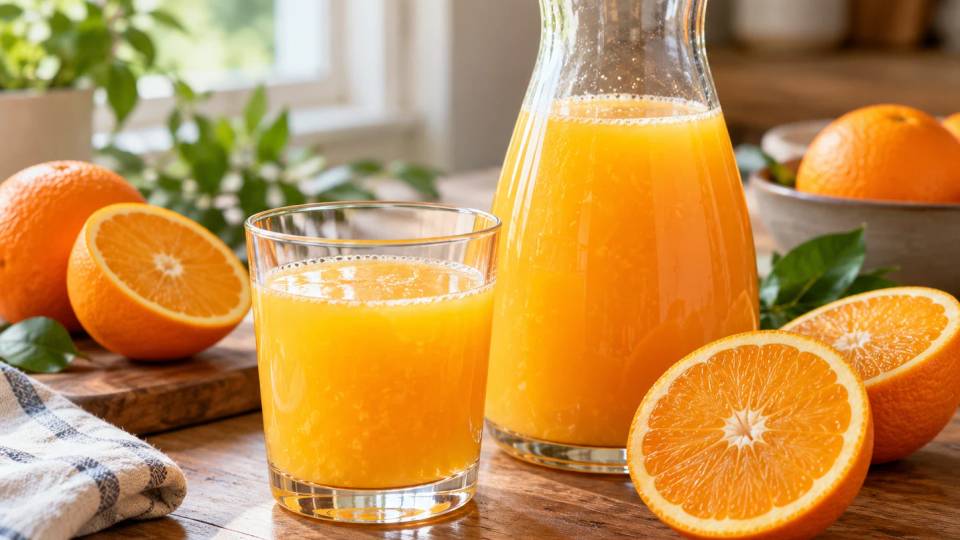
A freshly squeezed orange juice requires almost no additional ingredients, but its result depends on precise choice.
Ingredients
- 1.8 to 2.2 kg of juice oranges for about 800 ml to 1 liter of juice, yield variable
- No added sugar in the basic version
- A little cold drinking water, optional; tell guests if the juice is diluted
- Ice cubes to serve, optional
Preparation
Choose healthy, heavy oranges for their size. Remove any that have mold or deterioration. Wash and dry the fruit before cutting. However, uneaten skin may come into contact with the knife and juice during pressing.
Cut the oranges in half and press with a clean press. Work without pressing until the bark and white part are over-crushed, which can cause bitterness. First, take a little juice to check the taste of the fruit before pressing a large quantity.
Measure the juice rather than guaranteeing a litre from a fixed number of oranges. The yield varies with the variety, season and condition of the fruit. If you are preparing a specific table, save a few extra oranges instead of diluting at random to reach a stated volume.
Remove the seeds and choose the desired amount of pulp. A fairly wide strainer retains more material; a fine filtering gives a smoother drink. The pulp is not a defect. Taste before any addition and keep this version without added sugar to preserve the flavor of the fruit.
Pour into a clean carafe and cover. Serve preferably quickly after pressing, or refrigerate for close service. Do not add fresh juice to an old unwashed carafe bottom. The acidity does not turn the product into a sterile drink.
Stir gently before pouring if the pulp has settled. Present small glasses and announce a possible dilution with water rather than masking it. Ice cubes are optional and should be made with drinking water. Also offer plain water at table.
Introduction
Freshly squeezed orange juice requires almost no additional ingredients, but the result depends on precise choice. The fruit must be healthy, the material clean and the yield measured. This family drink sheet is offered in the Libya section without attributing orange juice an exclusively national origin. It does not multiply identical recipes under different titles of freshness.
The oranges are already sweet. No added sugar is provided in this version. If the fruit is very acidic or bitter, it is more useful to identify the variety, ripeness or excessive pressure on the bark than to systematically correct with several spoons of sugar. The choice of keeping the pulp or filtering finely depends on the desired texture and can simply be announced to guests.
Preparation notes
Control dilution and yield. Measure the final liquid rather than adding water without a mark. The size, maturity and moisture content of products change from purchase to purchase. A highly concentrated drink can be gradually relaxed; an already over-diluted preparation is more difficult to catch up. Serve a small test glass and taste at the intended temperature, because a very cold drink does not give exactly the same feeling of sweetness as a warm one.
Sugar is a setting, not an automatic compensation. Fruits and some basic ingredients already add sweetness. Start with the intended amount, or even no added sugar when optional, and then taste. If you want a less sweet drink, check the balance of dilution and flavors before multiplying the ingredients. A pinch of spice can change the flavor, but it does not change the basic nutritional composition of a drink.
Filtration is an explicit choice. A fine sieve holds some of the pieces while preserving body; Clean food tissue gives a smoother liquid. Filtering more may decrease the sensation of the material, without automatically making the result better. For a naturally cloudy drink, advertise this texture rather than consider it a defect. Stir or gently shake before serving if the elements separate at rest.
The equipment must be clean and suitable. Rinse the blender, strainer or juicer quickly after use to prevent residues from drying up in the corners. A wide-opening carafe is often easier to clean than a very narrow bottle. Do not pour a new preparation on the remains of an old one without washing. Cold does not replace manufacturing hygiene, and a lid does not turn a homemade drink into a sterile product.
Prepare a small amount for the meal or a short drink. Place the drink in the refrigerator when not being served and do not leave it on a hot table for several hours. If you use milk or nuts, make this clear to your guests. A homemade plant-based drink is not necessarily nutritionally equivalent to milk. For serving, choose modest glasses and offer water in parallel rather than make a sweet drink the only source of hydration.
Cultural context
Orange juice is a widely shared urban and family drink. This recipe describes a preparation and service, not a traditional exclusive dish. Whole oranges and their juice are not identical portions in terms of texture and consumption.
Variations
A small amount of water can soften the intensity of the juice; tell guests about the dilution and the new yield. Mixing it with lemon, carrot or other fruits would create a different recipe requiring its own quantities. A chilled or frozen version does not automatically need added sugar.
Accompaniments
Serve a small drink with breakfast or afternoon snack, rather than a very large portion that is difficult to enjoy with other sweet foods. Water and a whole fruit can also be offered depending on the preferences of the people at the table.