Broad beans with cumin
The cumin broad beans are presented here as a shared preparation of the Mediterranean repertoire, adapted to the Libyan section.
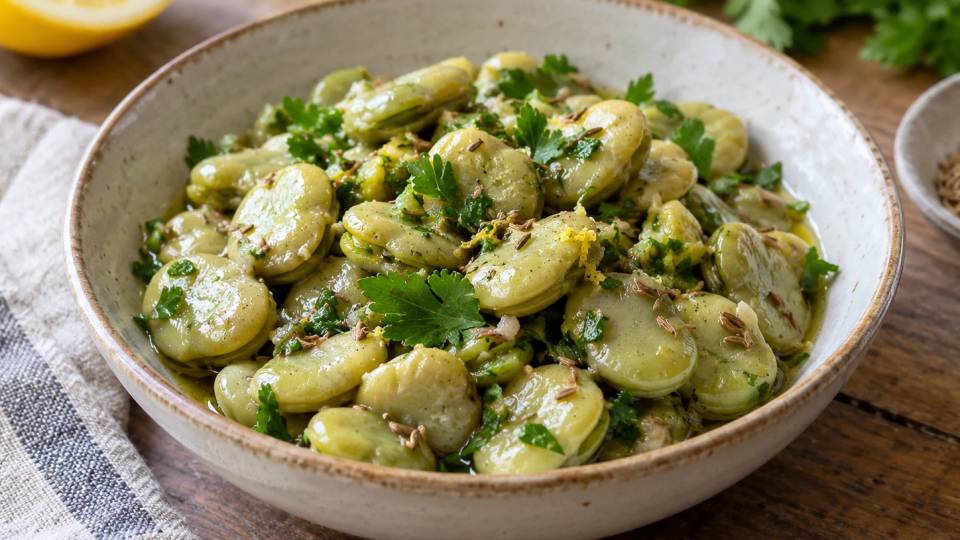
Ingredients
- 800 g fresh or frozen shelled broad beans, weighed without their pods
- 2 cloves of garlic, chopped
- 2 tablespoons olive oil
- 1 teaspoon ground cumin
- 1/2 teaspoon sweet paprika
- 150 ml hot water, adjustable
- 1 tablespoon of lemon juice
- 20 g chopped parsley
- 1/2 teaspoon fine salt initially
- Black pepper
Preparation
Prepare broad beans that have already been peeled. If the second skin is thick, blanch them in boiling water for two minutes, drain and remove the skin after a brief cooling. Small tender broad beans can keep the skin. Dried broad beans do not follow this preparation and would require another recipe with appropriate soaking and cooking.
Heat the oil in a skillet over medium heat. Add the garlic and stir for thirty seconds without colouring it strongly. Stir in the cumin and paprika, mix briefly, then add the broad beans. Lift gently to coat them without breaking those that have already been blanched.
Pour the 150 ml of hot water and add a small amount of salt. Cover partially and let simmer for ten to fifteen minutes, depending on the size. Frozen beans should also follow the manufacturer's instructions. Check for tenderness rather than just the length of time.
If the bottom becomes dry before the beans are tender, add a few tablespoons of warm water. If the beans are already ready in an excess of liquid, briefly stir to reduce. Avoid stirring vigorously, as the meat may fall apart when cooking is finished.
Add the lemon and parsley out of the fire. Taste a bean with a little juice and add the pepper and salt. The cumin must be perceptible but not form a dry powder in the mouth. It's been hydrated in the small amount of cooking liquid.
Serve warm or lukewarm, with some of the fragrant juice. For warm service, cook near the meal rather than leaving the dish exposed for a long time. Divide the beans into portions and serve the extra lemon separately to maintain the balance of the first plate.
Introduction
The cumin broad beans are presented here as a shared preparation from the Mediterranean repertoire, adapted to the Libyan section. The broad beans remain whole and tender, covered with a little juice of garlic, oil and spices. This dish is not confused with either a dry bean puree or a chickpea stew with tomato.
The weight indicated corresponds to the skinned broad beans, not the pods bought at the market. The second skin is removed depending on size and tenderness. This precision avoids promising identical cooking for very different products. Dry broad beans, even skinned, cannot directly replace fresh broad beans with only fifteen minutes of cooking. The version of this sheet is therefore voluntarily delimited.
Preparation notes
Give a specific place to the vegetables. The size of the pieces determines how regularly the food is cooked. Similar pieces end up together; The very different sizes of the parts make it necessary to choose between parts that are still firm and other defects. Also decide what you want to achieve: a filling that retains its shape, a melting texture, or a sauce that is bound by part of the vegetable. These objectives do not require the same fire or the same mixing.
The spices build a base before the water comes in. Onion needs to become soft; garlic, added later, burns faster. Dry spices release their flavor after brief contact with the fat, but should not blacken. If the recipe contains tomato paste, a short cooking removes some of its raw taste. This construction gives relief without having to continually increase the salt.
Adapt the liquid to the container. A covered cocotte retains more water than a wide hopper left open. Add the liquid gradually and watch the bottom. For a sauce that is too light, a controlled reduction is more useful than a large amount of flour added at random. If the preparation is too dry, a few tablespoons of hot water can be used to start cooking again. Don’t drown an already tender vegetable in the hope of getting it back to a lost hold.
The timing of the seasoning changes the outcome. Salt becomes concentrated when water evaporates. Lemon added at the end keeps a fresher impression and may require less quantity than juice that has been steamed for a long time. Fresh herbs add their fragrance without necessarily having to be cooked as much as roots or legumes. Taste a portion with its sauce to evaluate the whole, then correct one thing at a time.
Vegetable preparations benefit from being presented in a simple way. Spread the pieces and their sauce rather than hiding the vegetable under numerous toppings. The chili can be kept apart. To prepare in advance, keep fresh items, herbs and final seasonings separate when this protects their texture. After cooking, spread the leftovers in shallow containers and place them quickly in the cold. A salad served at room temperature is not meant to remain exposed all day.
Cultural context
Cumin, lemon and legumes are part of several regional cuisines. The descriptive title makes it possible to explain this version without claiming national exclusivity. Beans are a separate product from beans and chickpeas and should be named precisely.
Variations
A small amount of fresh coriander can replace parsley. For a more rustic presentation, crush only a few broad beans to bind the juice; a full purée would change the dish. The chili is optional. Do not use a very salty broth to replace such a small amount of water.
Accompaniments
Serve with flat bread or as a side dish to fish. A fresh salad completes the textures. If the beans are very small and tender, keep some of their thin skin; With larger beans, careful peeling gives a more even bite and avoids hiding the flesh under a thick coating.