Stuffed cabbage
This stuffed cabbage is a family adaptation of leafy vegetables topped with rice and meat, proposed for the Libya section.
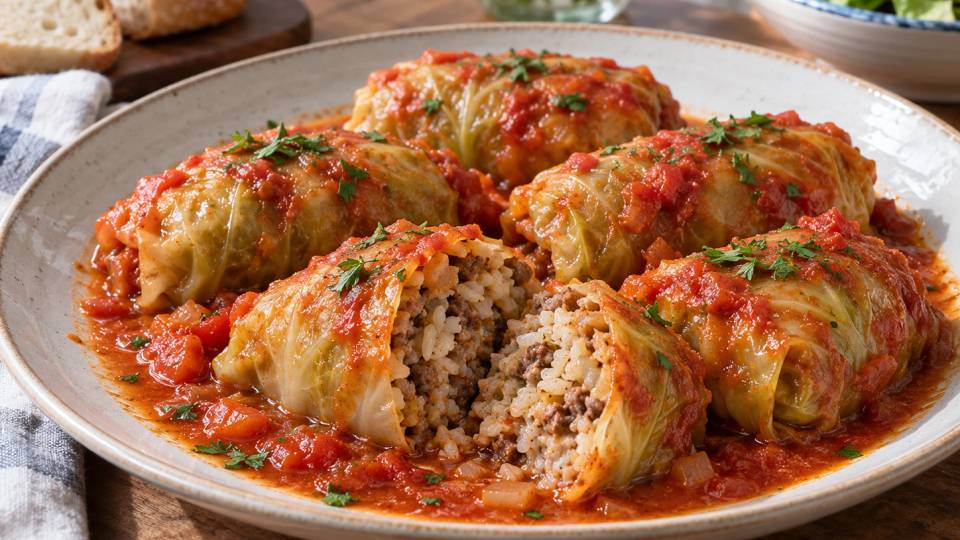
Ingredients
- 12 large cabbage leaves, about 1 medium cabbage
- 300 g minced beef or minced lamb
- 150 g uncooked long-grain rice
- 1 onion of 120 g
- 2 cloves of garlic
- 600 g crushed tomatoes
- 1 tablespoon tomato paste
- 2 tablespoons olive oil
- 20 g of parsley
- 1 teaspoon sweet paprika
- 1/2 teaspoon cumin
- 250 ml of hot water
- Salt and pepper
Preparation
Peel twelve large leaves without tearing them apart and rinse them. Blanch for a few minutes in simmering water until they bend easily, then drain. Remove or thin the big central rib with a knife. Keep the damaged leaves to protect the bottom of the dish rather than attempting a fragile roll.
Cook the rice separately until tender, then drain well. Soften the chopped onion in a spoonful of oil, then add a garlic clove, the meat and the spices. Cook thoroughly, breaking up the meat. Add the rice and parsley, taste and allow to cool slightly before shaping.
Prepare the sauce with the last tablespoon of oil, the remaining garlic, the concentrate and the tomatoes. Let it reduce for ten minutes, then add the 250 ml of hot water. Add a little salt at first. The sauce should remain soft enough to accompany the covered cooking without the rolls bathing in a large volume.
Place a piece of filling at the base of each sheet. Fold the sides and roll without squeezing too tightly. Place the joint underneath in a large cooking pot or a dish with a suitable lid. The leaves must hold the stuffing; Don't double the amount in a small sheet to finish faster.
Pour the sauce around the rolls, cover and cook over low heat for thirty to forty minutes, or in an oven at 180 °C in a suitable dish. Check that the base does not dry out and add a few spoonfuls of hot water if necessary. The meat and rice are already cooked; this stage finishes tenderising the cabbage.
Allow to stand for five to ten minutes before lifting the rolls with a skimmer. Check a roll in the centre to make sure it is warm. Serve with the sauce spread around, without stirring the coconut vigorously and unwrap the leaves that have become tender.
Introduction
This stuffed cabbage is a family adaptation of leafy vegetables with rice and meat, proposed for the Libya section. The card uses rice and meat already cooked before assembly. This choice clearly distinguishes its organisation from a raw-stuffed version, which would require different amounts of liquid and different control of the bulge.
The leaves must be able to bend without breaking. Bleaching, thinning the big rib and a warm stuffing make it easier to assemble. Rolls are stacked close enough together, joint down, then cooked gently in a soft tomato sauce. A very fragile leaf can be removed from the shaping and used to protect the bottom. Trying to fit too much stuffing in each roll increases the risk of opening.
Preparation notes
Give a specific place to the vegetables. The size of the pieces determines how regularly the food is cooked. Similar pieces end up together; The very different sizes of the parts make it necessary to choose between parts that are still firm and other defects. Also decide what you want to achieve: a filling that retains its shape, a melting texture, or a sauce that is bound by part of the vegetable. These objectives do not require the same fire or the same mixing.
The spices build a base before the water comes in. Onion needs to become soft; garlic, added later, burns faster. Dry spices release their flavor after brief contact with the fat, but should not blacken. If the recipe contains tomato paste, a short cooking removes some of its raw taste. This construction gives relief without having to continually increase the salt.
Adapt the liquid to the container. A covered cocotte retains more water than a wide hopper left open. Add the liquid gradually and watch the bottom. For a sauce that is too light, a controlled reduction is more useful than a large amount of flour added at random. If the preparation is too dry, a few tablespoons of hot water can be used to start cooking again. Don’t drown an already tender vegetable in the hope of getting it back to a lost hold.
The timing of the seasoning changes the outcome. Salt becomes concentrated when water evaporates. Lemon added at the end keeps a fresher impression and may require less quantity than juice that has been steamed for a long time. Fresh herbs add their fragrance without necessarily having to be cooked as much as roots or legumes. Taste a portion with its sauce to evaluate the whole, then correct one thing at a time.
Vegetable preparations benefit from being presented in a simple way. Spread the pieces and their sauce rather than hiding the vegetable under numerous toppings. The chili can be kept apart. To prepare in advance, keep fresh items, herbs and final seasonings separate when this protects their texture. After cooking, spread the leftovers in shallow containers and place them quickly in the cold. A salad served at room temperature is not meant to remain exposed all day.
Cultural context
The stuffed leaves are found in several cuisines of the region. This sheet does not invent a traditional name that is exclusively Libyan. It is distinguished from the lebrak with vine leaves by its vegetation, whitening and taste, although some rolling gestures are similar.
Variations
A filling of pre-cooked lentils and rice can make a meat-free variation, with seasoning adjusted to its texture. A version with raw rice will not automatically use the same quantities of liquid or the same cooking times. Smaller leaves need less filling and make more rolls.
Accompaniments
Two small rolls can form a serving according to their size and the rest of the meal. A crispy salad completes the already present rice and meat. The bread is optional and is only used to collect a little sauce.