Fried squid
Fried squid is a shared Mediterranean preparation.
Ingredients
- 900 g of squid, cleaned, ready-to-cook weight
- 100 g of wheat flour
- 40 g cornstarch
- 1 teaspoon sweet paprika
- 1/2 teaspoon cumin
- 1/2 teaspoon black pepper
- 1 level teaspoon salt
- Approx. 800 ml frying oil depending on the container
- 1 lemon
- 15 g parsley optional
Preparation
Ask for cleaned squid and check for cartilage and beak in the tentacles. Cut the bodies into regular rings of about one centimeter. Separate the tentacles into small groups of comparable size. Mop thoroughly with clean paper: surface water interferes with the adhesion of the flour and causes the oil to splash.
Mix flour, starch, paprika, cumin and pepper in a large dish. Keep the salt for the outlet of the bath so that the salty and wet rings do not wait. Install a grating above a plate and provide a scaffolding that allows several pieces to be lifted without compressing them.
Heat the oil in a deep, stable bowl to about 175-180°C. Cover a small handful of squid with the dry mixture and shake off the excess. Do not flour the whole batch long before cooking: the juice will eventually turn the flour into an uneven dough.
Dip a small amount in the oil and gently separate the rings that touch. Cook for about one to two minutes in fine pieces until slightly golden in colour and opaque in flesh. A long cooking makes the squid firm; A very dark colour is not a target.
Drain on the grate and add a little salt. Cut a ring from the first baking to check the texture and adjust the next one. Remove floating crumbs, then let the oil return to its temperature. Thicker tentacles may require a separate bath rather than the same time as thin rings.
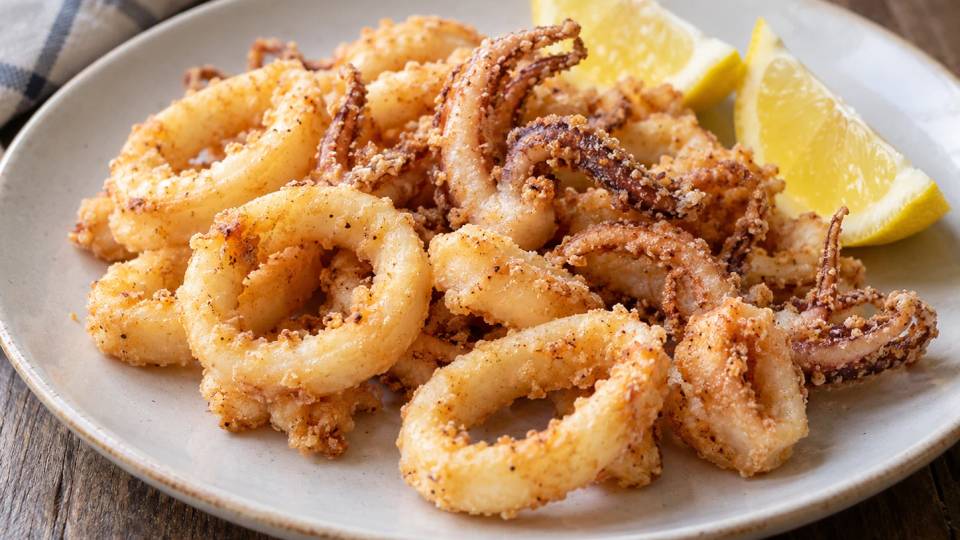
Serve as you go, with sliced lemon and optional parsley. Do not cover hot parts tightly or pour sauce over the entire dish. A fried squid is enjoyed quickly: prepare the salad and plates before launching the first bath.
Introduction
Fried squid is a Mediterranean preparation that is shared. This version for Libya uses a very thin dry coating, flavoured with paprika and cumin. The result should be recognizable rings and tentacles, with a slightly crispy surface and supple flesh. It is not a thick dough donut.
Cleaning and drying play an important role in the preparation time. If you buy whole squids, the weight before cleaning does not correspond to the 900 grams of ready-to-cook indicated. Defrosted products require particularly careful draining. The amount of oil depends on the container, but it must allow the small batches to circulate without sticking to the bottom.
Preparation notes
Organize regular frying. Choose a deep, stable container suitable for the fireplace. Leave a generous margin below the edge as food moves oil and produces bubbles. Prepare the skimmer, drip rack and plate before heating. A wet handle or splash of water near hot oil can cause spillage. Keep food and hands as dry as the preparation requires.
The temperature should be monitored between baking. A small amount added at a time allows the oil to retain its heat. A pan filled with all of a sudden cools down: the pieces stick together, the color becomes slow and the absorption of oil can increase. On the contrary, too hot oil thickens the coating before the center has had time to cook. Use food-specific marks; the same time is not suitable for a brick sheet, a slice of vegetable and a piece of fish.
The coating must remain proportionate. Excess flour will fall to the bottom and burn; too wet a mixture will give a thick layer that can peel off. Work in small amounts and shake what does not stick. Do not try to give a very thick crust to compensate for poorly prepared food. The objective is to protect and color the surface while preserving the identity of what it covers.
Place the pieces gently, without releasing them from above. Allow the surface to set before turning and use the tool that best supports the shape. Remove crumbs between baths so they do not blacken. Persistent smoke or a pungent smell indicates that oil and heat need to be reassessed. Do not taste a burning piece directly out of the bath; the center keeps its heat longer than the surface.
Drain on a rack when you want to preserve a crispy surface. Stacking immediately traps steam and softens the underside. A brief wait in the gentle oven can help for multi-baking, but long storing warm will eventually dry out. Present sauces separately to keep the contrast of textures. Finally, allow the oil to cool completely before handling or transferring it to a suitable container; it should not be poured hot into the sink.
Cultural context
The squid is a mollusc, not a finned fish. Report this allergen. The descriptive French name allows to present this coastal adaptation without inventing a regional name or claiming an exclusive national origin.
Variations
Rice flour can replace some of the wheat flour for another coating; a gluten-free version requires checking all the products and the oil used. Very thick frozen wafers do not necessarily follow the same duration: test a small baking time and adapt without prolonging by reflex.
Accompaniments
A lemon salad, a few slices of lemon and water are enough. The bread is optional. A spicy condiment is presented separately so that the thin crust does not soften before being eaten.