Séri
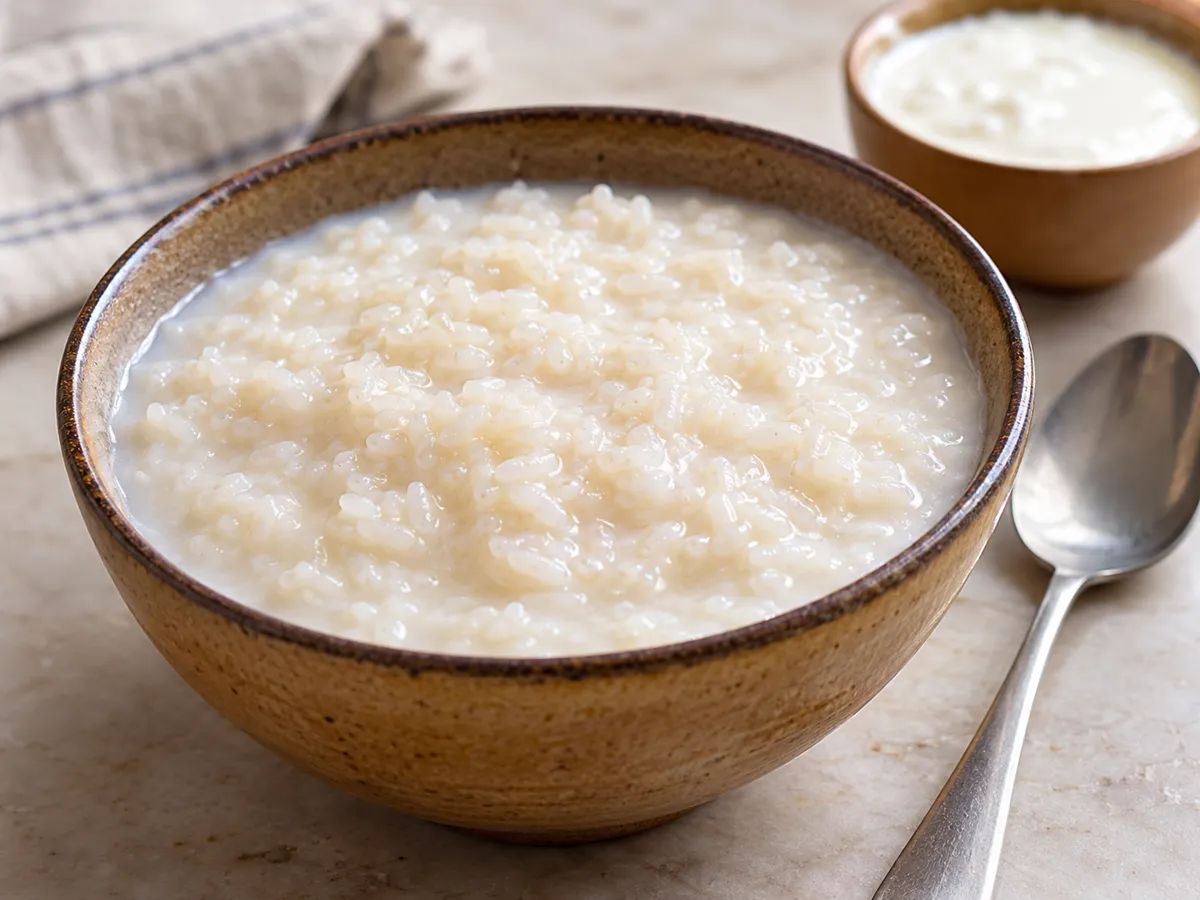
Malian rice séri: a soft porridge of thoroughly cooked grains, lightly sweetened, with cultured milk added at serving if desired.
Ingredients
- 300 g white round-grain rice or food-grade broken rice
- 1.5 litres drinking water for cooking
- 300 ml hot drinking water in reserve, only if needed
- 30 g sugar, adjusted after tasting
- 1 small pinch of salt, optional
- 500 g plain commercially produced cultured milk made with pasteurised milk, or plain yoghurt, optional for serving
Preparation
Choose and measure the rice. Weigh 300 g round-grain or broken rice and check for small debris. Brown rice is not a direct substitution in this method: its outer layers change cooking time and water requirements. Read the package, particularly for precooked products. For a first attempt, choose ordinary white rice and keep the same product for later trials, making comparisons without changing several variables at once.
Rinse briefly. Put the rice in a fine sieve and rinse under running drinking water. There is no need to make the water completely clear, since some starch helps bind the porridge. Drain without soaking for a long time. Choose a pan large enough to simmer without overflowing and a spoon that reaches the corners of the bottom.
Start cooking in water. Bring 1.5 litres water to the boil in the pan. Sprinkle in the rice and optional small pinch of salt. Stir to release grains from the bottom, then immediately reduce to a gentle simmer. Leave the lid partly open. Do not pour cultured milk into the pan: it is for serving and does not replace cooking water in this version.
Soften the grains. Cook for approximately 30–40 minutes, stirring regularly and more often as the liquid thickens. Sweep the spoon across the bottom without beating the rice unnecessarily. If the mixture becomes dense while grains remain firm, add a little reserved hot water. Add it gradually rather than automatically using the whole reserve. Reduce the heat if a patch starts sticking or boiling becomes vigorous.
Check the grain centres. Take a few grains with a clean spoon, let them cool slightly and taste. They should be very tender without a hard core. Broken grains may cook sooner than whole round-grain rice. If the centre remains firm, continue with a little hot water. Milk or sugar cannot disguise and correct undercooked rice; they alter flavour without solving texture.
Sweeten and adjust consistency. Once the rice is tender, add 30 g sugar and stir until dissolved. Simmer for another 2–3 minutes. A channel made with the spoon should close fairly quickly. Loosen dense clumps with hot water; gently reduce an overly watery mixture for a few minutes. Porridge thickens further as it stands, so leave it slightly looser than the final bowl texture you want.
Prepare the dairy separately. Take cultured milk or yoghurt out of the refrigerator at serving and stir gently until even. Divide the porridge among six bowls; let it become lukewarm if adding dairy. Each person can mix in their own portion to taste. Adding it to boiling porridge would change its texture more noticeably. Keeping it separate also lets people who prefer no dairy share the same pan.
Serve and adjust the final portion. Stir the pan once more before filling bowls because the bottom can be thicker than the surface. If the last portion thickens while you serve, stir in a little hot water. Offer extra sugar separately. Serve without a long delay and return unused cultured milk to the refrigerator. Cool leftover porridge quickly and refrigerate instead of leaving it in the pan at room temperature.
Introduction
Séri belongs to the family of cereal porridges. The Malian tourism office’s gastronomic guide describes whole or broken grains cooked until soft, followed by sugar and optional cultured milk or yoghurt. This recipe chooses rice because it is readily available and easy to use at home. Rice is not presented as the only possible cereal, and rice grains should not be confused with the small rolled flour pellets used for moni.
The desired texture is soft and lightly bound by starch. Grains remain visible but crush easily under a spoon, with liquid still surrounding them at serving. This is neither dry rice nor a firm moulded rice cake. A modest amount of sugar makes a gently sweet base. Cultured milk remains separate until serving so everyone can adjust acidity and freshness in their own bowl. Those who prefer plain porridge can have it without dairy.
These quantities are a home adaptation for six bowls. Water requirements vary with rice type, grain size, pan width and heat. Keeping hot water in reserve allows gradual adjustments without abruptly interrupting cooking. Grain tenderness and fluidity determine when the porridge is ready. Whole rice and broken rice may take different times: start tasting earlier when pieces are small.
Cultural context
The Gastronomie malienne guide uses the name séri for porridge made from grains or broken grains, with several cereal options. Rice is therefore one version rather than an exclusive definition. Dégué, where prepared grains join a dairy mixture, and moni made with rolled flour pellets involve different techniques. These distinctions help describe each dish without counting spelling changes as new recipes.
Documentary source: https://officetourismemali.com/images/Mali%20Gastronomie.pdf, SERI section. Quantities and practical cues are an editorial adaptation.
Tips
Keep hot water nearby: séri continues to thicken during serving.
Lower the heat before the mixture sticks; vigorous boiling does not make rice tender more quickly.
Do not crush every grain to correct undercooking; continue cooking with a little liquid.
Taste before adding more sugar, especially if the chosen dairy product is already sweetened.
Serve cultured milk separately so people can adjust their bowls and identify the milk allergen clearly.
Planning
Use a heavy-based pan, fine sieve, scales, long spoon and six bowls. Weigh rice before rinsing. Timing includes preparation and approximate cooking; grain size and heat can change it. Do not use raw milk left to ferment spontaneously to imitate commercial cultured milk.
Variations
Broken rice gives a different texture from whole grains. Other cereals are documented for séri, but their cooking must be adapted rather than copying the same timing. A dairy-free version simply keeps the water-based porridge. Plant-based yoghurt can accompany an adaptation, but its flavour differs from cultured milk.
Accompaniments
Séri can be a breakfast bowl or snack according to portion size and the rest of the meal. Fruit may be served alongside without being described as an obligatory ingredient. Avoid automatically adding several very sweet toppings to an already lightly sweetened base.
Nutrition notes
Rice is the main carbohydrate source here. Cultured milk or yoghurt adds protein and calcium depending on the product and actual amount used. Milk is an allergen. No numerical nutritional values are claimed without calculations for the chosen products. Sugar can be adjusted without turning the recipe into individual medical advice.