Saga-saga
Malian saga-saga with sweet potato leaves, beef, smoked fish and okra: a tender leafy sauce to serve with rice or fonio.
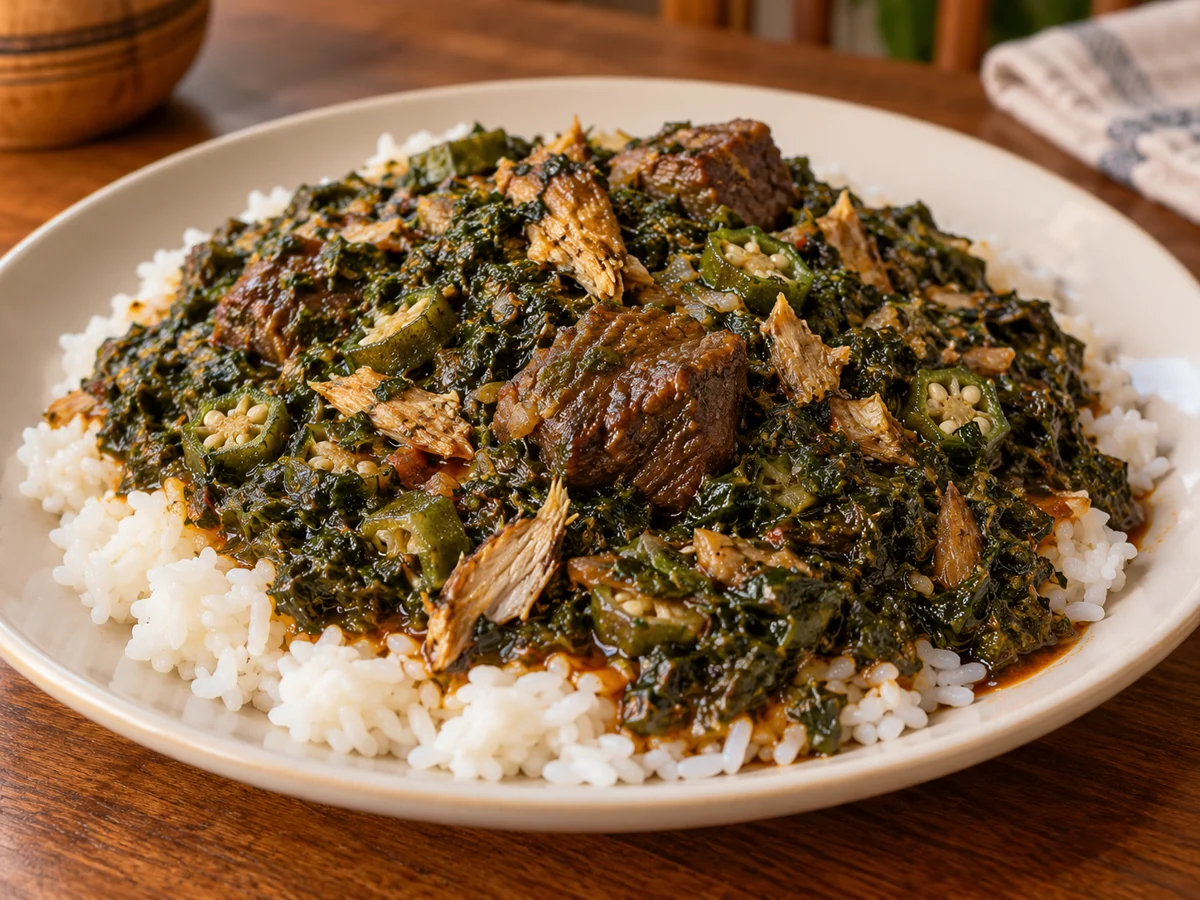
Ingredients
- 600 g edible sweet potato leaves, weighed after removing tough stalks
- 750 g boneless stewing beef, cut into 3 cm cubes
- 150 g smoked fish flesh suitable for cooking, carefully deboned
- 200 g peeled onions, finely sliced
- 200 g fresh okra
- 40 ml food-grade red palm oil
- 1.2 litres hot drinking water, plus a little more according to evaporation
- 1 small whole chilli, optional and unpierced
- Black pepper to taste
- Salt after tasting, depending on the fish’s saltiness
- 360 g dry rice or dry fonio, cooked separately according to the product instructions
Preparation
Prepare the leaves. Spread them on a tray and remove fibrous stalks, damaged parts and debris. Weigh out 600 g of usable leaves. Wash in several changes of drinking water, lifting the leaves out so that dirt stays at the bottom. Drain, gather into small bundles and slice finely with a clean knife. Even slicing reduces long fibres and helps the leaves cook evenly. Never substitute ordinary potato leaves.
Start the beef. Put the cubes in a heavy-based pot with 1 litre hot water and a small pinch of pepper. Bring to a simmer and skim off any foam. Partly cover and simmer for about 40 minutes. The beef should begin to soften but need not yet be ready. Reserve the remaining 200 ml water for cooking the leaves. This version does not require searing the meat or heating oil until it smokes.
Add the leaves gradually to the beef and broth. They may initially occupy a large volume; let each addition wilt before adding more. Stir with a long spoon, replace the lid slightly ajar and cook at a gentle simmer for about 30–40 minutes. Stir regularly, gently scraping the bottom. If the pot becomes dry before the beef is tender, add some reserved water. The mixture should cook in a small amount of liquid without sticking.
Prepare the fish and okra while the pot simmers. Separate the smoked fish into pieces large enough to check for remaining bones. Follow the seller’s storage and preparation instructions, including any required desalting. Wash and dry the okra, removing only the tough tip rather than cutting away the entire top. Slice into thin rounds to help thicken the sauce. Keep fish and okra separate until needed.
Season the base. Once the leaves have softened well, add the sliced onions and optional whole chilli. Cook for 10 minutes, then add the smoked fish. Stir gently so the flesh does not disintegrate. Taste some broth before adding salt: smoked fish may already supply plenty. A stock cube is not needed for flavour. If the chilli splits, remove it and check the heat before continuing.
Thicken with okra. Test the beef with the point of a knife; it should be tender. If it resists, continue cooking before adding the okra. Add the okra rounds and cook for about 10–15 minutes, stirring gently. Aim for a supple, lightly thickened sauce. The okra need not disappear, and the fish should remain noticeable. A vigorous boil mainly evaporates water and increases the risk of sticking.
Finish with oil. Add the 40 ml red palm oil and stir it through. Simmer for another 5 minutes, then adjust salt and pepper. The sauce should coat a spoon without becoming a dry paste. If too thin, reduce uncovered for a few minutes; if too thick, add hot water a little at a time. Remove the chilli and rest the pot off the heat for 5 minutes.
Cook the rice or fonio in a separate pan according to the product instructions, keeping control of its texture without unnecessary extra oil. Divide among six warm plates and spoon over or alongside the leaves, beef and fish. Offer extra chilli separately. Distribute the meat and fish evenly rather than putting most of the protein into the first portions.
Introduction
Saga-saga is a sweet potato leaf sauce described in the Malian tourism office’s gastronomic guide. Identifying the leaves matters: sweet potato leaves are neither the cassava leaves used for borokhé nor the jute mallow leaves used for fakoye. In this version, they cook with beef before smoked fish and okra are added. A measured amount of food-grade red palm oil gives depth without leaving the sauce swimming in oil. The finished leaves should be tender, the sauce thick enough for rice, and the vegetable flavour still recognisable.
This is a documented adaptation for a home kitchen. Quantities are weighed for six people, while cooking times remain approximate: the tenderness of the beef and leaves matters more than an exact minute. The tourism guide describes a related preparation with meat or fish, finely cut leaves and okra added towards the end. This recipe follows that sequence and supplies practical texture cues. It does not claim that every Malian family follows one fixed formula.
Buy sweet potato leaves sold as food and identified as Ipomoea batatas. Ordinary potato leaves are unsuitable. Ask whether the bunches contain many tough stalks and buy enough to reach the stated weight after trimming. Young leaves make a softer sauce; thicker leaves need finer slicing and longer cooking. The finished dish is dark green and does not need a garnish of raw leaves.
Cultural context
The Malian tourism office’s Gastronomie malienne guide describes saga-saga as a sweet potato leaf sauce associated with Kayes and Koulikoro. This identifies the preparation and its main ingredients, but does not establish identical proportions in every household. The combination of smoked fish and meat is retained as a culinary choice for this version. Do not confuse the name with leafy dishes called saga or saget elsewhere: similar names can refer to different plants and cuisines.
Documentary source: https://officetourismemali.com/images/Mali%20Gastronomie.pdf, SAGA-SAGA page. Quantities, cooking cues and organisation are an editorial adaptation, not a transcription of the guide.
Tips
Weigh after trimming: 600 g of whole bunches will not yield 600 g of usable leaves.
Sticking can indicate insufficient liquid or excessive heat; adding oil does not automatically solve it.
Wait until the beef is tender before adding okra, avoiding unnecessarily long cooking of the rounds.
Do not salt heavily at the start: the final saltiness appears after adding smoked fish and reducing the broth.
For a meat-free version using more fish, revise the sequence; the long beef simmer is no longer relevant.
Planning
Use a large pot, vegetable board, knife and long spoon. Keep leaf preparation equipment clean and separate raw meat preparation from ready-to-serve food. Total time varies with the beef cut, cube size and leaf maturity. Tenderness and texture take priority over the stated timing. Cassava, jute mallow and ordinary potato leaves are not interchangeable substitutes.
Variations
A fish-only version needs a different sequence: cook the leaves until tender, then add the fish according to its type and cooking requirements. Simply removing fish produces a different leaf sauce and should be labelled as an adaptation. Spinach can be used for an experiment with available ingredients, but its flavour, structure and cooking time differ from sweet potato leaves. Do not describe it as an exact traditional equivalent.
Accompaniments
Serve with plain white rice or fonio, which carry the sauce while leaving the leaves, smoked fish and beef recognisable. The 360 g dry cereal supplies six side portions. Water or a low-sugar drink suits the meal. Saga-saga already contains leafy vegetables and okra, so another rich sauce is unnecessary.
Nutrition notes
Leaves and okra provide fibre; beef and fish contribute protein. Salt content depends largely on the smoked fish and added salt. Measuring the oil makes the recipe easier to reproduce. No calorie or micronutrient figures are claimed without calculations matching the actual products. Fish is an allergen; also check prepared products for added ingredients.