Simmered sepalie
Mustard leaves give this side a peppery note. Start the thicker ribs before the leaves so they become tender together. A little sunflower oil rounds out the flavour.
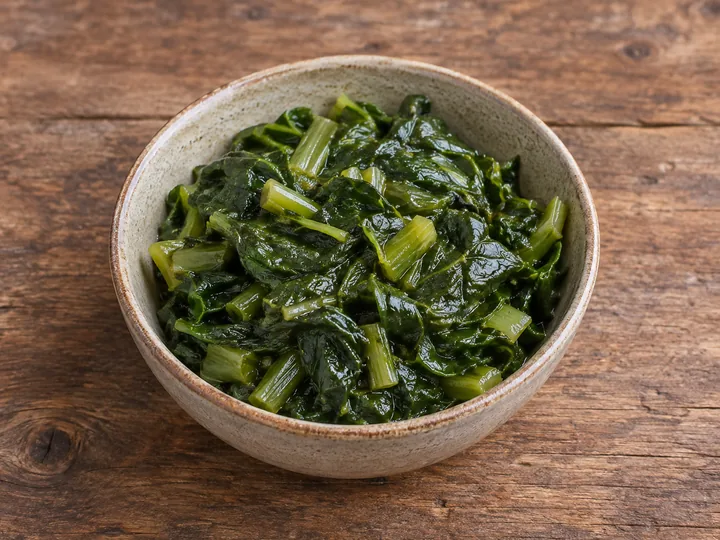
Ingredients
- 500 g edible mustard greens sold as a vegetable, weighed after trimming
- 100–150 mL water
- 12 g sunflower oil
- 2 g fine salt
Preparation
Wash and drain the leaves. Separate the thick ribs, slice them finely and cut the leaves into 2 cm ribbons.
Bring 100 mL water to a simmer in a sauté pan. Add the ribs and cover for 4 minutes. Add the leaves in two batches, waiting for the first to wilt.
Stir, partly cover and cook over medium-low heat for 10 minutes. If the pan dries, add the remaining water a little at a time. When the leaves soften, add the oil and salt.
Finish uncovered for 4–6 minutes, depending on the liquid. Taste a rib and cook a few minutes longer with a splash of water if firm. Divide into four portions.
Introduction
Mustard leaves give this side a peppery note. Start the thicker ribs before the leaves so they become tender together. A little sunflower oil rounds out the flavour.
Finely sliced ribs cook faster. Young leaves and ribs can go in together. A wide pan helps reduce the cooking liquid.
Cultivated mustard greens vary in pungency. Stir after adding the oil and salt. Serve with plain papa to balance the slight bitterness.
The Lesotho food composition table lists sepalie as wild mustard greens boiled with water, salt and oil. This adaptation uses commercially sold edible mustard leaves. It is distinct from pumpkin-leaf moroho oa lepu.
Choose mustard greens sold for cooking. Trim before weighing. Wash well, drain and separate thick ribs from the leaves. Finely slice those ribs across the fibres and keep them apart from the leaf ribbons. Start with the stated initial water and keep the rest in reserve.
Cook ribs first and add leaves in batches as they wilt. Lift the upper leaves into the steam. Check a ribbon and a rib separately; the leaves should be tender without becoming fibrous. Extend gently with water if needed. Add sunflower oil and salt once tender. Reduce excess liquid uncovered without frying the leaves dry.
Divide greens first, then spoon over a little juice. Serve alongside plain papa. Cool and refrigerate promptly if preparing ahead, then reheat with a little water. The Lesotho table documents sepalie made with wild mustard greens; this adaptation uses cultivated greens sold as food. It is distinct from pumpkin-leaf lepu. Nutrition excludes sides.
Cultural context
Recipe source — https://www.fao.org/fileadmin/templates/foodcomposition/documents/Lesotho1-127pages.pdf