Setjetsa
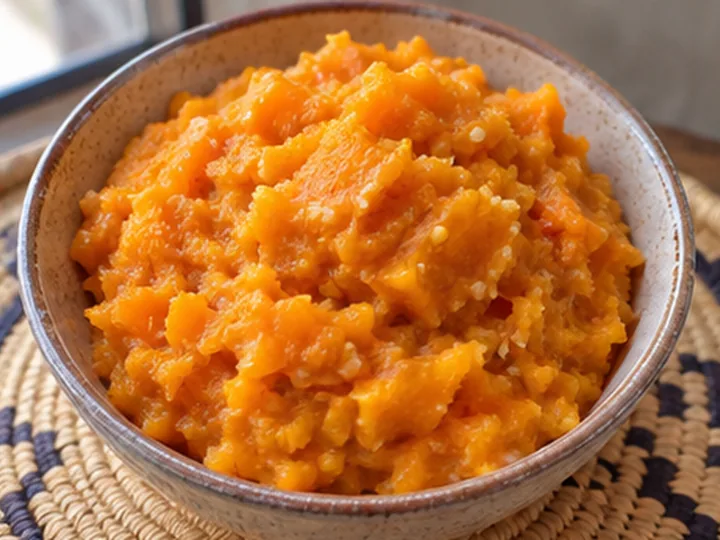
Pumpkin is mashed in its cooking liquid before the maize meal goes in. The result is a spoonable orange pap whose thickness depends on the squash and the grind of the meal.
Ingredients
- 500 g butternut squash flesh
- 180 g fine or medium maize meal, regular cooking
- 500 mL water plus 100 mL hot water in reserve
- 25 g plain margarine
- 3 g fine salt
Preparation
Cut the squash into 2 cm cubes. Put them in a heavy saucepan with 500 mL water and the salt. Cover and simmer for about 15 minutes, until a fork crushes them easily.
Take the pan off the heat and mash the squash in its liquid. Return to low heat, melt in the margarine and sprinkle in the maize meal while stirring once the liquid simmers again.
Stir until the meal is evenly moistened. Partly cover and cook over very low heat for 20–25 minutes, scraping the bottom every few minutes. Add hot water if the mixture stiffens before the grains soften.
Taste a few grains and cook longer if necessary. When tender, take the pan off the heat, cover and rest for 5 minutes.
Introduction
Pumpkin is mashed in its cooking liquid before the maize meal goes in. The result is a spoonable orange pap whose thickness depends on the squash and the grind of the meal.
The pap should hold on a spoon and spread a little under its own weight. Reduce very watery squash before adding maize meal and add the reserved water gradually if needed. Instant polenta absorbs water differently.
Serve hot with Moroho oa lepu or bean sauce. Loosen a portion with a spoonful of water when reheating gently.
The Malealea and National University of Lesotho booklet documents pumpkin pap finished in an insulated cooking bag. This adaptation finishes on the stove and differs from plain pap or mashed squash.
Weigh the squash after trimming. Cut even pieces and test several, including the largest, before mashing. Mash off the heat in its liquid. Once the margarine has melted and the mixture simmers, sprinkle in the meal gradually. If lumps form, pause and press them against the pan. Start with a whisk if helpful, then switch to a sturdy spatula.
Lower the heat when thick bubbles appear. Keep the lid ajar and scrape along the bottom as you stir. If the base burns, transfer the unburnt mixture to a clean pan, add hot water and continue gently. If grains are hard but the pap is already firm, it needs liquid and time. If tender but runny, reduce briefly and rest.
Test a spoonful on a plate. It should form a low mound and soften around the edges. Serve with greens or beans on the side. The booklet also mashes squash before adding maize. This stovetop adaptation cooks the meal in the squash, rather than topping plain pap with it. Cook the squash ahead separately if desired. Cool and refrigerate cooked leftovers promptly, then reheat gently with water, stirring to the centre.
Cultural context
Recipe source — https://www-cd2.shu.ac.uk/-/media/home/research/helena-kennedy-centre/projects/eco-cook-bag-recipe-booklet.pdf#page=15