Roasted pepper and peanut sauce
Serve this sauce in small amounts with roasted root vegetables. Add the water a little at a time, as the thickness depends on the peanut paste. Contains peanuts.
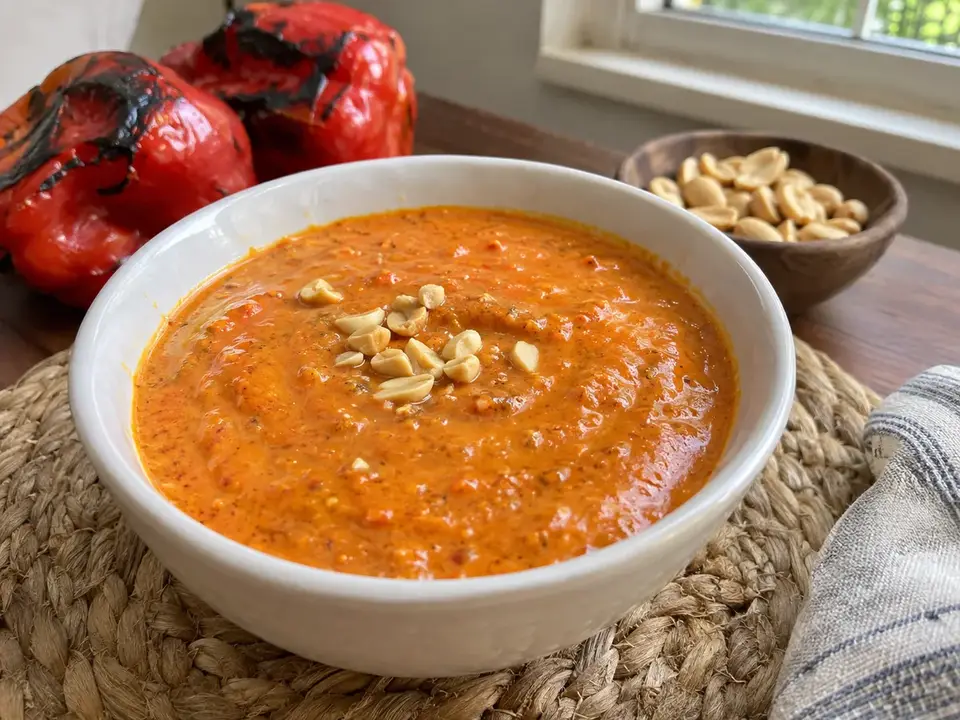
Ingredients
- 2 red sweet peppers
- 80 g plain peanut paste
- 120 ml water
- 20 ml lime juice
- 1 garlic clove
- 3 g salt
Preparation
Roast the whole peppers until their skins blister.
Cover for 5 minutes, then peel and deseed. Blend the flesh with garlic, peanut paste and half the water.
Warm gently, add water until it coats a spoon and finish with salt and lime juice.
Introduction
Serve this sauce in small amounts with roasted root vegetables. Add the water a little at a time, as the thickness depends on the peanut paste. Contains peanuts.
Cultural context
Editorial adaptation for the Liberia collection.
Planning
Method and texture checks
Turn the peppers under the grill until the skin lifts in several places. Collect the juice as you peel them and add it to the mixture if it tastes sweet and mild. Blend with the peanut paste, adding the water in stages. Warm gently, stirring along the bottom of the pan. Stop when the sauce coats a spoon and add the lime off the heat. Serve in a small bowl with roasted yam.
Emulsifying the pepper flesh and peanut paste
Let the peppers cool slightly under a lid, then peel them over a bowl to catch their juice. Remove the seeds before blending the flesh. If the peanut paste is very stiff, first loosen it with some of the measured water. Then add the remaining water in small amounts. To check the consistency, spoon the sauce over a piece of warm yam. If it sits in a lump, thin it a little more before adding the lime juice.
Choosing the peppers and setting up the tray
Use fleshy red peppers. Thick flesh gives the sauce more body and comes away from the skin more easily after roasting. Wash and dry the peppers, then set them whole on a rimmed baking tray to catch their juices. Leave space between them so the sides are exposed to the heat. If they differ in size, put the larger pepper in the part of the oven that browns most strongly. Have tongs, a container with a lid and a fine sieve ready before you start roasting.
Blistering the skin on all sides
Watch for the skin to start blistering on top. Turn the peppers with tongs to expose the sides where the skin is still smooth. Dark patches make the skin easier to peel. The moist areas around the stems may need a little longer. When the flesh yields to the tongs, transfer the peppers to the container and cover for the specified resting time. They will release juice. Lift out the peppers without discarding the liquid. Strain it if you would like to use some to deepen the pepper flavour in the sauce.
Peeling and weighing the flesh
Open the peppers on a plate, pull out the stems and remove the seeds. Peel the skins away in strips, using the tip of a small knife where they cling. Remove any stray seeds with your fingers or the flat of the knife. Weigh the trimmed flesh if you want to reproduce the recipe precisely. A batch of small peppers may need less water than a batch of thick, fleshy ones. Set aside a few strips and taste them on their own to judge how sweet the peppers are before blending them with the peanut paste.
Blending with some water in reserve
If the oil has separated, stir the peanut paste in its jar. Plain paste lets you adjust the salt and acidity at the end. Put the pepper flesh in a blender with the garlic, peanut paste and the first half of the water. Blend, switch off the machine and scrape the sides down towards the middle. If the mixture clumps and the blades cannot turn, add a little of the reserved liquid. Blend until smooth before deciding how much extra water you will need when you heat the sauce.
Warming gently and checking the consistency
Pour the sauce into a small saucepan and stir right down to the bottom as it warms. The peanut paste can thicken the sauce quickly at first. Add the remaining water a little at a time. Draw a line through the sauce coating the back of a spoon. If the sauce holds around the line but runs when you tilt the spoon, it is ready to serve with yam or rice. If it drops off in clumps, stir in a spoonful of liquid. If it runs like water, heat it a little longer while stirring before adding the lime.
Seasoning just before serving
Stir in the salt, take the pan off the heat and add some of the lime juice. Taste the sauce with a piece of warm sweet potato or yam. The sweetness of the vegetable helps you judge whether the sauce has enough tang. Add the rest of the lime if the pepper and peanut still dominate. If the sauce accompanies an already tangy dish, serve it in a bowl and let diners take a small amount. Clearly point out that it contains peanuts. Use a dedicated spoon to keep it separate from the other condiments.
Preparing a second batch
To double the recipe, spread out the peppers as they roast and weigh the trimmed flesh from both batches. Blend in two batches if your blender jug is small. Combine them in the saucepan before adjusting the consistency and adding the lime. If the sauce has thickened while standing, return it to a low heat and whisk in a little hot water. Add the liquid gradually and test again on the back of a spoon. If you plan to serve the sauce cold, leave it a little looser while it is still hot.
Matching the consistency to the way you serve it
For dipping yam batons, keep the sauce thick enough to cling to the tip as you lift it. To serve with rice, thin one portion separately so it runs more easily between the grains. For grilled vegetables, spoon the sauce onto the plate first and set the vegetables on it just before serving. Their browned sides will stay visible. Save a little strained pepper juice to loosen any sauce that thickens as it stands. It brings back a smooth consistency while keeping the pepper flavour.
Tasting a small portion before seasoning
If you are unsure how much lime to add, spoon out two small samples. Season only the second and taste both with the intended accompaniment. You can then adjust the whole saucepan with the amount of lime that suits the actual sweetness of your peppers.