Pineapple and lemongrass infusion
Lemongrass provides the main aroma, followed by a fruity finish. Serve over ice or warm, depending on the season.
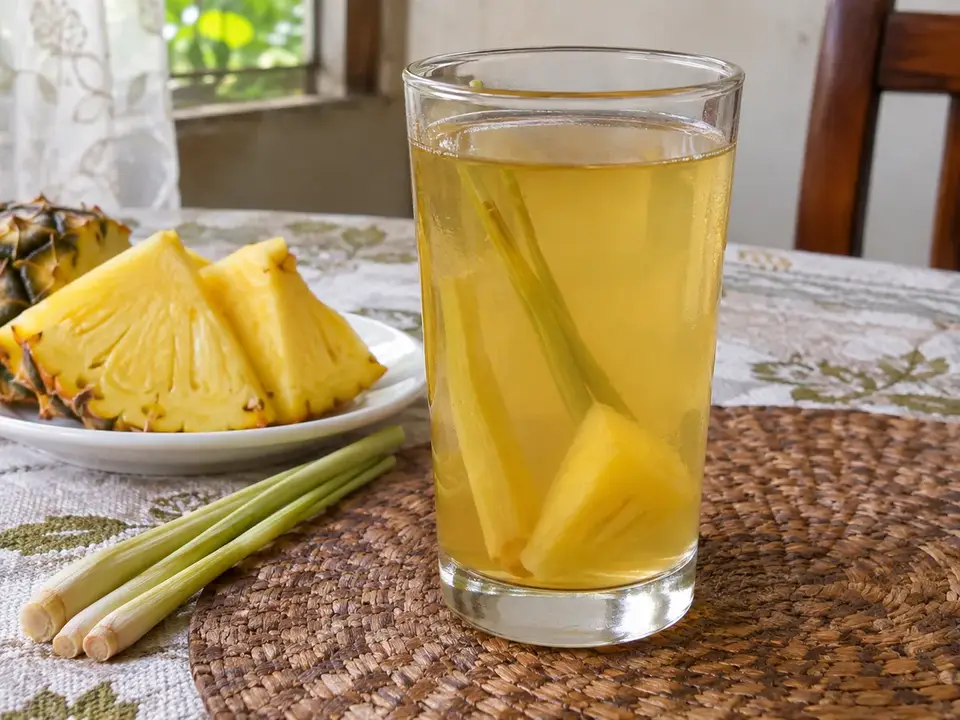
Ingredients
- 300 g pineapple flesh
- 2 lemongrass stalks
- 900 ml water
- 25 g sugar
- 15 ml lime juice
Preparation
Crush the lemongrass stalks and simmer them in water 10 minutes.
Add chunks of pineapple and simmer another 5 minutes. Strain, pressing lightly on the fruit.
Dissolve the sugar, add lime juice, cool and refrigerate.
Introduction
Lemongrass provides the main aroma, followed by a fruity finish. Serve over ice or warm, depending on the season.
Cultural context
Editorial adaptation for the Liberia collection.
Planning
Preparing and tasting the infusion
Remove the dry lemongrass leaves and bruise the tender part with the flat of a knife. Infuse the stalks first, then add the pineapple for a brief simmer. Strain through a fine sieve. Cool a spoonful and taste before adding sugar, as pineapple varies considerably. Add the lime last. For a cold drink, reserve a few fresh pineapple pieces and put them directly in the glasses.
Adjusting the infusion before filling the glasses
Cut the bruised lemongrass stalks in two so you can lift them out before pressing the pineapple in the sieve. Press once with the back of a spoon and check the liquid. For a clearer drink, stop when pulp starts to pass through. Taste a cooled spoonful before adding the sugar and lime. Pour into glasses with ice at serving time.
Preparing lemongrass for an even infusion
Remove very dry outer leaves and rinse the stalks. Use the flat of a sturdy knife or a small pestle to bruise the lower part and open the fibres. Cut each stalk into a few lengths that are easy to submerge and remove. Thin lemongrass may scent the water more lightly. Split thick stalks lengthwise after bruising. Keep small pieces together so they are easy to spot when you strain. Cut up the fruit as the water starts heating, ready for when the lemongrass has infused.
Cutting and measuring the pineapple
Peel the pineapple and remove any hard eyes with the tip of a knife. Weigh the flesh for the drink and cut it into even pieces. Very small pieces can partly slip through the sieve, while large cubes release their flavour more slowly. If a very ripe pineapple leaves juice on the cutting board, add that juice with the fruit. Taste a piece before measuring out the sugar. If it is especially sweet, reserve some of the sugar until the final adjustment.
Extracting the lemongrass aroma first
Gently simmer the pieces of lemongrass in water. Keep the bubbles small and partially cover the pan to limit evaporation. When the stated time is up, cool a spoonful before smelling and tasting it. If the lemongrass is faint, crush one stalk against the pan with a spoon and give it more time. If the infusion already smells strong, add the pineapple as planned. Tasting the lemongrass first makes it easier to balance the two flavours.
Infusing the pineapple briefly
Add the pieces to the simmering water and wait until it returns to a simmer before timing. At the end, lift out a piece and press it against a spoon. It should release a little juice without breaking up completely. Turn off the heat, take out the lemongrass and strain. Press the fruit lightly in the sieve for a stronger pineapple flavour. For a clear infusion, let the juice drain naturally and taste the fruit separately. This keeps the fibres in the sieve.
Sweetening and adding lime after straining
Stir the sugar into the warm liquid until it dissolves. Squeeze the lime separately and add its juice a little at a time. To judge the cold drink, cool a small spoonful in a chilled cup and taste it. The lime should give a fresh finish while allowing the lemongrass aroma through. If the pineapple was very sweet and the drink will be served over ice, allow for dilution before adding more sugar. Stir the cold pitcher to redistribute any fine particles.
Serving the drink with a meal
Pour the chilled infusion into glasses, with or without ice according to its strength. Serve it with coconut and gari bites or papaya compote. With a savoury meal, offer smaller glasses at first and pour a second round if wanted. If you used a coarse sieve, leave the sediment in the pitcher and stop pouring when the pulp approaches the spout. For a clearer presentation, strain again through a fine sieve before chilling. This makes it easier to serve from a narrow pitcher or in small glasses.
Preparing a large pitcher
To double the recipe, use a saucepan wide enough to keep the lemongrass submerged. Two separate pans let you compare the strength when the stalks differ. Strain both batches into the same container before adjusting the sugar and lime, so the sample you taste represents the full batch. If filling several pitchers, stir the strained liquid before dividing it. Keep some chilled without ice to top up glasses without watering down the last round.
Using the leftover pineapple
If the strained pineapple still holds its shape and tastes good, try it once cooled. Serve a few pieces with rice porridge or mix them with papaya in a small bowl. Heavily pressed pineapple can be more fibrous and work better in small amounts as a garnish. Remove any pieces of lemongrass before serving it. For another pitcher, use fresh stalks and pineapple. The fruit and stalks you already steeped have lost some of their flavour and would give a different result.
Deciding whether to dilute the infusion
If the infusion reduced more than expected, taste it cold before topping it up. Pour a little into a glass and add a dash of cold water. If it still tastes clear and fragrant, use the same proportion for the pitcher or let everyone dilute their own serving.
Stirring up any sediment
If a little fruit has settled in the refrigerator, stir the liquid before filling large glasses. For a clearer drink, pour slowly and leave the sediment behind.