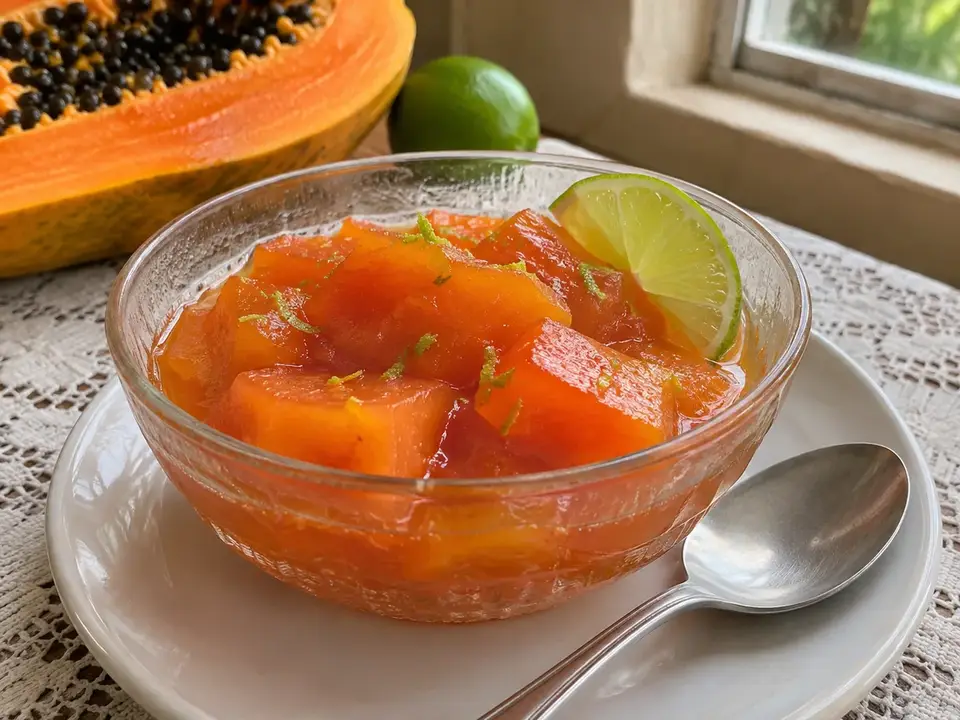
Papaya and lime compote
Use ripe papaya for a fruity flavour. This spoonable compote differs from candied slices of green papaya.
Ingredients
- 550 g peeled ripe papaya
- 65 ml water
- 30 g sugar
- 20 ml lime juice
- 8 g ginger
Preparation
Dice the papaya and slice the ginger.
Simmer with the water and sugar until the fruit starts to soften. Remove ginger, add lime juice and roughly mash with a fork.
Serve chilled.
Introduction
Use ripe papaya for a fruity flavour. This spoonable compote differs from candied slices of green papaya.
Cultural context
Editorial adaptation for the Liberia collection.
Planning
Checking the fruit as it cooks
Cut out the ripe flesh and remove the fibres around the seed cavity. Cook gently until the cubes yield to a fork. If the papaya releases a lot of juice, uncover the pan for the last few minutes before adding the lime. Mash some cubes and leave others whole. Serve in a small dessert bowl or spoon over a slice of cornbread.
Keeping pieces of papaya in the compote
Cut the flesh into large cubes. As it cooks, move the pieces aside with a spatula and check the bottom of the saucepan. If there is a lot of juice, let it reduce uncovered. Set the most even cubes aside, mash the rest and remove the ginger. Return the cubes along with the lime juice. If using individual bowls, distribute the pieces last so every serving gets some.
Choosing papaya that holds its shape
Choose a ripe papaya still firm enough to dice. A very soft fruit will make a smoother compote in the same cooking time. Halve it lengthwise, scoop out the seeds and peel both halves. Weigh the flesh and separate the softer parts from the firmer ones. Cut the softer pieces a little larger if you want some to stay whole. Prepare the lime and ginger before turning on the stove so the fruit need not cook while you get them ready.
Cutting and simmering
Make cubes of roughly the same size, except for the very soft pieces. Slice the ginger so that you can take it out with tongs. Put the water and sugar in a saucepan wide enough for the papaya. Heat, stirring until the sugar dissolves, then add the fruit and ginger. Stir gently to moisten the papaya. Some cubes may initially sit above the liquid. Turn them with a spoon once the fruit starts releasing juice. Keep it at a gentle simmer so the pieces hold their shape.
Cooking according to the amount of juice
Check the saucepan after the first few minutes. Very ripe papaya quickly gives off liquid. If juice rises around all the cubes, cook uncovered to concentrate it. If firmer fruit stays dry on top, cover briefly so steam softens the upper cubes, then uncover. Press the thickest piece with the edge of a spoon. It should yield, with a tender centre. The hot juice may still look thin. Put a spoonful on a plate to see how it behaves as it cools.
Removing the ginger and mashing in stages
Find and remove all the ginger slices before using the fork. First mash some cubes against the side of the pan. Stir the crushed fruit into the juice and check the texture. Keep a few larger pieces for bread or porridge. For a dessert bowl, mash a little finer so the papaya is spread through each spoonful. If much liquid remains, spoon some out before mashing. Add it back after cooling if the compote seems too stiff.
Adding the lime at the end
Squeeze the lime and take out any seeds. Add some of the juice, stir and taste a small sample once it has cooled slightly. If the papaya is very sweet, you may want to add the rest straightaway. If it already has a bright flavour, wait until the compote is cold to decide. The lime should come through alongside the ginger and fruit. For a dish already flavoured with lime, keep the compote milder. Alternatively, season one serving individually, then repeat that amount in the other bowls.
Serving the compote chilled
Divide the compote among dessert bowls or pour it into a wide dish so it cools evenly. Stir gently before serving to redistribute the juice. With coconut rice porridge, serve the compote alongside or spoon it over at the last moment. For plantain fritters, put it in a small bowl with a spoon so each bite can be topped as desired. If serving the compote on its own, save the neatest pieces for the top to show the fruit's texture.
Scaling the recipe for several papayas
When using two fruits, taste a slice from each before combining them. A more fragrant papaya can balance a milder one. If their textures differ, start cooking the firmer pieces and add the others as soon as the first start softening. A wider saucepan promotes even evaporation. For a second batch, note how much juice is left after cooking and compare it with the first batch. This helps you decide how much liquid to retain before adding the lime.
Checking the consistency once cold
For a sauce-like finish, the compote should run slowly off the edge of a spoon. If you want to mound it on a plate, drain a little and add some juice back only if the papaya falls apart. If it has turned out thinner than expected, serve the flesh with a slotted spoon and offer the juice separately. Diners can spoon it onto a fritter or into a bowl. You can also stir some crushed papaya into the juice to give it more body.
Sharing the pieces among bowls
Spoon out the whole pieces before the juice. Divide them among the bowls, then add the mashed papaya. If one bowl gets a lot of liquid, add a little more fruit to balance it. Put the firmest pieces on top so both textures remain visible.